

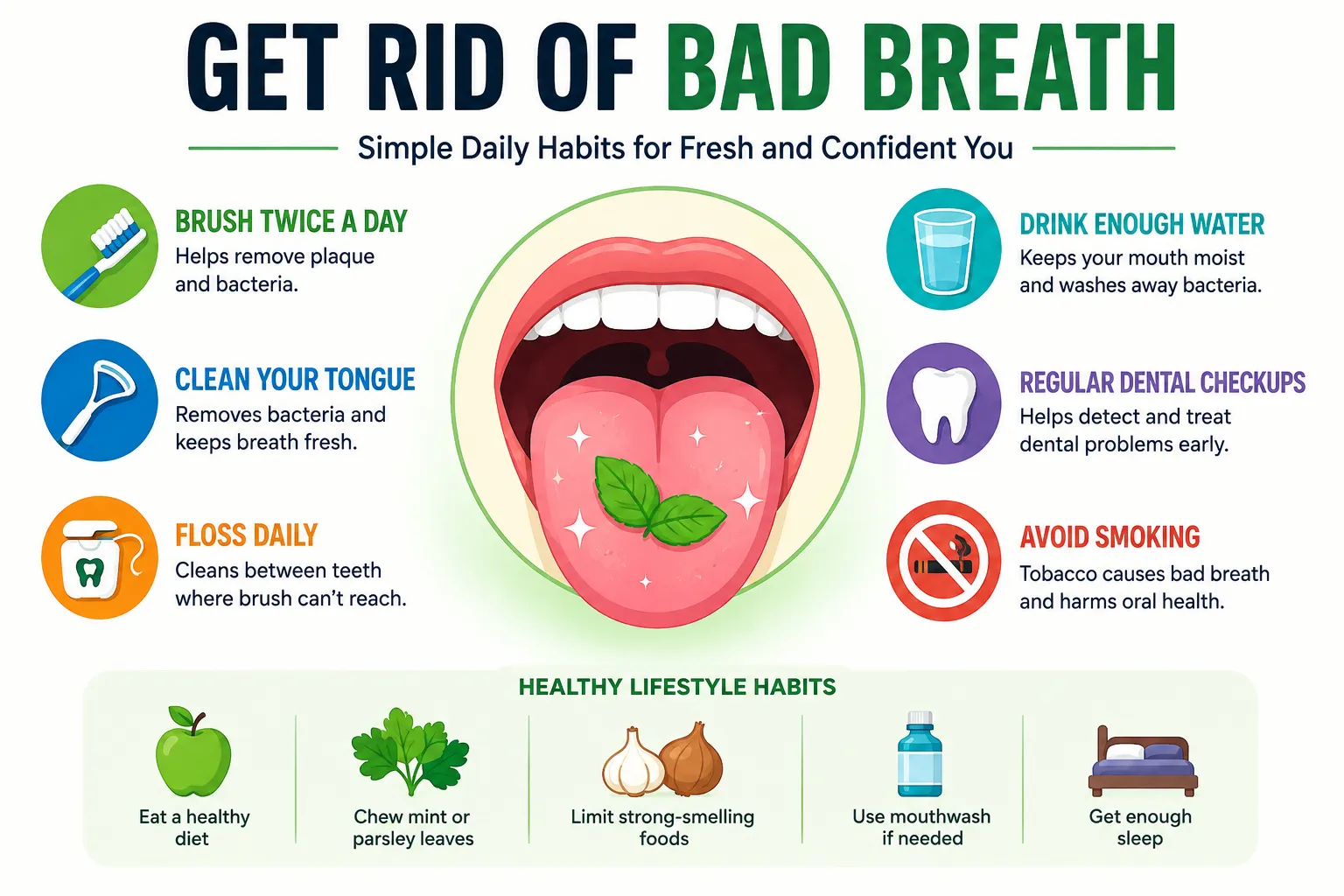
Bad breath, also called halitosis, can often be controlled or eliminated by identifying and treating its underlying cause. The most effective long-term approach is to brush your teeth twice a day with fluoride toothpaste, clean your tongue, floss or use interdental cleaners daily, and keep your mouth hydrated. If bad breath continues despite good oral hygiene, gum disease, tooth decay, dry mouth, tonsil stones, sinus problems, or certain medical conditions may be responsible. Regular dental checkups are important because a dentist can identify oral causes that home care may not resolve. Avoiding tobacco and limiting foods or drinks that worsen mouth odor can also help maintain fresher breath.
Common Causes of Persistent Bad Breath
Most ongoing bad breath originates in the mouth. Bacteria can accumulate on the tongue, between teeth, around the gums, and on dental appliances, producing unpleasant-smelling compounds.
Other common causes include:
Poor oral hygiene and plaque buildup
Gum disease such as gingivitis or periodontitis
Tooth decay or dental infections
Dry mouth, which reduces saliva's natural cleansing action
Tonsil stones
Certain foods, including garlic and onions
Smoking or tobacco use
Some medications that contribute to dry mouth
Less commonly, digestive, respiratory, or other medical conditions
Best Ways to Get Rid of Bad Breath Long Term
Step | What to Do | Why It Helps |
|---|---|---|
Brush twice daily | Use fluoride toothpaste for about two minutes | Removes plaque and odor-causing bacteria |
Clean your tongue | Gently use a tongue scraper or toothbrush | Removes bacteria and buildup from the tongue |
Clean between teeth | Floss or use interdental brushes daily | Removes trapped food and plaque |
Drink enough water | Keep your mouth adequately hydrated | Helps maintain saliva flow |
Treat dental problems | See a dentist for cavities or gum problems | Addresses underlying causes |
Manage dry mouth | Stay hydrated and discuss persistent dryness with a professional | Reduces bacterial buildup caused by low saliva |
Avoid tobacco | Stop smoking and other tobacco use | Reduces odor and improves oral health |
Maintain dental visits | Get professional examinations and cleaning when recommended | Helps detect problems early |
When to See a Dentist
If bad breath lasts for several weeks despite consistent oral hygiene, arrange a dental examination. Persistent odor accompanied by bleeding gums, swollen gums, tooth pain, loose teeth, or a persistent bad taste should not be ignored.
A dentist can check for plaque, tartar, cavities, gum disease, infections, and other oral causes. If no dental cause is found, a healthcare professional may evaluate other possible sources.
Can Bad Breath Be Removed Permanently?
There is no single permanent cure because bad breath is a symptom rather than a disease. Long-lasting improvement comes from treating the cause and maintaining good oral hygiene. For example, treating gum disease can resolve odor caused by infected or inflamed gums, while managing dry mouth can reduce odor associated with insufficient saliva.
Conclusion
The most reliable way to get rid of persistent bad breath is to find and treat its underlying cause rather than relying only on mints or mouthwash. Daily brushing, tongue cleaning, interdental cleaning, hydration, tobacco avoidance, and regular dental care provide the foundation for fresh breath. If the problem does not improve, a dentist should evaluate you for an underlying oral condition.
FAQs
1. Can bad breath go away permanently?
Yes, persistent bad breath can often be eliminated when its underlying cause is identified and treated. Maintaining good oral hygiene is essential for preventing it from returning.
2. Does brushing your tongue help with bad breath?
Yes. The tongue can collect bacteria and debris that contribute to unpleasant odors. Gently cleaning it daily can help reduce these odor-causing substances.
3. Why do I still have bad breath after brushing?
Bad breath can persist because of gum disease, cavities, dry mouth, tongue buildup, tonsil stones, tobacco use, or other conditions. If brushing and flossing do not solve the problem, a dental examination is recommended.
4. Is mouthwash enough to permanently stop bad breath?
Usually not. Mouthwash may temporarily reduce odor, but it does not necessarily treat the underlying cause. Good brushing, tongue cleaning, interdental cleaning, hydration, and appropriate dental treatment are more important for long-term control.
Also read : Why should we take vitamin B-12?