The most common way to say "Good afternoon" in German is:
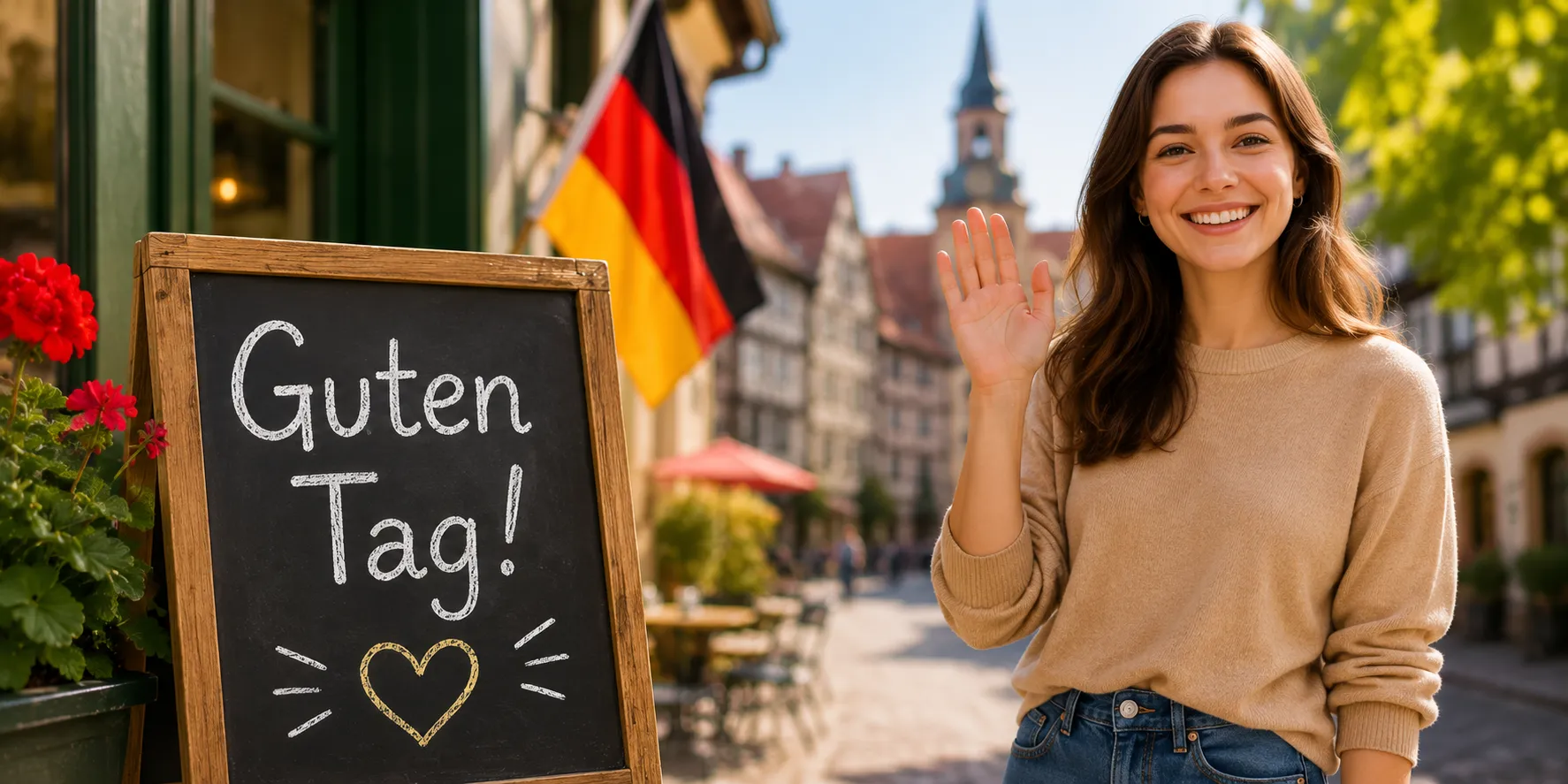
Guten Tag
English Meaning: Good afternoon / Good day
Although the literal translation is "Good day," Guten Tag is the standard greeting used from around late morning until early evening across Germany, Austria, and much of the German-speaking world. It's the greeting you'll hear most often in offices, shops, hotels, restaurants, and formal conversations.
Pronunciation
German pronunciation can feel intimidating at first, but Guten Tag is actually one of the easiest greetings to learn.
Break it into two parts:
- Guten → GOO-ten
- Tag → sounds like tahk (the final "g" is pronounced more like a soft "k")
Once you say it a few times, it becomes surprisingly natural.
The good news is that native German speakers generally appreciate anyone making the effort to speak their language, even if the pronunciation isn't perfect.
When to Use It
Guten Tag is the safest greeting for almost any daytime situation.
You can use it when:
- Meeting someone for the first time
- Entering a shop
- Speaking with colleagues
- Greeting clients
- Talking to hotel staff
- Asking for directions
- Visiting government offices
- Beginning a professional conversation
Because it's both polite and neutral, it's often the first greeting language learners are taught.
Formal vs. Informal Variations
German greetings change depending on the time of day and how formal the situation is.
| German Greeting | English Meaning | When to Use |
|---|---|---|
| Guten Morgen | Good morning | Morning |
| Guten Tag | Good afternoon/Good day | Late morning to early evening |
| Guten Abend | Good evening | Evening |
| Hallo | Hello | Informal, anytime |
| Hi | Hi | Casual conversations among friends |
If you're visiting Germany for the first time, Guten Tag is almost always a safe choice during the day.
Example Sentences
Here are a few practical examples you'll actually use.
At a Hotel
German:
Guten Tag! Ich habe eine Reservierung.
English:
Good afternoon! I have a reservation.
At a Store
German:
Guten Tag! Können Sie mir helfen?
English:
Good afternoon! Can you help me?
At Work
German:
Guten Tag, Frau Müller.
English:
Good afternoon, Mrs. Müller.
Learning greetings first makes everyday conversations much easier because they're often the first words you'll say when meeting someone.
Common Mistakes
Saying "Guten Nachmittag"
Many beginners assume this is the direct translation of "Good afternoon."
In reality, native German speakers rarely use "Guten Nachmittag" as a greeting.
Instead, they almost always say:
Guten Tag
Using "Hallo" Everywhere
"Hallo" is perfectly acceptable in casual situations.
However, in professional settings, Guten Tag sounds much more polite.
Worrying Too Much About Pronunciation
One of the biggest barriers to learning a language is the fear of making mistakes.
In practice, most native speakers appreciate genuine effort far more than perfect pronunciation.
Why Learning Another Language Is Worth It
As someone who enjoys exploring languages and cultures, I've realized that learning a new language offers much more than just vocabulary.
It changes how you experience the world.
You understand different cultures, communicate more confidently while traveling, and connect with local people in a way that simply isn't possible through translation apps alone.
Professionally, multilingual skills have also become increasingly valuable. Many employers today actively seek candidates who can communicate with international clients, collaborate across cultures, or work in global teams. Whether you're interested in tourism, business, technology, customer support, or studying abroad, knowing another language can open doors that wouldn't otherwise exist.
And even if you never use German at work, learning something new is rarely wasted. Every language teaches you new ways of thinking, improves memory, strengthens communication skills, and builds confidence. You may start with one simple greeting like Guten Tag, but it often becomes the beginning of a much bigger learning journey.
The standard way to say "Good afternoon" in German is Guten Tag. It's polite, widely understood, and appropriate for most daytime situations, making it one of the first expressions every German learner should know. Along with learning its pronunciation and proper usage, understanding when to use formal and informal greetings will help you communicate more naturally. More importantly, learning a language is an investment that extends far beyond words—it helps you travel with confidence, build meaningful connections, explore new cultures, and create opportunities in both your personal and professional life.
Frequently Asked Questions (FAQs)
1. Is "Guten Tag" the same as "Good afternoon"?
Yes. While it literally means "Good day," it's commonly used as "Good afternoon" or a general daytime greeting in German.
2. Can I say "Hallo" instead of "Guten Tag"?
Yes, but Hallo is more informal. Guten Tag is preferred in professional or polite situations.
3. How do Germans greet people in the evening?
They usually say Guten Abend, which means Good evening.
4. Is German difficult to learn for English speakers?
German has some challenging grammar, but many everyday words and sentence structures are closely related to English because both languages belong to the Germanic language family.
5. Why should I learn German?
German can help with international careers, higher education, travel, business opportunities, and connecting with millions of native speakers across Germany, Austria, Switzerland, and other parts of Europe.
Must Read: How to Learn the German Language
 Answered by