
Making an extraordinary chicken curry requires less of a variety in ingredients and more patience, and that is the step most cooks overlook. Anyone can throw a few chicken bits, spices and water into a pot and call it a curry, but a good thick rich gravy with chicken that nearly falls off the bone is a product of some easy to follow tricks to be done at the right moment. Nothing here is difficult and no special equipment or free hour is required. You just need to have good quality chicken, a few spices that are commonly found on the Indian or Chinese shelves, and above all the patience to let the onions fry. I will guide you through this recipe as it can be explained face to face, with some easy to incorporate tricks I've learned from my own mistakes. This recipe makes about four servings, depending on how hungry your guests are.
It is best to start with the chicken because the texture is best prepared ahead of time. Use about 750 grams of chicken with bones, which adds way more flavor than a boneless breast, which you may cut into small bits and combine with half a cup of thick plain yogurt, a teaspoon of ginger-garlic paste, half a teaspoon of turmeric, a teaspoon of red chilli powder and a good pinch of salt. Let it marinate for at least half an hour, and if you have the time, in the refrigerator for a couple of hours. The yogurt is the key to this marinade, as its mild acidity will help the chicken to cook up juicy and tender instead of coarse and dry, and you'll see that it also makes the spices adhere to the chicken. On the side, slice two big onions as finely as you can bear, and chop three ripe tomatoes and set a few whole spices aside, a small cinnamon stick, two or three cloves, two green cardamom pods, a bay leaf and a teaspoon of cumin seeds. Seems like a lot, but after you do it once, it becomes a habit.
Now comes the part that makes or breaks your entire effort, and that is, the base. Heat up three tablespoons of oil, or oil and ghee combined, if you have some lying around in the kitchen, in a thick bottomed pot, and throw in the whole spices. Let it crackle and perfume the kitchen for about thirty seconds and then throw in the chopped onions along with a small pinch of salt. Here is where the hurry comes in, and the disaster begins. Slowly and on medium flame, cook the onions, now and then stiring, for about fifteen minutes or so, until it reaches a deep golden brown. Not burnt, of course, but a nice rich honey brown, which will give the curry its sweetness. Now throw in a tablespoon of ginger-garlic paste and cook for a minute, till its raw smell is gone. Add the tomatoes and some water and let it cook a bit until the oil starts to separate from the rest, and that is when you know your masala is ready, and I have to admit, it is quite a proud moment.
The spices now, and a small warning is given. Reduce the flame and add a teaspoon of coriander powder, half a teaspoon of cumin powder, a teaspoon of Kashmiri chilli powder for color and less heat, and another half teaspoon of turmeric. Toss it around in the masala for a good minute, adding a bit of water if it seems too sticky. This step, called bhunao in Hindi, is what makes all the difference between a packet masala and a home made one. Now add the marinated chicken, along with the yogurt and let it fry on medium to high flame, tossing occasionally, for about eight to ten minutes, or till the chicken has changed color and the masala sticks well to its surface. No water yet, just let it fry for a while to thicken up and create a good amount of flavor, and you'll see that this way you avoid a very common mistake of watering it down too early and ruining the consistency.
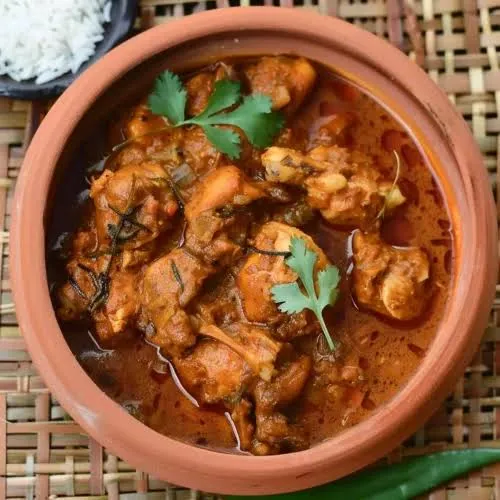
Once the chicken is all enveloped in the masala, add about one cup of hot water, just enough to make a gravy. You don't want to water it down too much because you can always add more, but you can't take it away, so just enough to make a good consistency. Now bring it to a gentle boil and reduce the flame to low and let it simmer for twenty to twenty five minutes, covered with the lid slightly ajar, and occasionally stirring, till the chicken is tender and the gravy is thick enough to stick to the back of a spoon. If it looks too runny, simmer it uncovered for a few minutes and if it seems too thick, toss in a bit of hot water to loosen it up. Now comes the finishing touches that give a restaurant feel to your dish. Crush a teaspoon of kasuri methi in your palms and toss it in, along with half a teaspoon of garam masala, and a good handful of freshly chopped coriander and stir it in. Some lemon juice at the end will brighten up the flavors, and if you like a richer and creamier curry, a spoonful of fresh cream or cashews turned into a paste also works wonders, but it is not mandatory.
Now comes the most difficult part, to let it rest. Turn off the stove and let it be, covered, for about ten minutes, before you serve, and trust me, it makes all the difference. It should be hot enough by now, and served with some steamed basmati rice, fresh rotis or naan or just paratha for the hungrier ones, with some sliced onions and a lemon wedge on the side. If you have leftovers, which is highly unlikely as the next day curry tastes even better, as all the spices had time to integrate well, it is always a good idea to reheat before you serve again. Some easy tips on the go, and you will find your own ways of tweaking this recipe. Use bone-in chicken every time and don't rush the onions, and always taste for salt at then end, instead of guessing. Your first attempt won't be the best, and that is normal, but each time you will know what to adjust, and before you know it, you'll be playing with the spices to make it your own, with the desired consistency and flavor that a packet masala cannot provide.