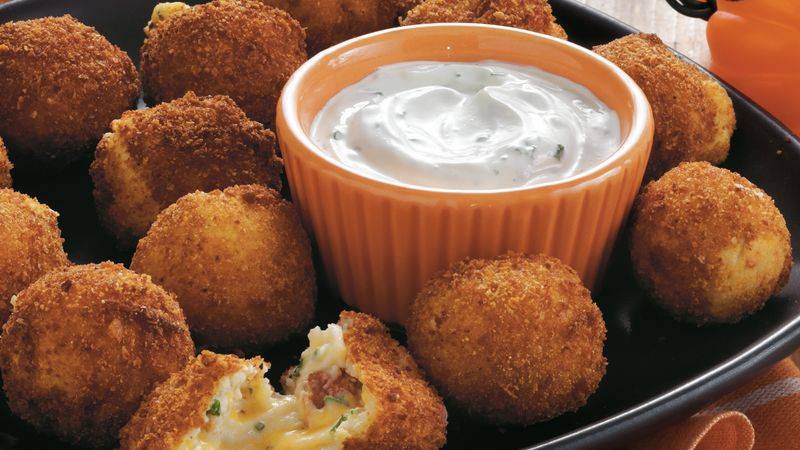
Nothing kills the mood quite like biting into what should be a crispy, oozing cheese ball and getting a soft mush instead, cheese barely melted, shell gone soggy within minutes of leaving the fryer. The good news is that the difference between a sad potato ball and a genuinely great one comes down to a handful of small changes in the preparation rather than any real skill.

What You'll Be Working With
Starchy, floury potatoes hold their shape far better once mashed than waxy varieties, which tend to turn gluey; look for the kind typically used for mashing or baking rather than salad potatoes
Mozzarella gives you that dramatic cheese pull, while cheddar or any firm, meltable cheese available locally leans sharper if that's more your thing
A spoonful of cornstarch, also sold as corn flour in some places,, mixed into the mash keeps things firm enough to shape without falling apart; potato starch or plain all-purpose flour works as a substitute if cornstarch isn't easy to find
Flour, egg, and breadcrumbs, applied strictly in that order, form the coating that actually crisps up properly
Putting It Together
Boil peeled, cubed potatoes until a fork slides through easily, somewhere around 10 to 15 minutes, then drain and let them cool a bit before handling
Mash until genuinely smooth, since any lumps left behind become weak points that crack open in the fryer later
Stir in salt, pepper, whatever seasoning you like, and that spoonful of cornstarch to tighten the texture
Take a small handful, flatten it out in your palm, and tuck a cube of cheese right into the center
Fold the edges up and over, sealing the cheese in completely, then roll it into a smooth ball
Dip it in flour, then egg, then breadcrumbs, pressing gently so the coating actually clings
Stick the coated balls in the freezer for 15 to 30 minutes before frying, which sounds unnecessary but makes a real difference in whether they hold together
The Part Where People Usually Mess Up
What Happens | Why |
|---|---|
Oil too hot | Cracks the shell before the inside even warms through |
Oil too cool | Everything turns greasy and heavy instead of crisp |
Moving them too soon | Tears the coating before it's had a chance to set |
Overcrowding the pan | Drops the oil temperature, leaving you with soggy, unevenly cooked balls |
Aim for oil sitting around 170-175°C (340-350°F), and give them two to four minutes without poking or flipping too early.
The Real Culprit Behind Leaking Cheese
If cheese keeps escaping into the oil mid-fry, do not fret; it's a thin spot or a tiny gap somewhere in the potato layer that you didn't quite seal. Take an extra ten seconds to check for gaps before coating, and skip the temptation to fry them the moment they're shaped instead of letting them rest in the freezer first.
If You'd Rather Skip the Fryer
Baking works too, and honestly holds up better than you'd expect. Line a tray, arrange the coated balls with a little space between them, and bake at 200°C (400°F) for 13 to 15 minutes until golden. The crunch is a touch more even and a little less shattery than deep frying, but the cheese still pulls exactly the way you want it to.
Eat the potato cheese balls the moment they come out, while the inside is still properly melted, with ketchup, some mayo if you enjoy it, or whatever dip you're in the mood for.