Building from the back is a tactical approach in which a football team starts its attacks close to its own goal, rather than immediately playing long toward the forwards. The best football bets are always present at the 1x betting platform, where you are also invited to join.
There are 4 players that work together in this:
the goalkeeper;
the center-backs;
the full-backs;
and the midfielders.
They basically want to achieve 2 things: move the ball through the opposition’s pressure and create space further up the pitch.
The goalkeeper often plays a crucial role. What can also be crucial is the 1x Bet platform, which you can also use for betting on great goalkeepers too.
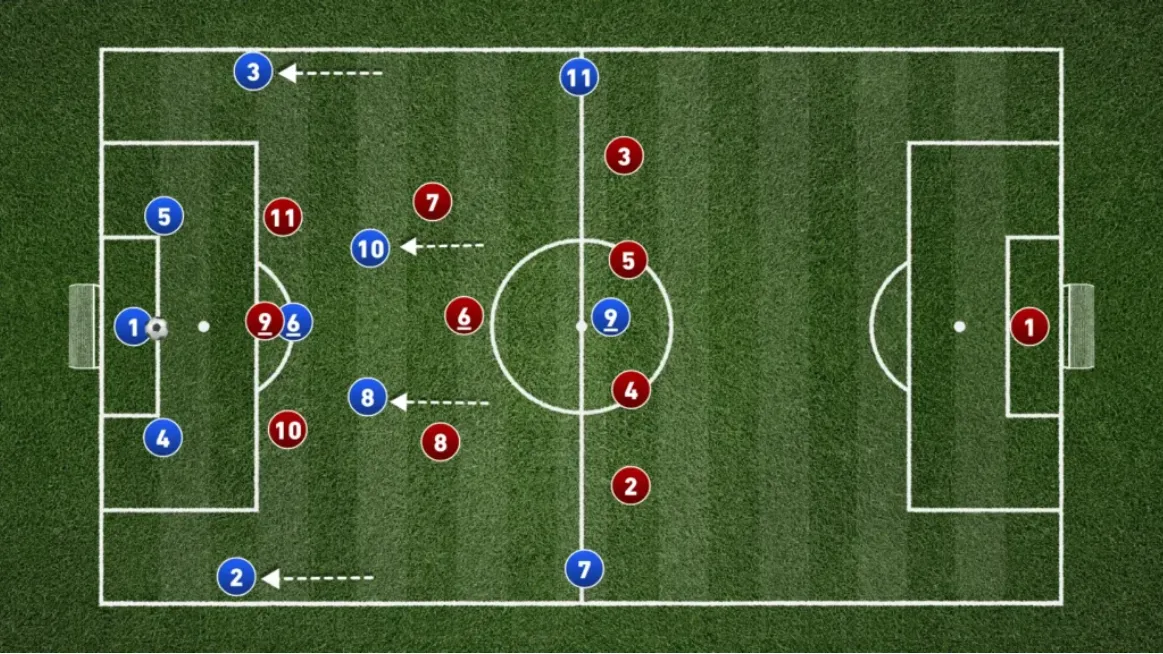
Instead of simply kicking the ball long, the goalkeeper can become an extra passing option, allowing the defenders to create numerical advantages. For example, the center-backs may move wider while a midfielder drops deeper to receive the ball. This achieves 2 goals: give the goalkeeper several possible passes and encourage opponents to press forward, creating space behind them.
Necessary abilities
Center-backs need 2 things: be comfortable receiving and passing under pressure. They may choose one of 3 options: exchange passes with the goalkeeper, find a full-back, or play directly into midfield. They can also carry the ball forward when there is space.
Full-backs also contribute significantly to this kind of tactic. They can stay wide to stretch the opposition, move forward to provide an attacking option, or come inside to support midfield. Their positioning can create passing lanes and make it harder for opponents to cover every player.
Midfielders provide the connection between defence and attack. They may drop toward the defenders to offer a safe passing option, rotate positions or receive the ball between opposition lines. Teams often use short passing combinations and movement to draw opponents toward one area before exploiting the space they leave elsewhere.
However, building from the back involves risks. A misplaced pass near the team's own goal can give the opposition an immediate scoring opportunity. Consequently, teams must recognise when to play short and when to use a longer pass. So, in general terms, it should be said that building from the back is not simply about making short passes. It is about using 3 elements: positioning, movement and patience. This is done in order to attract pressure, create space and progress the ball with control.