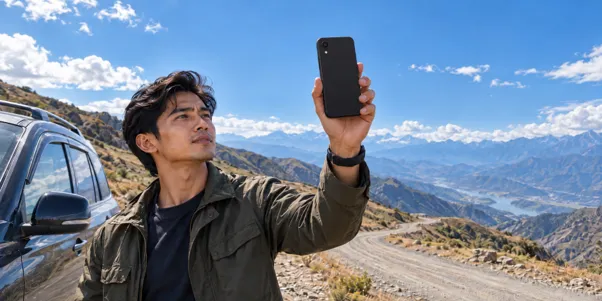
A phone loses its signal on a remote road. A text may still get through. That small change sits at the heart of MWC26 Doha’s Satellite & NTN Summit on November 8. Satellite-to-phone links now support more than emergency contact, though the experience depends on the device. Some satellite services support selected mapping apps. Others are limited to messaging. Ordinary mobile data still matters for large files. Before a remote drive, travellers often save offline routes in Google Maps, download podcasts from Spotify, or download 1x bet betting app while Wi-Fi is available. Saved maps and audio files can remain accessible even after mobile coverage disappears.
A Summit Focused on Coverage Gaps
The GSMA session is scheduled for 13:30–15:30. Its agenda examines commercial direct-to-device service, known as D2D. It also looks at how satellites work alongside 4G and 5G towers. The immediate question is less about replacing mobile networks than reaching people beyond them.
The GSMA estimates that 500–600 million people are outside mobile coverage. Another 300 million are near its edge. Those are estimates of connectivity gaps, not satellite subscriptions.
There are physical limits too. A ridge can obstruct the sky. So can thick trees. A user might need to move into open ground before the phone finds a satellite.
Texting Works Before Full Internet Does
Apple’s Messages via satellite works on supported iPhone 14 models and later in selected regions. It requires suitable software and an active SIM. The handset needs a clear view of the sky. Delivery can take longer than a standard text. Apple’s service does not send ordinary photo or video attachments. On an iPhone, iMessage must be enabled while normal coverage is still available. Satellite SMS may also depend on the network provider. These settings deserve an early check.
Android 15 brought system support for non-terrestrial networks, shortened to NTN. Manufacturers can use it for satellite functions. But Android 15 alone guarantees nothing. The modem must be compatible. The carrier must offer the relevant service.
A phone displaying satellite connectivity may therefore support one task but not another. Sending coordinates is not proof that a map will refresh.
Some Maps Already Work Over Satellite
T-Mobile added support for selected apps to T-Satellite in October 2025. Google Maps was on the list. So was AllTrails. WhatsApp received support for voice and video calls on compatible devices.
AllTrails says eligible users can navigate trails over T-Satellite. Trail searches work over T-Satellite, but map downloads do not. Three-dimensional trail previews also remain unavailable through that connection.
This is limited app access, not ordinary broadband. Features may be reduced when bandwidth is tight. The same app may behave differently on a cellular connection.
An offline map remains useful for a mountain route. Once downloaded, it opens even if satellite reception fails. Live traffic needs a connection. An unsupported app may not load at all.
Installation files are another matter. For Android users planning to download 1xbet apk file, ordinary mobile data or trusted Wi-Fi remains the more reliable option before leaving coverage. Satellite compatibility for a mapping app says nothing about unrestricted file transfers.
Four Checks Before a Remote Trip
The important detail is the exact service, not the satellite icon. Check these before setting off:
Phone model and installed software
Carrier’s satellite service availability
Coverage along the intended route
Specific functions supported away from towers
Two phones with similar names may have different hardware. A carrier might enable messages before offering any app data. Coverage maps also deserve attention: a service available in one region may be missing in the next.
What a Satellite Connection Can Handle
Task | Current capability | Common limitation |
|---|---|---|
Emergency messages | Supported on selected phones | Open view of sky |
Ordinary texts | Available in certain regions | Slower delivery |
Location sharing | Offered by some services | Device compatibility |
Navigation | Selected mapping apps | Partial functionality |
App-based calls | Supported on certain services | Varying performance |
Large downloads | Not generally assured | Regular data preferred |
A short message consumes little data. A detailed map asks for more. Even where a satellite link can open an app, it may fail at a task that feels routine on 4G.
The Change That Matters on the Road
The Doha summit will examine how many more phones can use these connections. Current services have already narrowed the gap between having no signal and having no way to reach anyone. Still, satellite support is uneven. Device specifications matter as much as network coverage. A location message can make a remote journey easier to manage after an unexpected breakdown. It cannot yet promise everything a cellular connection provides.