
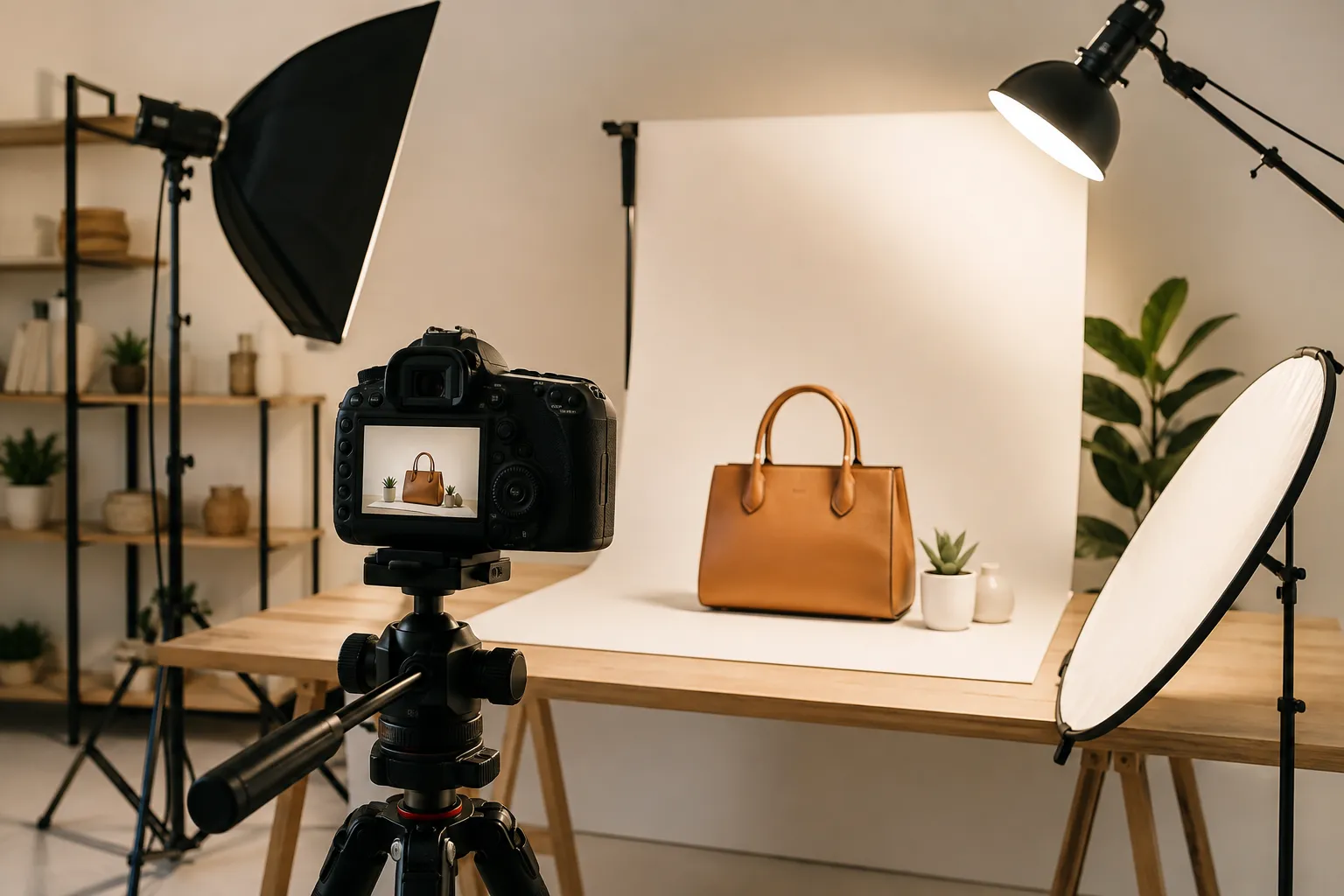
A product photography course teaches you how to create professional, visually appealing images that accurately represent products and encourage customers to buy. You can learn practical skills such as camera handling, lighting, composition, styling, product arrangement, and photo editing. Most courses also explain how to photograph different products for e-commerce websites, catalogs, social media, advertisements, and brand campaigns. You may also develop skills in using studio equipment, choosing suitable backgrounds, controlling reflections, and maintaining consistent image quality. By the end of the course, you should be better prepared to produce commercial-quality product photographs that meet professional and marketplace requirements.
Key Abilities You Can Develop
A well-structured course combines photography fundamentals with practical commercial techniques. The following abilities are particularly useful for anyone interested in e-commerce or professional product photography.
Ability | What You Learn |
|---|---|
Camera Skills | Manual exposure, aperture, shutter speed, ISO, focus, and lens selection |
Lighting Techniques | Using natural and artificial light, softboxes, reflectors, and diffusers |
Product Composition | Positioning products, choosing angles, framing, and creating visual balance |
Product Styling | Arranging products, props, colors, and backgrounds to create an appealing presentation |
Studio Setup | Setting up a basic product photography studio and selecting suitable equipment |
Photo Editing | Retouching, background removal, color correction, cropping, and image enhancement |
E-commerce Photography | Creating clean, consistent images suitable for online stores and marketplaces |
Creative Photography | Developing concepts for advertising, lifestyle shots, social media, and brand campaigns |
Understanding Camera and Exposure
One of the first abilities you are likely to develop is camera control. Instead of depending entirely on automatic settings, you learn how aperture, shutter speed, and ISO affect the final photograph.
You can also learn how to select lenses, control depth of field, achieve sharp focus, and maintain accurate exposure. These fundamentals are important because different products require different photographic approaches.
Lighting and Reflection Control
Lighting is one of the most important aspects of commercial product photography. A course can teach you how to position continuous lights, strobes, softboxes, reflectors, and diffusers to control shadows and highlights.
Special attention may be given to reflective products such as glass, metal, jewelry, and glossy packaging. Learning how to control unwanted reflections can significantly improve the professional appearance of product images.
Composition and Product Styling
A product photography course can also improve your ability to arrange products effectively. You learn about camera angles, framing, negative space, symmetry, proportions, and visual hierarchy.
Product styling is particularly valuable for lifestyle and advertising photography. You may learn how to select backgrounds and props that support the product without distracting attention from it.
Editing and Retouching
Photography does not always end when the shutter is pressed. Courses commonly introduce photo editing and retouching workflows that can include exposure adjustments, color correction, sharpening, cropping, background cleanup, and removing minor imperfections.
These skills are especially useful for e-commerce because online stores often require consistent image dimensions, backgrounds, colors, and presentation across an entire product catalog.
E-Commerce and Commercial Photography
Another important ability is understanding how photographs are used commercially. You can learn how to create images for product pages, online marketplaces, catalogs, social media, digital advertisements, and promotional campaigns.
You may also learn the importance of consistency. When photographing multiple products, maintaining similar lighting, camera angles, backgrounds, and image quality helps create a professional and recognizable brand presentation.
Conclusion
A product photography course can develop much more than basic camera skills. It can teach you lighting, composition, styling, studio setup, camera control, editing, retouching, and e-commerce photography techniques. These abilities can help beginners build a strong foundation and help existing photographers improve their commercial work. The most valuable courses combine technical instruction with practical assignments so learners can develop a portfolio and apply their skills to real products.
FAQs
1. What is the main skill learned in a product photography course?
The main skill is learning how to create clear, attractive, and commercially effective photographs of products using proper camera settings, lighting, composition, styling, and editing.
2. Do I need a professional camera to learn product photography?
Not necessarily. A professional camera can provide greater control and image quality, but beginners can learn many fundamental techniques using an entry-level camera or even a capable smartphone.
3. Does a product photography course teach photo editing?
Yes, many courses include basic or advanced photo editing and retouching, such as color correction, background removal, cropping, sharpening, and improving product appearance.
4. Can product photography skills be used for e-commerce?
Yes. These skills are directly applicable to e-commerce product images, online stores, marketplaces, catalogs, social media, and digital advertising, where high-quality product visuals are important for presenting products effectively.
Also read : Which Is Better for Photography: Print or Digital?