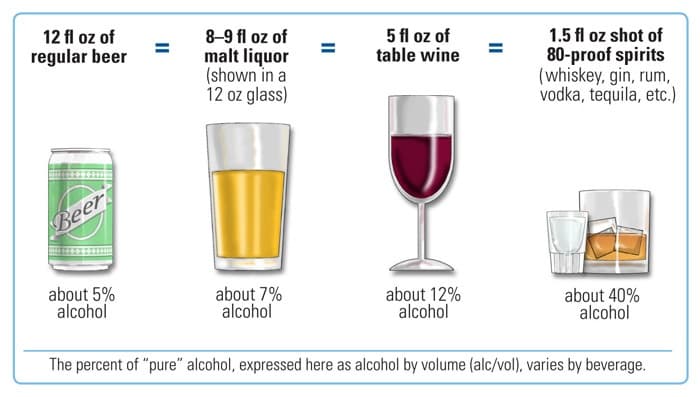
Whiskey, vodka, wine, and beer contain different amounts of alcohol, measured as Alcohol by Volume (ABV). Beer typically contains 4–6% ABV, wine averages 11–15% ABV, while whiskey and vodka usually contain around 40% ABV.
| Drink | Typical Alcohol Percentage (ABV) |
|---|---|
| Beer | 4–6% |
| Wine | 11–15% |
| Whiskey | 40–50% |
| Vodka | 40% (some varieties 45–50%) |
Alcohol content is measured using
Alcohol by Volume (ABV), which indicates the percentage of pure alcohol in a beverage. The higher the ABV, the stronger the drink.
Beer generally has the lowest alcohol content among these beverages. Most lagers, pilsners, and ales fall within the 4–6% ABV range, although craft beers and specialty brews can sometimes exceed 8–12% ABV.
Wine contains more alcohol because grapes naturally contain more sugar, which converts into alcohol during fermentation. Most red, white, and rosé wines contain between 11% and 15% ABV. Fortified wines, such as Port, can reach 18–22% ABV.
Whiskey is a distilled spirit, making it much stronger than beer or wine. Most Scotch whisky, bourbon, Irish whiskey, and rye whiskey are bottled at 40–50% ABV, while cask-strength versions may contain more than 55% alcohol.
Vodka is another distilled spirit commonly bottled at 40% ABV. Some premium or overproof vodkas contain 45–50% alcohol or higher. Despite its relatively neutral flavor, vodka has a similar alcohol strength to whiskey.
It's also important to remember that serving sizes differ. A standard serving is usually 12 ounces (355 ml) of beer at 5% ABV, 5 ounces (150 ml) of wine at 12% ABV, or 1.5 ounces (44 ml) of whiskey or vodka at 40% ABV. These servings contain roughly the same amount of pure alcohol.
In short, beer typically contains 4–6% ABV, wine averages 11–15% ABV, and whiskey and vodka generally contain around 40% ABV, making spirits considerably stronger than beer and wine.
Also read : Benefits of Drinking Red Wine?