
Current Topics

What are the Famous Modules in an ERP Sy...

image

| Updated on December 4, 2025 | news-current-topics

What are the Famous Modules in an ERP System?

3 Answers
1,036 views
G

@gaathaanand8548 | Posted on April 22, 2022

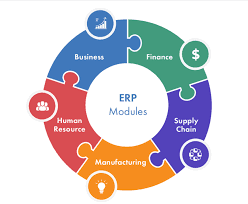
ERP is a centralised programme that helps organisations manage business activities across departments and functions. By sifting through the data offered by ERP, we can make all of the critical decisions. Required components are merged and a customised ERP system is built based on the demands of the firm. The following are some of the most well-known modules of an ERP system:

  • Human Resource.
  • Purchase.
  • Customer Relationship Management(CRM)
  • Sales & Marketing.
  • Supply Chain Management (SCM)
  • Engineering/ Production.
  • Finance & Accounting.
  • Inventory.

Loading image...

0 Comments
P

@prachilhs2339 | Posted on December 24, 2024

ERP software has some core modules which are crucial for ERP systems to manage business. 


1. Finance & Account

This module handles all financial activities within a business. It ensures accurate tracking of income, expenses, and budgets while providing real-time financial reports. Key functions include:

  • Accounts Payable/Receivable: Manages invoices, payments, and collections.
  • General Ledger: Records all financial transactions systematically.
  • Budgeting & Forecasting: Helps plan and allocate resources effectively.
  • Tax Compliance: Automates tax calculations and reporting to comply with regulations.
  • Profitability Analysis: Assesses financial performance across departments or products.


2. Material Management

Material management ensures efficient handling of raw materials, components, and finished goods. It includes:

  • Inventory Management: Tracks stock levels and prevents shortages or excess.
  • Procurement: Streamlines purchasing of raw materials, and negotiating with suppliers.
  • Stock Movement: Manages incoming and outgoing material for production or sales.
  • Warehouse Management: Optimizes storage and retrieval of materials.
  • Demand Planning: Forecasts material requirements based on production and sales.


3. Sales, Marketing & Dispatch

This module focuses on customer engagement and delivering products. Key features:

  • Sales Management: Tracks orders, quotations, and contracts.
  • Customer Relationship Management (CRM): Manages customer data and interactions to improve satisfaction.
  • Marketing Campaigns: Plans and tracks marketing activities for better outreach.
  • Dispatch & Delivery: Ensures timely and accurate shipping of products.
  • Pricing & Discounts: Manages price lists, offers, and promotions.


4. Production Planning

This module ensures efficient production to meet demand. Its functions include:

  • Production Scheduling: Plans when and how production will occur.
  • Resource Allocation: Assigns machinery, labor, and materials for optimal use.
  • Bill of Materials (BOM): Lists all components needed for production.
  • Capacity Planning: Ensures sufficient resources to meet production goals.
  • Work Order Management: Tracks progress and completion of production tasks.


5. Quality Management

Quality management ensures products meet required standards. Key activities include:

  • Inspection & Testing: Checks raw materials, in-process goods, and finished products.
  • Defect Tracking: Identifies and resolves quality issues quickly.
  • Compliance Management: Ensures adherence to industry and regulatory standards.
  • Continuous Improvement: Tracks metrics to improve quality processes over time.
  • Certification & Documentation: Maintains records for audits and certifications.


6. Logistics & Movement

This module manages the movement of goods within and outside the organization. Key functionalities:

  • Inbound Logistics: Tracks material delivery from suppliers.
  • Outbound Logistics: Manages transportation of finished products to customers.
  • Fleet Management: Optimizes use of vehicles for transportation.
  • Route Planning: Ensures timely and cost-efficient delivery.
  • Tracking & Monitoring: Provides real-time updates on goods in transit.


0 Comments
A

@annettehermann8611 | Posted on December 4, 2025

An ERP (Enterprise Resource Planning) system is built to integrate all major business functions into one unified platform. Some of the most famous and widely used ERP modules include:

1. Finance & Accounting

Manages budgets, payments, invoices, reporting, and financial compliance. This module helps organisations maintain financial accuracy and transparency.

2. Sales & CRM

Handles sales orders, quotations, customer communication, and lead management. 

3. Inventory & Warehouse Management

Tracks stock levels, warehouse locations, product movement, and reordering. Helps businesses avoid stockouts or overstock situations.

4. Human Resources (HRM)

Includes employee records, payroll, attendance, recruitment, and performance tracking. It streamlines workforce management in growing companies.

5. Procurement (Purchase Management)

Automates purchase orders, vendor management, pricing, and approvals to ensure efficient supply chain operations.

6. Manufacturing (MRP)

Supports production planning, scheduling, bill of materials, and quality control. 

7. Project Management

Tracks project tasks, deadlines, budgets, and resources. Ideal for service-based companies managing multiple projects.

8. Customer Support / Helpdesk

Manages customer tickets, service requests, and after-sales support to improve customer satisfaction.

9. Reporting & Analytics

Provides detailed dashboards and BI insights to support better decision-making across departments.
0 Comments