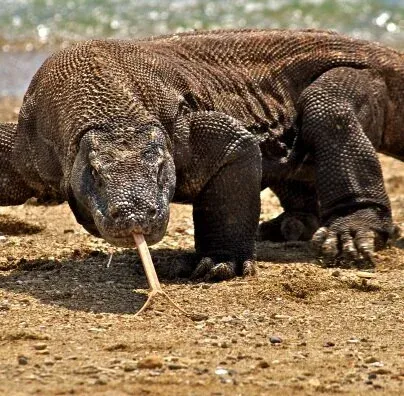
When a Komodo dragon locks onto its target, the situation becomes extremely dangerous for the prey. These giant reptiles are not just powerful hunters; they are patient, intelligent ambush predators with incredible senses.
A Komodo dragon first detects prey using its forked tongue and highly developed scent-tracking ability. It can smell carrion or animals from several kilometers away under favorable conditions.
Once it identifies a target, the dragon often begins stalking quietly. It may remain hidden for long periods, waiting for the perfect opportunity to attack. Unlike many animals that rely purely on speed, Komodo dragons combine stealth, patience, and sudden aggression.
When the moment comes, the attack is surprisingly fast. Despite their massive size, Komodo dragons can sprint at speeds of up to around 20 km/h (12 mph) in short bursts. They usually aim for:
-
The throat
-
The underside
-
The legs
of the prey.
Their bite is particularly deadly. Modern research shows that Komodo dragons possess venom containing toxins that can:
Older theories suggested dangerous bacteria were the main weapon, but scientists now believe venom plays a much larger role.
What makes them even more terrifying is that they do not always give up after the first attack. If prey escapes, the dragon can continue tracking it using scent trails. Their tongue constantly samples the air, helping them follow injured animals over long distances.
However, contrary to popular myths, Komodo dragons usually try to kill prey directly rather than waiting days for infection to finish the job. Studies and observations show they often bring down deer, pigs, and other animals within minutes during successful hunts.
Once the prey is weakened or killed, the feeding process begins. Komodo dragons can tear apart large animals with powerful jaws and swallow surprisingly huge chunks of meat. Smaller prey may even be swallowed whole.
According to me, what makes a Komodo dragon so frightening is not just its size or bite but the combination of patience, venom, speed, tracking ability, and relentless hunting behavior. Once it fully locks onto a target, escaping becomes extremely difficult.
Must Read: What are bearded dragon and What is bearded dragon lifespan?