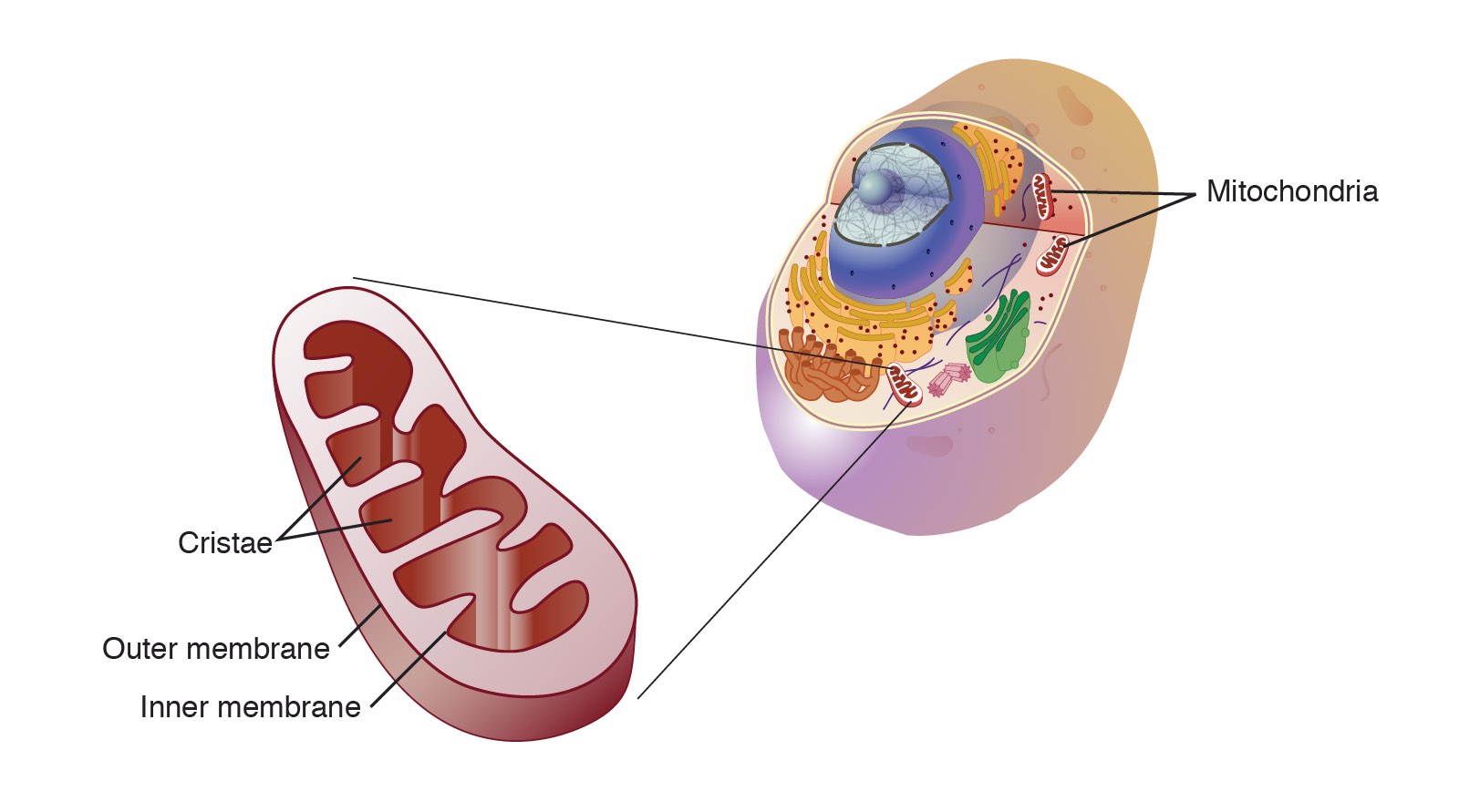
A mitochondrion is a specialized, membrane-bound organelle found in most eukaryotic cells. It is often called the “powerhouse of the cell” because it helps produce much of the cell’s usable energy in the form of ATP (adenosine triphosphate).

The plural of mitochondrion is mitochondria. They are especially important in cells that need a lot of energy, such as muscle and nerve cells.
What Is the Function of a Mitochondrion?
Mitochondria perform several important functions in cells.
1. Produces ATP
One of the main functions of mitochondria is helping cells produce ATP through cellular respiration. ATP provides usable energy for processes such as muscle contraction, active transport, growth, and the production of important molecules.
2. Helps With Cellular Respiration
Mitochondria are involved in important stages of aerobic cellular respiration, the process cells use to obtain energy from nutrients in the presence of oxygen.
The citric acid cycle takes place in the mitochondrial matrix, while oxidative phosphorylation occurs mainly across the inner mitochondrial membrane.
3. Supports Other Cell Processes
Mitochondria also have roles beyond energy production. They help regulate calcium levels inside cells and participate in programmed cell death, also known as apoptosis. They are also involved in the production and processing of some molecules needed by cells.
What Is the Structure of a Mitochondrion?
A mitochondrion has a distinctive structure with two membranes.
Part | Function |
|---|---|
Outer membrane | Forms the outer boundary of the mitochondrion |
Inner membrane | Contains proteins involved in energy production |
Cristae | Folds of the inner membrane that provide more surface area |
Matrix | Inner compartment containing enzymes, mitochondrial DNA, and ribosomes |
Mitochondrial DNA | Contains some genetic information used by the mitochondrion |
The folds of the inner membrane are called cristae. They increase the membrane's surface area, allowing more of the proteins involved in energy production to be present.
How Does a Mitochondrion Produce ATP?
During aerobic cellular respiration, nutrients such as glucose are broken down through several stages. Some early reactions occur outside the mitochondria, while the citric acid cycle and oxidative phosphorylation take place in the mitochondria.
During oxidative phosphorylation, electrons move through a series of protein complexes in the inner mitochondrial membrane. This movement helps create a proton gradient. The gradient provides the energy needed by an enzyme called ATP synthase to produce ATP.
A simplified representation is:
Food molecules + Oxygen → Carbon dioxide + Water + ATP
The process also releases some energy as heat.
Do All Cells Have Mitochondria?
No. Mitochondria are found in most eukaryotic cells, including cells from animals, plants, fungi, and many other organisms.
However, some specialized cells do not contain mitochondria. For example, mature mammalian red blood cells lose their mitochondria during development. This allows them to transport oxygen without using the oxygen they carry for their own aerobic respiration.
Why Are Mitochondria Important?
Mitochondria are important because cells need a continuous supply of ATP to perform many essential activities. Muscle contraction, active transport across cell membranes, and the synthesis of many cellular molecules all require energy.
Mitochondria are also unusual because they contain their own DNA and ribosomes. Scientists generally explain this feature through the endosymbiotic theory, which proposes that mitochondria originated from ancient bacteria that formed a long-term symbiotic relationship with ancestral eukaryotic cells.
Conclusion
A mitochondrion is an energy-related organelle found in most eukaryotic cells. Its major role is to help produce ATP through cellular respiration, but mitochondria also contribute to calcium regulation, programmed cell death, and other cellular processes. Their unique structure, DNA, and role in energy production make them one of the most important organelles in eukaryotic cells.
Also Read: What is the source of photosynthesis?