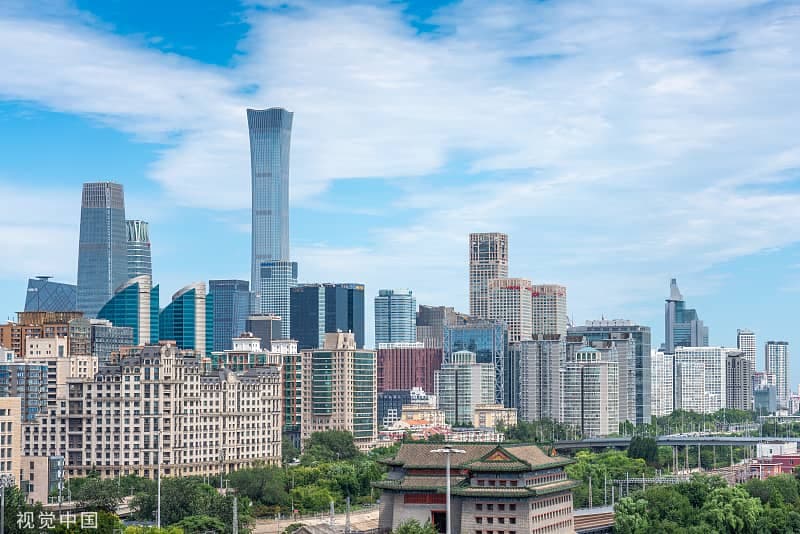
The capital of China is Beijing. Beijing, otherwise called Peking, isn't just the political and regulatory focus of the nation; it is also a city with a rich history, social legacy, and financial importance. We should dive into the different viewpoints that make Beijing the capital of the Individuals' Republic of China.
Verifiable Importance:
Beijing has a set of experiences that span more than three centuries, making it quite possibly the most established city on the planet. It filled in as the capital for a few lines, including the Yuan, Ming, and Qing traditions. The city's verifiable significance is clear in its building wonders, antiquated castles, and notable tourist spots.
Political and Regulatory Center:
In 1949, following the foundation of the Individuals' Republic of China, the public authority led by the Socialist Coalition of China assigned Beijing as the capital. The choice to make Beijing the capital depended on its authentic importance as well as on its focal area inside the country.
Beijing is home to the political and authoritative organizations that administer China. The representative heart of the Chinese government is Tiananmen Square, an extensive public square that has seen key verifiable occasions. The Incomparable Corridor of Individuals and the Public Exhibition Hall of China are unmistakable designs on the square, accentuating Beijing's job as the political focus.
Social and Instructive Center:
Beijing is a center of culture, instruction, and workmanship. The city is home to various galleries, theaters, and social organizations. The Castle Gallery, otherwise called the Illegal City, is a UNESCO World Heritage Site that houses a huge assortment of magnificent curiosities. Beijing is likewise known for its conventional patio homes, known as hutongs, which offer a brief look into the city's engineering history.
The city has a few renowned colleges, including Peking College and Tsinghua College, adding to its standing as an instructive focus. Understudies from across China and the world come to Beijing to seek advanced education and add to the city's lively scholarly environment.
Monetary Significance:
Notwithstanding its verifiable and social importance, Beijing assumes an essential role in China's cutting-edge economy. The city has a significant monetary and business focus, serving as the base camp for various public and worldwide partnerships. As China has gone through a quick financial turn of events, Beijing has been at the very front of this change.
Worldwide Impact:
Beijing's impact stretches beyond China's boundaries. As the capital of the world's most crowded country, it assumes a critical role in global affairs. The city has facilitated major worldwide occasions, including the 2008 Summer Olympics, which exhibited China's modernization and advancement on the world stage.
Beijing, with its rich history, political significance, social legacy, financial importance, and worldwide impact, remains the capital of China. The city keeps on developing, mirroring the dynamism of China as a country at the junction of custom and innovation.

Also Read :- What is the capital of Japan?