
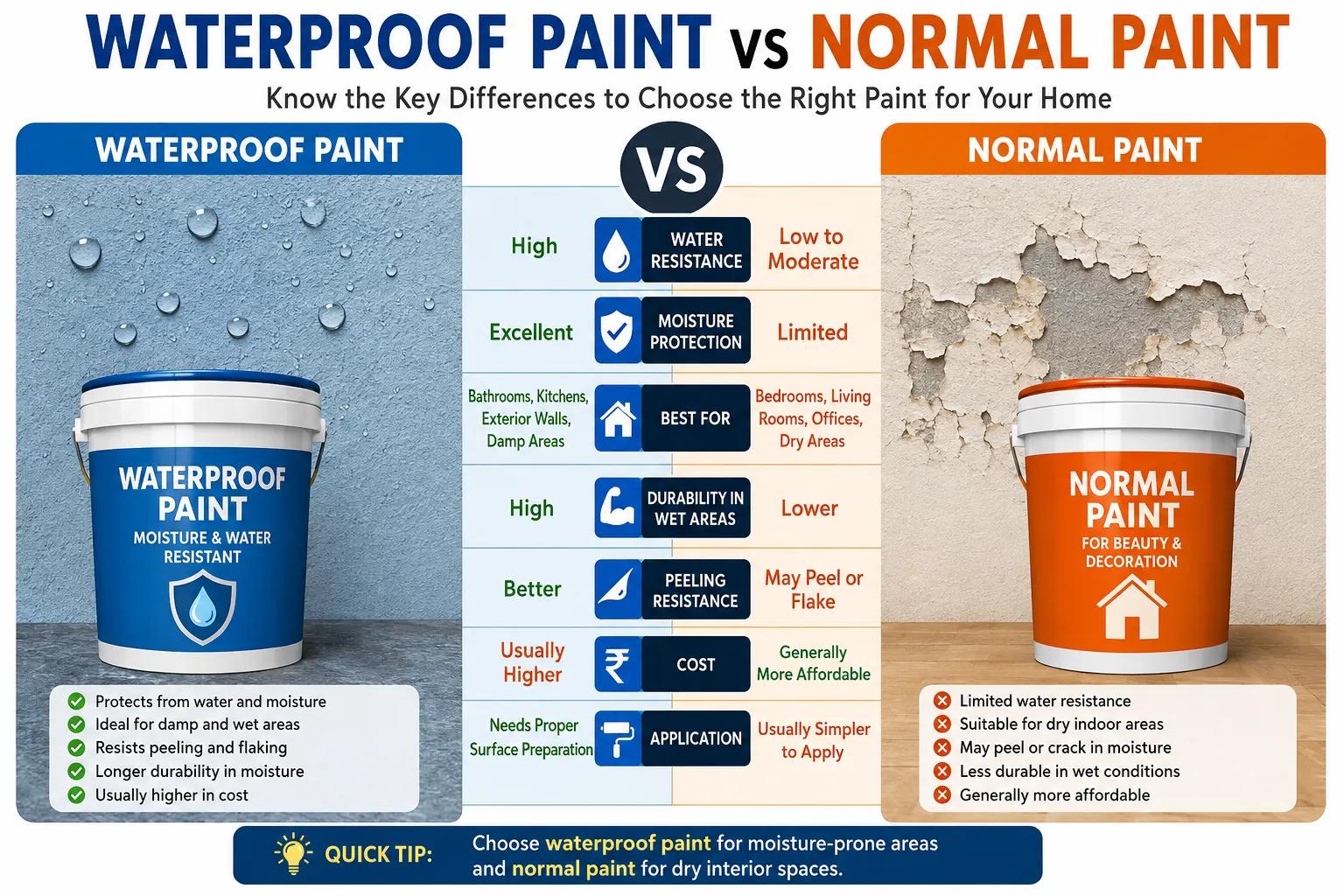
The main difference between waterproof paint and normal paint is their ability to resist moisture and water penetration. Waterproof paint is specially formulated to create a protective barrier that helps prevent water from entering walls and surfaces, while normal paint mainly provides color, coverage, and basic surface protection. Waterproof paint is generally more suitable for bathrooms, kitchens, exterior walls, basements, and other damp areas. Normal paint can work well in dry indoor spaces but may peel, crack, or develop stains when exposed to continuous moisture. The right choice depends on the surface, location, humidity level, and amount of water exposure.
Waterproof Paint vs Normal Paint
Feature | Waterproof Paint | Normal Paint |
|---|---|---|
Main purpose | Protects surfaces from water and moisture | Provides color, finish, and basic protection |
Water resistance | High | Low to moderate |
Moisture protection | Helps reduce water penetration | Offers limited moisture resistance |
Best for | Bathrooms, kitchens, exterior walls, damp areas | Bedrooms, living rooms, offices, and dry areas |
Durability in wet areas | Generally higher | May deteriorate with prolonged moisture |
Peeling resistance | Better when properly applied | Can peel in damp conditions |
Cost | Usually more expensive | Generally more affordable |
Application | Requires suitable surface preparation | Usually simpler to apply |
How Does Waterproof Paint Work?
Waterproof paint contains specialized resins, additives, or coatings that improve resistance to water and moisture. Once properly applied and cured, it forms a protective layer over the surface. However, waterproof paint cannot always solve serious structural problems such as leaking pipes, cracks, or rising damp. Those issues should be repaired before painting.
When Should You Choose Waterproof Paint?
Choose waterproof paint when a surface is regularly exposed to rain, humidity, condensation, splashes, or dampness. It can be particularly useful for exterior walls, bathrooms, kitchens, balconies, and other moisture-prone areas.
For a normal interior room with little moisture exposure, standard interior paint may be sufficient and more economical.
Conclusion
In simple terms, waterproof paint is designed for moisture protection, while normal paint is primarily designed for appearance and general surface protection. If water exposure is a major concern, waterproof paint is usually the better option, provided the underlying surface is properly prepared and any existing leaks or dampness are addressed.
FAQs
1. Is waterproof paint better than normal paint?
Waterproof paint is better for areas exposed to moisture or water. For dry rooms, normal interior paint may be sufficient.
2. Can normal paint be used in a bathroom?
It can be used in some bathroom areas, but moisture-resistant or waterproof paint is generally more suitable because bathrooms have high humidity and water exposure.
3. Does waterproof paint completely stop water leaks?
No. Waterproof paint can provide a moisture-resistant protective layer, but it cannot reliably fix structural leaks, plumbing problems, or major wall cracks.
4. Is waterproof paint more expensive than normal paint?
Usually, yes. Waterproof paints often cost more because they contain specialized ingredients designed to improve moisture and water resistance.
Also read : How much does interior painting cost?