
Tulasi, also known as holy basil, is a traditional Indian herb used for cultural, household, culinary, and wellness purposes. Its botanical name is Ocimum tenuiflorum. Tulasi leaves are commonly used in herbal drinks and traditional preparations. Modern research has also examined Tulasi for possible effects related to stress, antioxidant activity, and other aspects of health, although evidence for specific medical benefits is still developing.
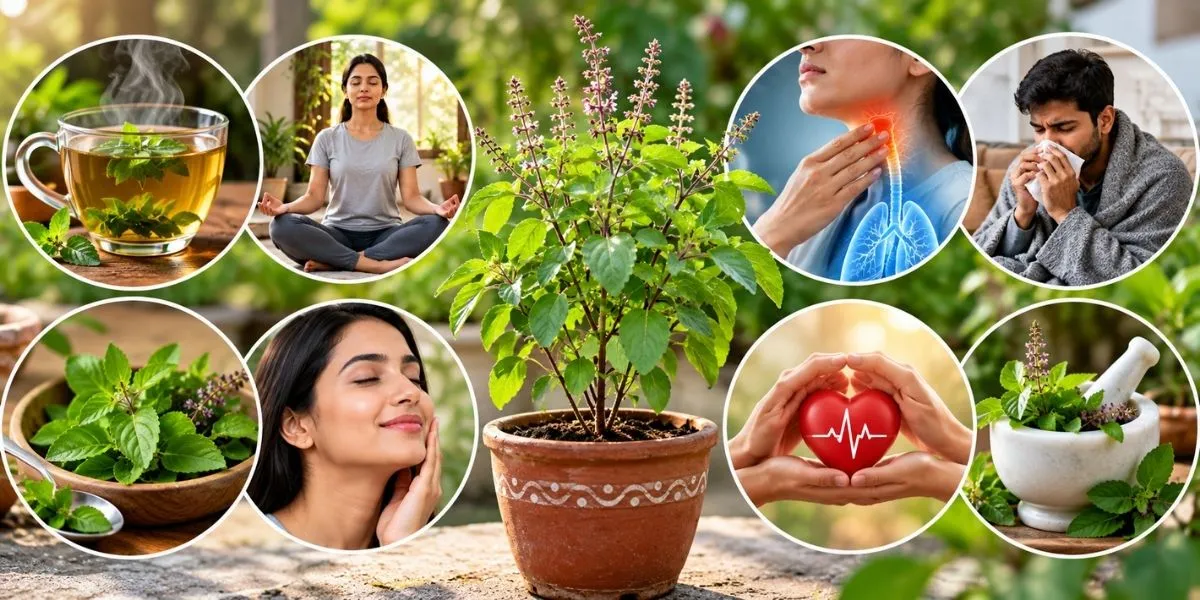
1. Traditional Health and Wellness
Tulasi has been used in Ayurveda and traditional Indian practices for centuries. Its leaves and other parts of the plant have been included in traditional preparations for general wellness and various common health concerns.
The Ministry of AYUSH includes Tulasi among medicinal plants used in traditional systems of medicine. Traditional use, however, should not automatically be considered proof that a herb can treat a particular disease.
2. Stress and Relaxation
One area of modern research is Tulasi's possible relationship with stress and psychological well-being.
Some human studies have reported improvements in certain measures of stress and subjective sleep quality after participants used standardized Tulasi preparations. However, these studies do not establish that Tulasi is a treatment for stress or sleep disorders, and further research is needed.
3. Antioxidant Activity
Tulasi contains naturally occurring plant compounds, including polyphenols and other phytochemicals. Laboratory research has investigated the antioxidant activity of some of these compounds.
Antioxidants are substances that can help protect cells from oxidative damage. However, laboratory findings do not automatically mean that consuming Tulasi will prevent or treat a specific disease in humans.
4. Traditional Respiratory Uses
Tulasi has traditionally been included in household preparations associated with respiratory and seasonal wellness.
However, traditional use is different from established medical treatment. Tulasi should not be considered a substitute for appropriate medical care when someone has a respiratory illness or other health condition.
5. Herbal Drinks and Food
Fresh Tulasi leaves are sometimes used in herbal teas and household drinks because of their distinctive aroma and flavour.
It is also commonly grown in home gardens and around homes in India. This makes Tulasi both a practical household plant and an important part of Indian cultural traditions.
6. Cultural and Religious Importance
Tulasi has a special place in many Indian traditions, particularly within Hindu households. The plant is often respected and cared for as part of religious and cultural practices.
Its importance therefore goes beyond its traditional wellness uses.
Is Tulasi Scientifically Proven?
Research into Tulasi is ongoing. Some human studies and scientific reviews have reported potentially useful effects in areas such as stress, metabolic health, and other physiological measures. However, the available evidence is not strong enough to consider Tulasi a proven treatment for a wide range of medical conditions.
More well-designed human studies are needed to understand its effectiveness, appropriate amounts, possible interactions, and long-term safety.
Tulasi Uses at a Glance
Use | What Tradition or Research Suggests |
|---|---|
Traditional wellness | Widely used in Ayurveda and traditional practices |
Stress support | Some human research shows potential |
Antioxidant activity | Investigated mainly through laboratory and scientific research |
Herbal drinks | Common household use |
Respiratory wellness | Traditional use in household preparations |
Cultural importance | Highly respected in many Indian traditions |
Safety and Important Note
Using Tulasi as a food or in ordinary herbal drinks is different from taking concentrated extracts or supplements. People considering concentrated Tulasi products, particularly those taking medicines or managing a health condition, should speak with a qualified healthcare professional.
Research into appropriate dosing, long-term use, and possible interactions is still developing.
Conclusion
Tulasi is a traditional Indian herb used for wellness, herbal drinks, household purposes, and cultural and religious practices. Scientific research has investigated its possible antioxidant and stress-related effects, but more high-quality human research is needed to establish specific medical benefits.
Also Read: Persistent Cough & Runny Nose?