Baking soda and baking powder are very similar. They are often confused. However, they are not interchangeable. Both are leaveners. This means that they produce carbon dioxide gas to help baked items to rise. The difference between the two is in how they produce the gas. Baking soda is a single ingredient that requires an acid to activate it, whereas baking powder is a pre-made mixture that already contains an acid. This is why most recipes will use one or the other, or both.
Baking soda (sodium bicarbonate) by itself is alkaline, meaning it is the opposite of an acid. It will do very little on its own. When it is combined with something acidic, it creates a rapid reaction causing bubbles. This is the same reaction that occurs when you pour vinegar onto baking soda in a school volcano. When used in a cake or cookie, the acid is usually present within the recipe. This can be things such as yoghurt, buttermilk, lemon juice, vinegar, honey, brown sugar, molasses, cocoa powder or ripe bananas. Therefore if a recipe contains a lot of curd or buttermilk, it will often require baking soda. It is also a lot stronger than baking powder (3-4x stronger). Therefore recipes will only include a small amount of baking soda (often ½ teaspoon).
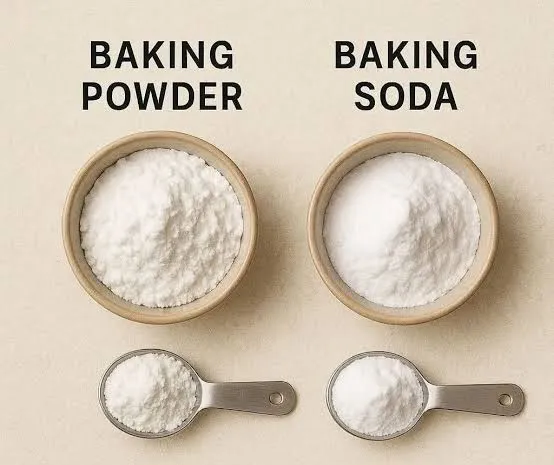
Soda requires a quick reaction so it is best to get your mixture into the oven fairly quickly. As soon as the wet ingredients are mixed with the acid, it will begin to react. If you leave the mixture to sit for an hour, the gas will escape and your baked item will be flat and dense. Another thing to note about baking soda, is that it increases the pH level of your mixture. This helps with browning, giving your cookies a deeper golden colour and a slight chewy texture. However, too much will cause a soapy and metallic taste and a very coarse texture.
Baking powder is a mixture of baking soda, one or more dry acids (such as cream of tartar or sodium aluminium sulphate) and a little cornflour/starch to keep it dry. As it already contains an acid, it will just require moisture and heat to react. This makes it great for recipes that do not contain much acid such as a plain sponge using normal milk. Most baking powders available today are double acting. This means that it will react twice. Once when it comes into contact with moisture and again when it comes into contact with heat in the oven. This means you can have a little more time to get your mixture into the oven, though still shouldn’t leave it to sit for an hour.
Recipes will often use one or the other, or both. Usually if there is a lot of acid in the recipe, baking soda will be required to neutralise the acid. Otherwise the baked item would taste quite sharp and acidic. If there is little or no acid in the recipe, baking powder will provide the acid. Many recipes will use both. For example, a batch of buttermilk pancakes may use baking soda to neutralise the buttermilk and baking powder for extra lift. As the baking soda would not provide enough lift. Chocolate cake often uses both as natural cocoa is acidic.
However, if you were to use baking powder instead of baking soda, you may not get enough lift or browning. As there will still be acidic ingredients in the recipe, your item will taste quite sharp and be quite dense. Whereas if you use baking soda instead of baking powder, and there is no acid in the recipe to react with, you won’t get much lift and will have a bitter soapy taste. Therefore the best option is to stick to the recipe. Especially if you are still learning.
However, there are some quick fixes if you run out of baking powder. If you have baking soda and an acid you can make a rough substitute. Mix ¼ tsp baking soda with ½ tsp cream of tartar for every tsp of baking powder you need. Alternatively you can mix ¼ tsp baking soda with ½ tsp lemon juice or vinegar. This will only work if the rest of your recipe can cope with the extra liquid and you can mix and bake quickly. However, if you are trying to substitute baking powder for baking soda, you will need about 3x as much baking powder. This can also affect the taste as there will be extra acid and starch. Therefore your item will not be exactly the same.
Many people fall into the trap of using old baking powder/soda. Both lose their potency over time. Baking powder will absorb moisture from the air and begin to react in your tin. If you are using old baking powder, your cakes may turn out flat. You may be wondering what you did wrong. A quick test would be to mix ½ tsp baking powder into some hot water. If it fizzes a lot, then it is good to go. To test your baking soda, add a splash of vinegar or lemon juice to a pinch of baking soda. It should fizz quite vigorously. Store your baking powder and baking soda in an airtight container in a cool dry place. Avoid storing near the steam from your stove. Replace your baking powder every 6-12 months.
Finally, these ingredients are not just used in baking! Baking soda is a gentle cleaning agent and deodoriser. It can be used to help soften pulses during cooking, tenderise meat and create crispier fried batters (such as pakoras). However, too much will affect the taste. In India, sometimes a pinch of baking soda is added to the dhokla or idli batter. However many mixes will use something called fruit salt. This is a mixture of baking soda and a dry acid. It acts the same as baking powder. Baking powder can also be found in batters and fritters to give a light and fluffy crust. You may have been using these ingredients for years!
To help you quickly remember, baking soda needs a partner and baking powder already has one. Baking soda needs an acid in your recipe. Baking powder already has an acid. If a recipe has a lot of acid, it will use baking soda. If it has little acid it will use baking powder. Often if they want a lot of lift they will use both. Once you get your head around this, you will no longer get confused. You will understand why a recipe has been created the way it has. If your bake turns out flat, soapy or strangely bitter, you now have a good idea where to look first.