Quick Answer
If you are wondering, "Which city is known as Red City?", the most globally recognized answer is Marrakesh, Morocco [2.1.1; 2.1.3]. Often referred to in Arabic as Al Hamra (The Red) or in French as Ville Rouge, Marrakesh earned this title due to the distinct salmon-red clay and sandstone used to build its ancient walls and historic Medina. While Marrakesh is the primary Red City, other destinations like Bologna, Italy ("La Rossa"), and Bikaner, India, share similar colorful monikers.
Introduction
The world is home to many vibrantly colored urban landscapes. From the striking blue alleyways of Chefchaouen to the gleaming white facades of Santorini, color often becomes a city's defining architectural signature. However, when travelers and geographers ask, Which city is known as Red City?, they are almost always referring to the bustling, sensory-rich epicenter of Morocco: Marrakesh.
Stepping into Marrakesh feels like walking into a living, breathing earthen fortress. The city radiates a warm, rosy-red glow that changes hues depending on the position of the North African sun. Let us delve into the history behind this iconic nickname, the materials that give the city its signature color, and other famous "red" destinations around the globe.
The Origins of Morocco's Ville Rouge
To understand why Marrakesh is so uniform in its color, we have to look back to its founding in the 11th century by the Almoravid dynasty. When the original city walls and the central Medina were constructed, builders utilized the most abundant resource available to them: the local earth.
The architects used a traditional building material known as tabia. This is a mixture of red mud, clay, and water sourced directly from the nearby Hazou plains. When this mixture bakes and hardens under the intense Moroccan sun, it solidifies into a robust, salmon-pink and rust-red sandstone [2.1.1; 2.1.2].
Centuries later, long after modern construction materials became available, city ordinances were passed requiring all new buildings in Marrakesh to be painted or finished in this exact shade of red. This legal mandate ensures that the city maintains its historic visual harmony, preventing modern steel-and-glass towers from disrupting the ancient aesthetic.
Other Famous "Red Cities" Around the World
While Marrakesh holds the definitive global title, the question of Which city is known as Red City? can sometimes yield different answers depending on the specific region or context. Here is a summary table of other cities famous for their red hues:
City Location | Nickname | Reason for the Moniker |
|---|---|---|
Marrakesh, Morocco | The Red City (Al Hamra) | Ancient walls and buildings constructed from red tabia mud/clay [2.1.3; 2.3.3]. |
Bologna, Italy | La Rossa (The Red One) | Famous for its sweeping terracotta rooftops and historic left-wing political leanings. |
Bikaner, India | The Red City of India | Renowned for magnificent forts and palaces built entirely from red sandstone. |
Petra, Jordan | The Rose-Red City | An ancient archaeological wonder carved directly into vibrant red desert sandstone cliffs. |
Top Things to Experience in Marrakesh
If you are planning a visit to the original Red City, you must immerse yourself in the architecture that earned it the name. Here are the top ways to experience the historic hue of Marrakesh:
Wander the Medina: Get lost in the ancient, walled historic district (a UNESCO World Heritage site). The narrow alleys are flanked by towering red clay walls that keep the interior remarkably cool.
Admire the Koutoubia Mosque: The city's largest mosque features a stunning 77-meter minaret built from the signature red stone. It is the architectural anchor of the city and beautifully reflects the golden hour sunlight.
Explore Jemaa el-Fnaa: This massive, chaotic central square is surrounded by red-hued cafes and markets. It comes alive at dusk with food stalls, storytellers, and musicians.
Contrast with the Majorelle Garden: To truly appreciate the red city, visit the Jardin Majorelle. This botanical garden features a striking, electric "Majorelle Blue" villa that perfectly contrasts the surrounding red architecture of the city.
Frequently Asked Questions (FAQs)
Is Jaipur considered the Red City?
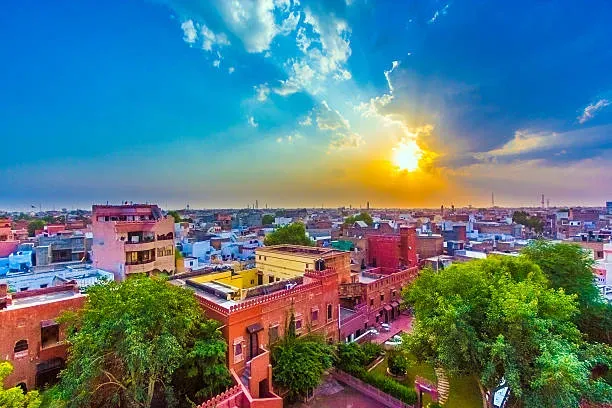
No, Jaipur (in Rajasthan, India) is globally famous as the "Pink City" because its buildings were painted a distinct terra-cotta pink to welcome the Prince of Wales in 1876. While sometimes confused with red, the official Red City of India is actually Bikaner, which features deep red sandstone architecture [1.1.1; 1.1.4].
Why is Bologna, Italy called "La Rossa"?
Bologna's nickname, La Rossa (The Red One), has a dual meaning. Architecturally, it refers to the stunning sea of red terracotta roof tiles and brick facades that dominate the historic center. Politically, it refers to the city's strong history as a bastion of left-wing, anti-fascist politics in Italy.
When is the best time to visit Marrakesh?
The best time to visit Marrakesh is during the shoulder seasons of spring (March to May) and autumn (September to November). During these months, the weather is warm and sunny, allowing you to comfortably explore the outdoor red-walled Medina without suffering through the extreme, scorching heat of the Moroccan summer.
Conclusion
Whether you are a geography student or a world traveler, knowing Which city is known as Red City? unlocks a fascinating architectural history. Marrakesh, Morocco, earned this beautiful title not through modern marketing, but through centuries of utilizing the very earth it stands on. From the ancient tabia walls of the Medina to the towering Koutoubia minaret, the Ville Rouge remains a masterclass in how a city's environment can shape its enduring global identity.