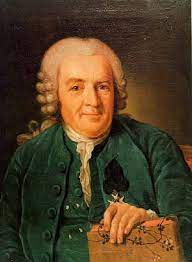
The Father of Taxonomy is generally recognized as Carl Linnaeus. He earned this title because he developed the modern system for naming and classifying living organisms.
In the 18th century, Linnaeus introduced the binomial nomenclature system, which gives every species a two-part scientific name consisting of its genus and species. For example, humans are scientifically known as Homo sapiens. Before his system was adopted, scientists often used long and inconsistent names, making it difficult to identify and compare organisms.
Linnaeus also proposed a hierarchical classification system that groups organisms into categories such as kingdom, class, order, genus, and species. Although taxonomy has evolved with advances in genetics and evolutionary biology, his classification principles remain the foundation of modern biological naming and organization.
In short, Carl Linnaeus is known as the Father of Taxonomy because he established the standardized system used worldwide to classify and name living organisms.
Also read : Who is known as the Father of Geography?

Tara Verma is a practising teacher and education content writer with over 10 years of classroom experience across primary and secondary levels. She holds a Master's degree in Education (M.Ed.) from Delhi University and a Bachelor of Education (B.Ed.) from Jamia Millia Islamia — qualifications that ground her writing in both pedagogical theory and the day-to-day realities of teaching in India. Her content covers exam preparation strategies, learning methodologies, curriculum guidance, student mental health, career counselling for students, and the evolving state of school and higher education in India. Her work has appeared on platforms including TeacherVision India, Jagran Josh, and Careers360, where she writes for students, parents, and fellow educators who need content built on actual teaching experience — not theory alone. Over a decade of working directly with students across age groups and learning levels has given Tara a practical understanding of how education content should be written — clearly, accessibly, and with genuine awareness of the challenges students and teachers face on the ground. She has taught 1,000+ students, contributed to school curriculum development initiatives, and published 250+ articles on education across digital platforms. She is an active member of the National Council of Teachers of English (NCTE) India. Across all her writing, every recommendation is classroom-tested, every insight comes from direct teaching experience, and every article is held to the same standard she applies in her own classroom — accuracy, clarity, and genuine usefulness for the reader.
_-_Nationalmuseum_-_15723.tif.jpg&w=1080&q=75)