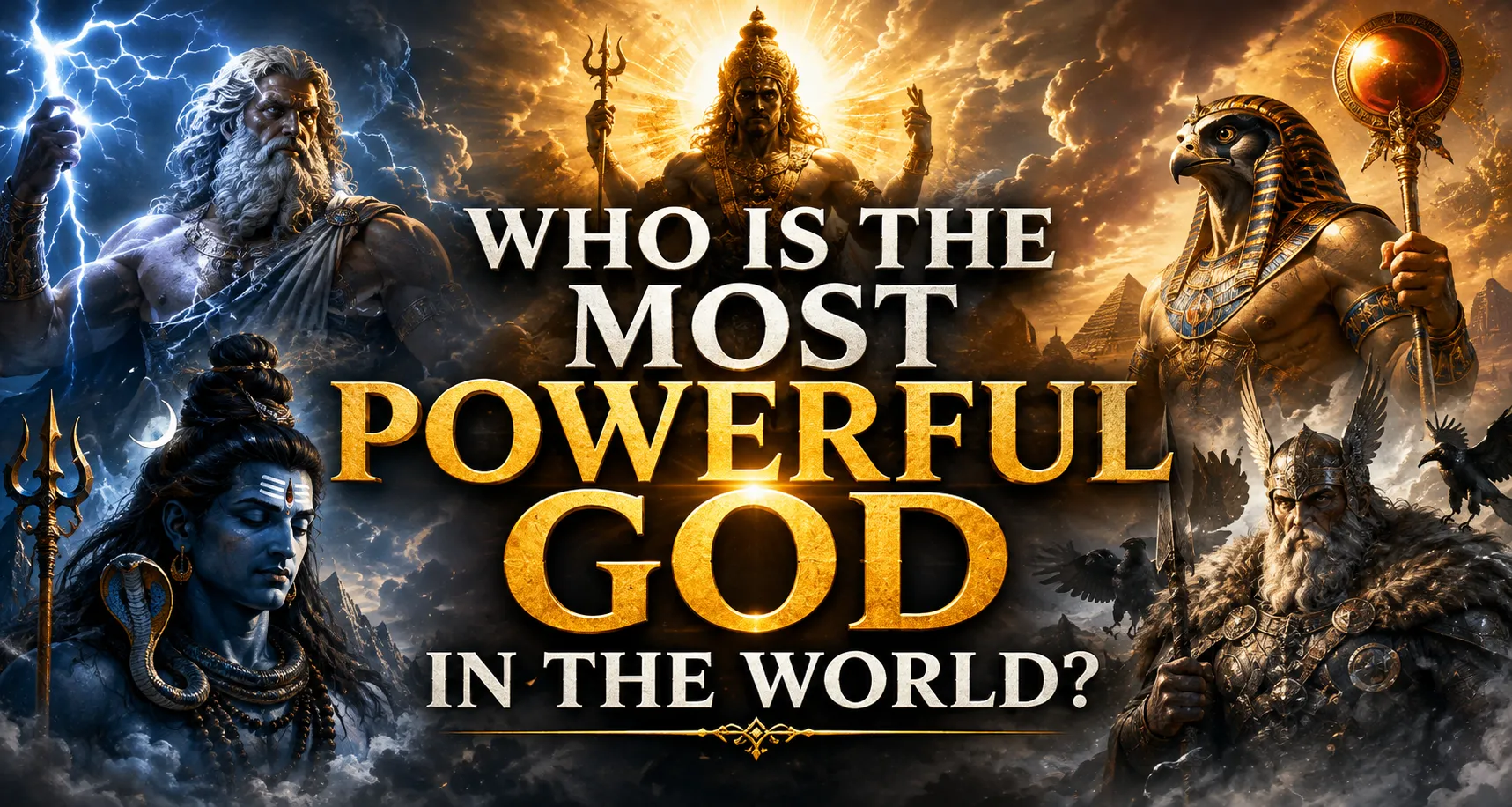
The question “Who is the most powerful God in the world?” has no single universally accepted answer because different religions and traditions have different beliefs about God, divine power, creation, and the universe.
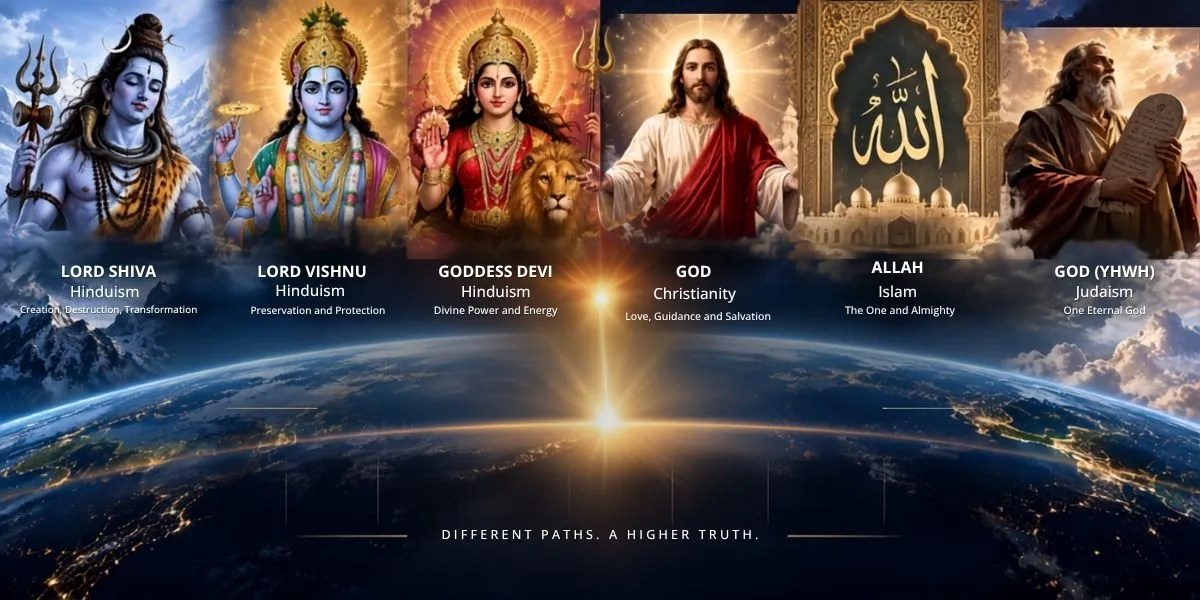
For followers of Christianity, Islam, and Judaism, God is understood as the one supreme and all-powerful creator. In Hinduism, the idea is more diverse, with traditions giving supreme importance to Shiva, Vishnu, Devi, Krishna, or Brahman. In other religious and mythological traditions, figures such as Zeus, Odin, and Ahura Mazda hold central positions.
Therefore, the answer to “who is the most powerful God in all religions?” depends on the religious tradition and how “power” is defined.
Is There One Most Powerful God in All Religions?
There is no neutral religious ranking that proves one God is more powerful than every other deity across all religions.
In monotheistic religions, the concept itself is different. Christianity teaches belief in one God, Judaism emphasizes the oneness of God, and Islam teaches that Allah is the one God and the ultimate authority. Monotheism generally understands God as the supreme and omnipotent creator rather than one deity competing against others.
Hinduism has a more complex theological landscape. Different traditions identify different forms of the divine as supreme. For example, Vaishnavism gives supreme status to Vishnu, Shaivism to Shiva, and Shaktism to Devi. Some Hindu philosophical traditions understand Brahman as the ultimate reality beyond individual forms.
Most Powerful Gods and Supreme Beings Across Major Traditions
Religion or tradition | Supreme or highly revered figure | Common association |
|---|---|---|
Christianity | God | Creator and Almighty |
Islam | Allah | One God and ultimate authority |
Judaism | God / YHWH | One supreme God |
Hinduism | Shiva, Vishnu, Devi, Brahman | Supreme reality varies by tradition |
Greek mythology | Zeus | King of the Olympian gods |
Norse mythology | Odin | Chief god associated with wisdom and kingship |
Zoroastrianism | Ahura Mazda | Supreme wise Lord |
This table should be understood as a comparison of religious beliefs, not a ranking of which faith's God is objectively stronger.
Who Is the Most Powerful God in Hinduism?
The answer is particularly interesting because Hinduism does not have one universally accepted supreme deity across all traditions.
Lord Shiva is regarded as supreme in Shaivism, while Lord Vishnu is regarded as supreme in Vaishnavism. Shaktism places Devi or Shakti at the center of ultimate divine power. Some philosophical schools instead focus on Brahman, the ultimate reality.
Recent discussions of Hindu theology similarly emphasize that the question cannot be settled simply by ranking the Trimurti. Major Hindu texts and traditions contain different understandings of divine supremacy.
Who Is the Most Powerful God in Mythology?
If the question is about mythology rather than living religions, the answer changes again.
Zeus is traditionally the king of the gods in Greek mythology, while Odin is the chief god in Norse mythology. Shiva is also frequently described in popular discussions as one of the most powerful deities in Hindu mythology.
However, comparing mythological figures from completely different traditions is difficult because each mythology has its own rules, cosmology, and concept of divine power.
What Does “Most Powerful God” Actually Mean?
“Power” can mean different things, including:
Creation – the ability to create the universe
Omnipotence – unlimited power
Destruction and transformation
Knowledge and wisdom
Control over nature or cosmic forces
Moral and spiritual authority
Eternal or ultimate existence
Because religions define these qualities differently, there is no universally accepted “most powerful god ranking.”
Final Answer
So, who is the most powerful God in the world? There is no objective answer accepted by every religion.
For monotheistic faiths, God is understood as the one supreme and all-powerful being. Within Hinduism, different traditions regard Shiva, Vishnu, Devi, Krishna, or Brahman as supreme in different theological contexts. In ancient mythology, figures such as Zeus and Odin were regarded as exceptionally powerful within their respective traditions.
Ultimately, the phrase “most powerful God in all religions” is a comparative question, while religious belief is based on faith, scripture, theology, and tradition. The most accurate answer is therefore context-dependent rather than a universal ranking.
Also Read: Who wrote the Gita?