

Vibhav Aggarwal
Vibhav Aggarwal· 27 days ago
Great work belongs to will of power

Who painted the Mona Lisa?

1
13

Join this conversation

Sort By
Replying to the question above
Updated on10/01/26

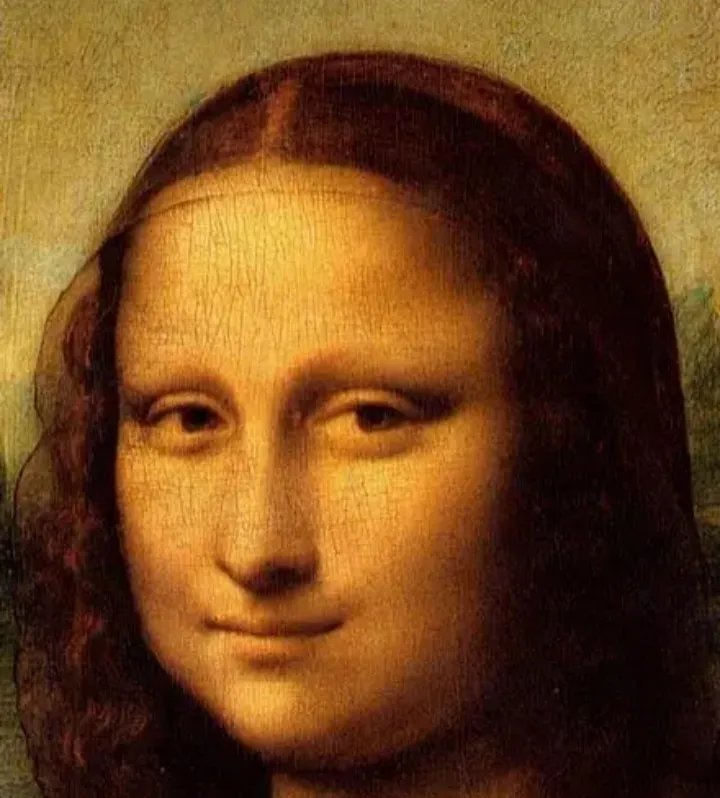
The quick answer to this question would be Leonardo Da Vinci. This is the same Leonardo Da Vinci that created drawings of flying machines and autopsied human bodies to learn how muscle groups function. Da Vinci began working on the Mona Lisa sometime between 1503 and 1505 in Florence while he was approximately 52 years old. Da Vinci did not finish the Mona Lisa until many years later, and continued to add layers of paint to the painting over time. Some believe Da Vinci was a perfectionist and therefore continued to work on the Mona Lisa for a very long period of time; others believe Da Vinci had too much going on at once and therefore lost focus.

The woman shown in the painting is generally accepted by most historians as Lisa Gherardini, the wife of Francesco del Giocondo, a silk merchant from Florence. This is how the Italian name "La Gioconda," which roughly translates into English as "The Joyful One," is associated with this particular painting. It's likely that the portrait was commissioned by Francesco to commemorate an event such as the purchase of a new house or the birth of a child, but exactly what is uncertain. Interestingly enough, the family of Francesco never received the painting; Leonardo da Vinci kept possession of the painting and traveled with it, leaving Francesco without his portrait.
Article image

The part that people like the best is probably this: On August 21, 1911, the Mona Lisa was stolen from the walls of the Louvre. A man by the name of Vincenzo Peruggia, an Italian handyman who had been employed by the museum, walked out with the Mona Lisa hidden beneath his work smock. No one was able to locate the stolen Mona Lisa for over two years. The reason why she became such a big deal is because of the theft. Newspapers throughout the world ran pictures of her face on the first page of every issue. Vincenzo Peruggia was arrested in December 1913 after attempting to sell the Mona Lisa to an art dealer in Florence. He stated that he wanted to return the Mona Lisa back to Italy. To be honest, there were many Italians who cheered Peruggia.

Today she will be behind a large, thick piece of bullet-proof glass, often with many other individuals holding up their cell phones. Be aware that when you go to see her she is smaller than what most would think; approximately 77 x 53 cm. You will also have very little time to view her closely as you will be moved along by the crowd. There are millions of people who travel to see her each year, and that seems incredible for such a small painting. Some people may feel slightly let down after viewing her, while others may become quite emotional. It appears that people's reactions depend upon their expectations prior to seeing her, and possibly their level of tolerance for being bumped by other people's elbows.

Yes, Leonardo Da Vinci painted her; however, there is much more to this story than simply who created the image. The mysteriousness of her smile, the length of time he used to perfect the image, the theft, the massive amounts of visitors, and so forth, are all adding up to create a legendary status for this painting. Even today, people debate over minor aspects such as if she ever possessed eyebrows, or what she may have been thinking. Perhaps this is exactly why it remains so intriguing. A painting that continues to hold some secrets will always cause people to wonder. Five hundred years later, we continue to gaze upon the painting attempting to decipher the smile.

R
View Profile
0
Replying to the question above
Updated on10/01/26

The Mona Lisa was painted by Leonardo da Vinci, the Italian Renaissance artist, inventor and polymath whose work continues to define the era more than five centuries later. He began the portrait around 1503 and is believed to have continued refining it for years afterwards, carrying the unfinished canvas with him across several moves rather than delivering it to a client in the usual way.

Who was the woman in the painting

Most art historians identify the subject as Lisa Gherardini, the wife of a Florentine silk merchant named Francesco del Giocondo. This connection gives the painting its alternative Italian title, La Gioconda, which translates loosely to "the joyful one" or references her married name directly. Some theories have floated alternative identities over the years, including suggestions that the portrait reflects an idealised figure rather than a specific sitter, though the Gherardini identification remains the most widely accepted.

Why the painting took so long to finish

Leonardo was notorious for leaving works unfinished, and the Mona Lisa was no exception in terms of timeline. He is thought to have worked on it intermittently for roughly a decade, if not longer, refining details such as the famously ambiguous smile and the hazy, atmospheric background technique known as sfumato. This technique blends tones and edges so gradually that outlines seem to dissolve into shadow, giving the portrait its distinctive soft, lifelike quality.

How the painting ended up in France

  • Leonardo brought the painting with him when he moved to France in 1516, invited by King Francis I.

  • After Leonardo's death in 1519, the painting is believed to have passed into the French royal collection.

  • It eventually became part of the Louvre's collection, where it remains on permanent display today.

  • The painting briefly left public view in 1911 after a notorious theft, which only intensified its global fame upon recovery.

Why it remains so famous today

Few paintings in history have generated as much ongoing fascination as this one, driven by a combination of Leonardo's reputation, the mystery surrounding the sitter's expression, and the painting's eventful journey through private and royal hands before reaching the public. Its relatively small size often surprises first-time visitors, given how outsized its cultural reputation has become over the centuries.

Sources:The Louvre, Britannica

H
Six years of research-backed expertise — making well-sourced, reliable content that readers and platforms can depend on.
View Profile

Himani Sharma is a subject matter expert and content writer with over 6 years of experience covering travel, government schemes, and personal development across digital platforms in India. She holds a Master's degree in Social Sciences from Banaras Hindu University (BHU), an academic background that informs the research depth and analytical approach she brings to every topic she covers. Her content spans domestic and international travel guides, breakdowns of central and state government welfare schemes, and practical personal development resources for Indian readers navigating career, finance, and everyday life decisions. Her work has appeared on platforms including Nativeplanet, Sarkari Result Blog, and UrbanClap Stories, where she has built a reputation for content that is thoroughly researched, clearly structured, and genuinely useful. Over six years, Himani has published 200+ articles across her subject areas, developing a methodical content approach — verified sources, evidence-based arguments, and writing that serves the reader's actual information need rather than just ranking for keywords. Her subject matter grounding gives her a consistent edge in producing content that holds up to professional scrutiny across three distinct but equally research-intensive categories. Across all her writing, her standard remains the same — research first, clarity always, and content that serves the reader rather than just filling a page.

0