
Quick Answer
When exploring the giants of 20th-century literature, a common question asked by readers and students alike is: Who was James Joyce? James Joyce was an Irish novelist, short story writer, and poet who became one of the most influential and revolutionary figures in the modernist avant-garde movement. Born in Dublin in 1882, he is best known for his landmark 1922 novel, Ulysses, which radically transformed the structure of modern fiction through its innovative use of the "stream of consciousness" narrative technique. Even though he spent most of his adult life living in continental Europe, his deep, complex relationship with his home city of Dublin served as the eternal backdrop for all his major works.
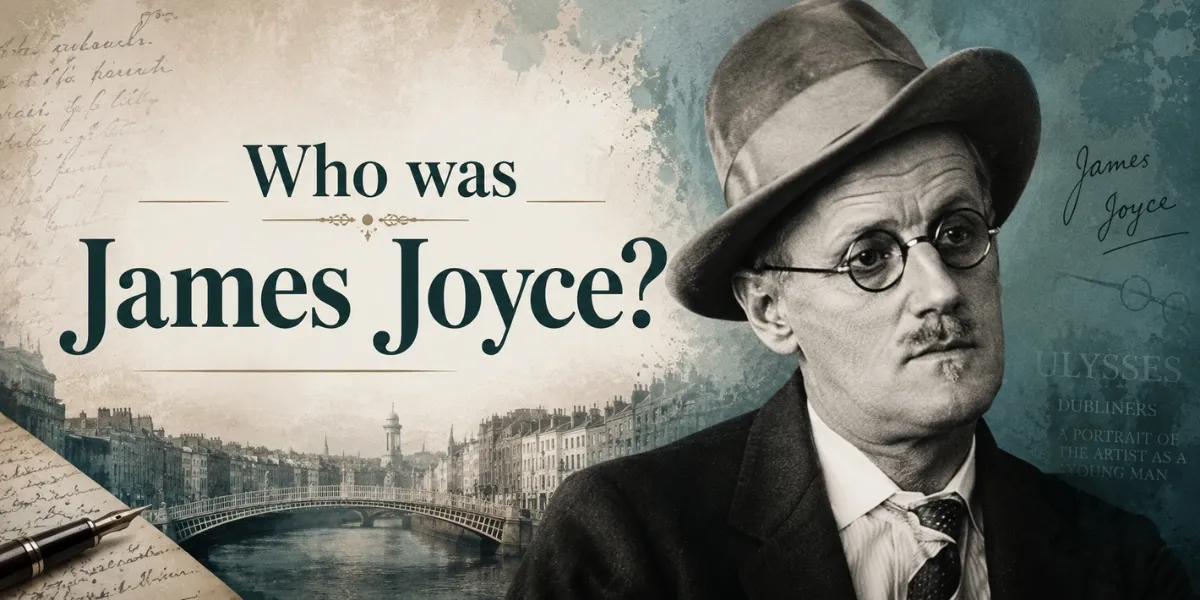
Early Life and the Dublin Connection
To truly understand the brilliance of James Joyce, you must look at his roots. James Augustine Aloysius Joyce was born into a middle-class Catholic family in the Dublin suburb of Rathgar. Initially, his family enjoyed relative prosperity, and Joyce was educated at prestigious Jesuit schools. However, his father's financial mismanagement gradually plunged the family into deep poverty.
Despite these struggles, Joyce was a brilliant student with a remarkable gift for languages and literature. He graduated from University College Dublin (UCD) in 1902. By his early twenties, Joyce had grown disillusioned with the restrictive religious and political climate of Ireland. In 1904, he eloped to Europe with Nora Barnacle, a young woman from Galway who would become his lifelong companion and eventual wife. They lived in voluntary exile, spending their lives in cities like Trieste, Zurich, and Paris.
The Masterpiece: Ulysses and Literary Exile
Though he left Ireland, Ireland never left him. All of Joyce's major literary works—from his short story collection Dubliners (1914) to his semi-autobiographical novel A Portrait of the Artist as a Young Man (1916)—are meticulously obsessed with the geography, people, and culture of Dublin.
His greatest achievement, Ulysses (1922), is often cited as one of the greatest novels ever written in the English language. It parallels Homer's epic poem, The Odyssey, but condenses the action into a single, ordinary day in Dublin: June 16, 1904 (the date of Joyce's first outing with Nora Barnacle, now celebrated globally as "Bloomsday"). The book was highly controversial; it faced intense censorship, was banned in the United States and the UK for alleged obscenity, and had to be smuggled across borders before a landmark legal ruling finally allowed its publication in America in 1933.
James Joyce at a Glance
To better understand the timeline and profile of this literary giant, here is a quick summary of his biographical details:
Biographical Detail | Fact / Information |
|---|---|
Birth / Death | February 2, 1882 – January 13, 1941 |
Place of Birth | Dublin, Ireland |
Literary Movement | Modernism |
Spouse | Nora Barnacle |
Major Works | Dubliners, A Portrait of the Artist as a Young Man, Ulysses, Finnegans Wake |
Burial Site | Fluntern Cemetery, Zurich, Switzerland |
Timeline of His Life and Works
Explore how Joyce's personal life in exile aligned with the publication of his groundbreaking literary masterpieces:
Top Reasons Why James Joyce's Work Matters
Joyce's influence on literature is staggering. Here are the core innovations and benefits that readers and writers draw from his work today:
Pioneering the Stream of Consciousness: He mastered the technique of presenting the raw, unfiltered, and often chaotic inner thoughts of his characters exactly as they occurred, radically changing how psychological realism is written.
Celebrating the Ordinary: Ulysses proved that a mundane day in the life of a regular, flawed citizen (Leopold Bloom) could be just as epic and deeply meaningful as the heroic battles of ancient Greek mythology.
Championing Free Speech: The fierce legal battles over the publication of Ulysses broke down strict censorship laws, expanding the freedom of expression for all writers who followed him.
Linguistic Innovation: In his final novel, Finnegans Wake, Joyce practically invented a new, dream-like language utilizing complex puns, multilingual wordplay, and cyclical structures.
Frequently Asked Questions (FAQs)
Why did James Joyce leave Ireland?
Joyce felt that the intense religious, cultural, and political nationalism of early 20th-century Ireland was too paralyzing for his artistic freedom. He chose a life of voluntary exile in Europe to gain the distance and objectivity he needed to write about his homeland truthfully.
What is Bloomsday?
Bloomsday is an annual international celebration held on June 16th to honor James Joyce and his novel Ulysses. It is named after the novel's protagonist, Leopold Bloom, and fans often celebrate by retracing Bloom's route through the streets of Dublin, dressing in Edwardian fashion, and reading passages aloud.
Is Ulysses hard to read?
Yes, Ulysses is notoriously challenging due to its dense, shifting narrative styles, obscure historical references, and lack of traditional punctuation in certain chapters. However, many readers find that studying it alongside a reading guide unlocks its incredible humor and profound humanity.
Conclusion
Whenever students of modern literature ask, "Who was James Joyce?", they are introduced to a man who possessed the courage to break every existing rule of fiction. By fleeing the country he loved, Joyce gained the unique perspective necessary to immortalize Dublin on the page. His fearless exploration of the human mind, his linguistic brilliance, and his unwavering dedication to his art despite poverty, failing eyesight, and fierce censorship firmly establish him as one of the most important writers in history.
Sources & References: Encyclopædia Britannica
Also Read: Who was first king of France?