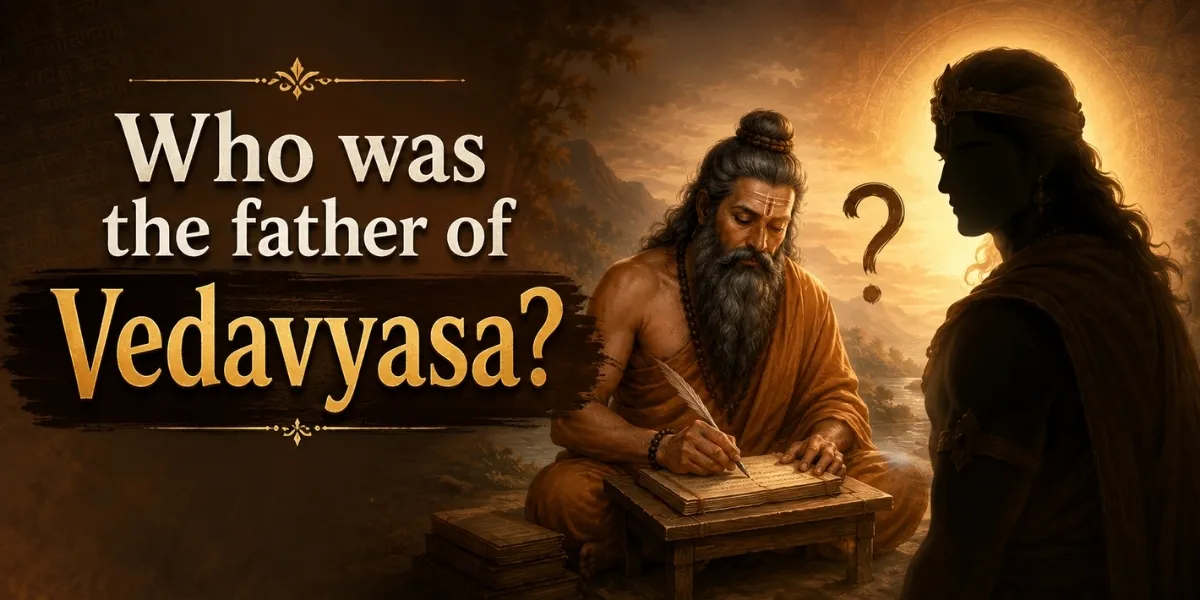
Parashara was a highly venerated sage of Hindu mythology and is widely recognized for being the father of Vedavyasa (Krishna Dvaipayana Vyasa). He was part of a renowned lineage of sages and is considered the son of Sage Shakti and grandson of Sage Vashishtha.
Parashara and Satyavati
Amongst many interesting stories linked to Parashara is that of his encounter with Satyavati, who later became the wife of King Shantanu of Hastinapura. As per the Mahabharata, Satyavati’s encounter with Parashara took place when she helped people cross the Yamuna River. They gave birth to Krishna Dvaipayana, who later acquired fame as Vedavyasa.
Krishna Dvaipayana was born on an island, and hence he was named Dvaipayana, which means “island-born”. He was also popularly referred to as Krishna Dvaipayana, where “Krishna” means dark-complexioned.
The Relationship between Parashara and the Mahabharata
While Parashara may have been an insignificant figure during the battle of Kurukshetra, his son Vyasa went on to become a very important figure during the period of the Mahabharata. Vyasa is believed to have been responsible for writing the Mahabharata as well as compiling the Vedas.
Vyasa had also become an important character within the genealogical lineage of the Kuru family. He had become the father of Dhritarashtra, Pandu and Vidura by using niyoga. While Dhritarashtra was the father of the Kauravas, Pandu had the Pandavas as his sons. Therefore, we can see that Parashara's lineage ended up having ties to both sides of the Mahabharata war.
The lineage of the family is simple:
Sage Vashishtha -> Sage Shakti -> Rishi Parashara -> Vedavyasa -> Dhritarashtra, Pandu & Vidura -> Kauravas & Pandavas
Knowledge and Teachings of Parashara
Parashara is known as a sage who was connected to Vedic knowledge, spirituality, dharma, and Jyotisha. Parashara is usually credited as the author of the Brihat Parashara Hora Shastra, which is an important treatise in Vedic astrology. But many modern scholars are unsure about the authorship and time period of this work.
Why is Rishi Parashara Significant?
The significance of Parashara is not only that he was the father of Vedavyasa, but that his lineage has a connection to both the sages of old and to the main family in the epic Mahabharata. It was through his son Vyasa that Parashara became connected to the Kuru family line, the Pandavas and the Kauravas, and the Kurukshetra War.
To put it more simply, Rishi Parashara was an honored sage, the son of Shakti and grandson of Vashishtha, and father of Vedavyasa. He is known for his relationship to Satyavati, which resulted in the birth of Vyasa, and thus gave great significance to his lineage in Hindu culture.