Quick Answer
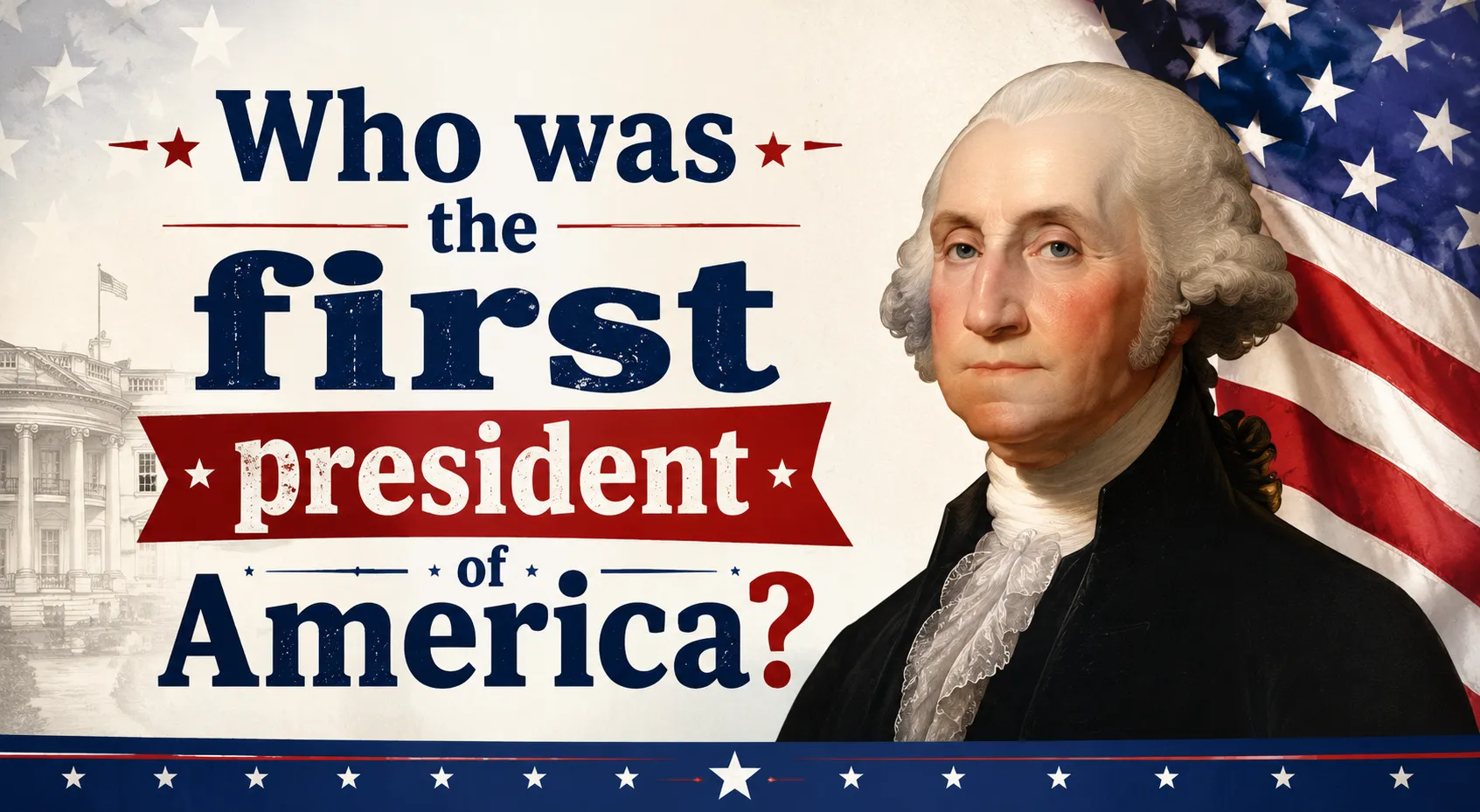
When studying the foundations of the United States, one of the most common and fundamental questions asked is: Who was the first president of America? The answer is George Washington. Serving from 1789 to 1797, Washington was a visionary military leader, a reluctant politician, and the only president in American history to be elected unanimously by the Electoral College. Because the United States Constitution provided only a broad outline for the executive branch, Washington’s actions, decisions, and character set the standard for every single president who followed him.
From Military Hero to Chief Executive
Before he ever stepped foot into the presidential office, George Washington had already secured his place in history. Born in Virginia in 1732, he gained early military experience fighting for the British during the French and Indian War. However, it was his role as the Commander-in-Chief of the Continental Army during the American Revolutionary War (1775–1783) that made him a national hero.
After successfully defeating the British Empire and securing American independence, Washington did something practically unheard of in world history: he voluntarily surrendered his military power and returned to his farm at Mount Vernon. This extraordinary act of walking away from absolute power solidified his reputation as a man of deep republican virtue. Consequently, when the new Constitution was ratified in 1788 and it came time to elect a leader, Washington was the undeniable choice of the people.
Setting the Presidential Precedent
When Washington took the oath of office on April 30, 1789, in New York City (the nation's first capital), there was no blueprint for how a democratic president should act. Every decision he made established a precedent. He was acutely aware that a misstep could cause the young republic to collapse into a monarchy or dissolve into anarchy.
He consciously chose a title that was respectful but not royal—"Mr. President"—rejecting more grandiose titles like "His Highness." He also established the concept of the Presidential Cabinet by surrounding himself with brilliant, albeit conflicting, minds like Thomas Jefferson (Secretary of State) and Alexander Hamilton (Secretary of the Treasury) to help advise his decisions.
George Washington at a Glance
To better understand the man who shaped the American executive branch, here is a quick summary of his historical profile:
Historical Detail | Fact |
|---|---|
Presidential Term | April 30, 1789 – March 4, 1797 |
Vice President | John Adams |
Political Party | Unaffiliated (He strongly opposed political factions) |
Home State | Virginia (Mount Vernon estate) |
Previous Role | Commander of the Continental Army |
Interactive Timeline of His Presidency
Explore the major milestones of Washington's two terms in office to see how he navigated domestic and foreign crises:
Top Traditions Established by Washington
The modern American presidency still heavily relies on the foundation Washington built over 230 years ago. Here are the core traditions he established:
The Two-Term Limit: Despite massive public support to run for a third term, Washington stepped down after two terms, setting a democratic precedent that lasted until Franklin D. Roosevelt (and was later formalized by the 22nd Amendment).
The Farewell Address: Upon leaving office, he wrote a famous letter warning the nation against the dangers of permanent foreign alliances and bitter partisan politics.
Executive Privilege: He established the right of the president to withhold certain information from Congress if it was deemed necessary for national security.
Federal Law Enforcement: By personally leading militia troops to suppress the Whiskey Rebellion in 1794, he proved that the new federal government was capable of enforcing its laws and maintaining order.
Frequently Asked Questions (FAQs)
Did George Washington live in the White House?
No. George Washington is the only U.S. president who never lived in the White House or Washington, D.C. During his presidency, the capital was located first in New York City and later in Philadelphia. He did, however, help select the site for the new capital city that bears his name.
Did George Washington have wooden teeth?
No, this is a common myth. While Washington suffered from terrible dental problems and wore dentures for most of his adult life, they were not made of wood. His dentures were constructed from materials like ivory, gold, lead, and teeth sourced from humans and animals.
Which political party did George Washington belong to?
George Washington never joined a political party. In fact, he was deeply fearful that the creation of political factions (like the emerging Federalists and Democratic-Republicans) would tear the fragile new nation apart.
Conclusion
Whenever students of history ask, "Who was the first president of America?", they are introduced to a man who literally shaped a nation by his character. George Washington's genius was not just in his leadership during a brutal war, but in his profound restraint during peacetime. By stepping away from power and setting incredibly disciplined precedents for the executive office, Washington ensured that the United States would be a nation governed by laws, not by kings.
Sources & References: Mount Vernon Ladies' Association
Also Read: What is the average retirement savings for an American?