Quick Answer
When exploring the social structures of ancient India, a fundamental question often arises for history enthusiasts and students alike: Who was the head of a family during Vedic period? The answer is the Grihapati (also referred to as the Kulapa). In the patriarchal society of the Vedic age, the family unit was known as the Kula, and the eldest male member naturally assumed the position of its head. The Grihapati held absolute authority over the entire household, controlling its economic resources, making all major decisions, and leading the family in essential religious and spiritual rituals.
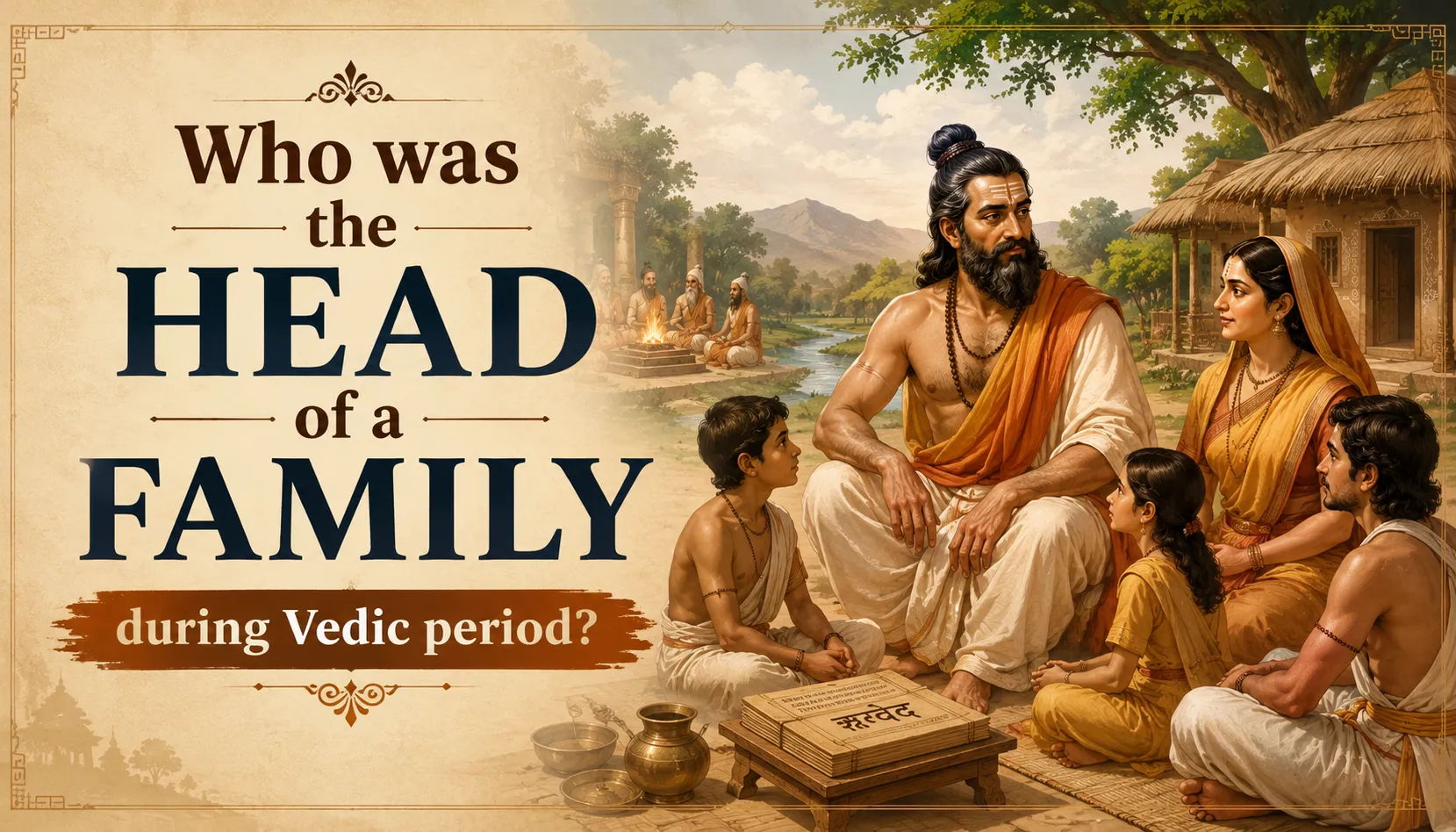
The Foundation of Vedic Society: The Kula
To truly understand ancient Indian history, one must look at the basic building blocks of its society. During the Early Vedic (Rig Vedic) period, around 1500 BCE to 1000 BCE, society was primarily tribal and pastoral. The smallest, most fundamental unit of this social structure was the family, known in Sanskrit as the Kula.
Unlike the nuclear families common in the modern era, the Vedic Kula was a massive joint family system. A single household often consisted of parents, children, grandparents, uncles, cousins, and domestic servants, all living under one roof. Maintaining order, discipline, and prosperity within such a large group required a strong, centralized figure, which is exactly why the role of the Grihapati was so vital to the survival and stability of the tribe.
(Note: AI image generation tools did not return a valid tag for this specific historical query, so visualization relies on historical imagination of standard Vedic pastoral life).
The Immense Power and Duties of the Grihapati
When asking who was the head of a family during Vedic period?, it is important to understand that the title of Grihapati was not merely a ceremonial one. It carried immense, almost absolute power. As a patriarchal society, the eldest male's word was the ultimate law within the boundaries of the household.
However, with great power came significant responsibilities. The Grihapati was the primary protector of the family in a time when tribal skirmishes over cattle and land were common. Economically, he managed the family's primary wealth, which during the Early Vedic period was measured almost entirely in cattle (Gau). He was responsible for ensuring the family's herds were protected and that agricultural duties were delegated and executed properly.
Vedic Social Structure at a Glance
To better understand where the head of the family fit into the broader political and social landscape of the Vedic period, here is a summary of the societal hierarchy:
Social Unit | Sanskrit Term | Head/Leader of the Unit | Role within Society |
|---|---|---|---|
Family | Kula | Grihapati / Kulapa | Managed the household, economic resources, and family rituals. |
Village | Grama | Gramani | Led a group of several families (Kulas) living together. |
Clan / Tribe | Vis | Vispati | Governed a group of villages forming a larger clan. |
State / Nation | Jana | Rajan (King) | The supreme leader and protector of the entire tribal state. |
Key Responsibilities of the Grihapati
The role of the head of the family was multifaceted, blending secular leadership with spiritual guidance. Here are the core responsibilities that defined the Grihapati's position:
Religious Leadership: The Grihapati was responsible for performing daily household sacrifices and leading the Yajnas (fire rituals) to appease the gods for the family's prosperity.
Economic Controller: He owned and managed the family's property, which included land, agricultural produce, and, most importantly, the cattle.
Social Disciplinarian: He had the authority to discipline any member of the joint family. Historical texts indicate this power was nearly absolute, though it was generally expected to be exercised with paternal affection and fairness.
Marriage and Alliances: The Grihapati made all final decisions regarding the marriages of the younger generation, which were crucial for forging alliances with other powerful families in the tribe.
Frequently Asked Questions (FAQs)
Did the wife of the Grihapati have any power?
Yes, particularly during the Early Vedic (Rig Vedic) period. While the society was patriarchal, women enjoyed a highly respectable position. The wife of the Grihapati (the female head of the household) was considered a co-partner in religious duties. No major Yajna or religious ritual was considered complete without her active participation alongside her husband.
How did one become the Grihapati?
The position was hereditary and based on seniority. Upon the death of the current Grihapati, the title, authority, and responsibilities automatically passed down to his eldest capable son.
Did the role of the family head change in the Later Vedic period?
Yes. As society transitioned into the Later Vedic period (1000 BCE to 600 BCE), the power of the Grihapati grew even more rigid and absolute. Unfortunately, during this same transition, the relatively high status that women enjoyed in the household during the Early Vedic period began to significantly decline.
Conclusion
Whenever students of ancient Indian history ask, "Who was the head of a family during Vedic period?", they are uncovering the very roots of the traditional Indian social structure. The Grihapati was the cornerstone of Vedic society. By acting as the economic provider, the spiritual leader, and the ultimate decision-maker for the Kula, the Grihapati ensured that the family unit remained strong, disciplined, and prosperous. This ancient patriarchal framework laid a lasting foundation that deeply influenced the evolution of the Indian joint family system for thousands of years to come.
Sources & References: NCERT
Also Read: How does Astrology Solve the Family Issues?