Quick Answer
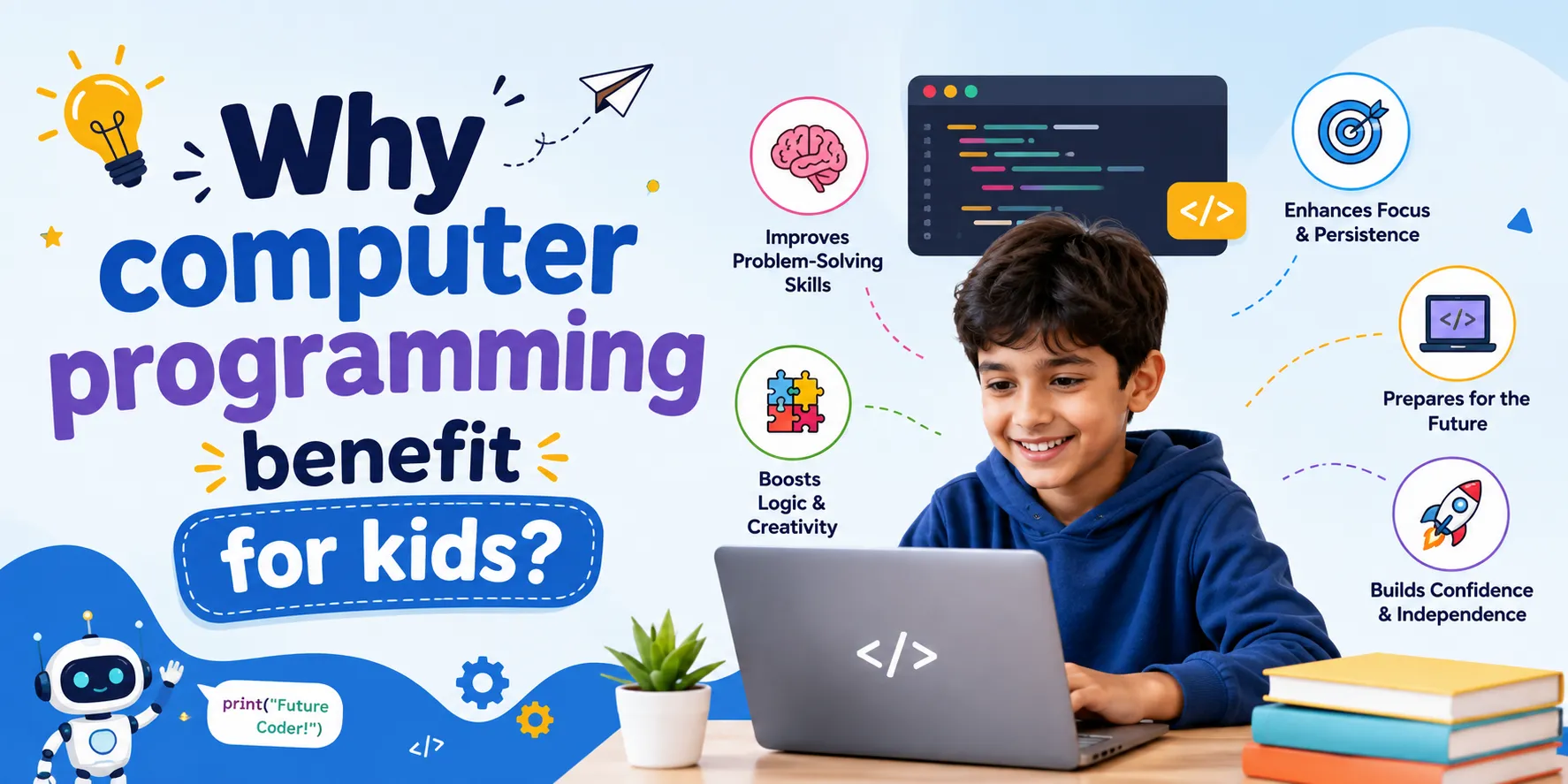
As we move deeper into a digitally-driven world, many parents and educators are beginning to ask a critical question: Why computer programming benefit for kids? The answer extends far beyond simply preparing them for a future career in technology. Teaching children how to code acts as a powerful catalyst for cognitive development. It teaches them how to break down complex problems into manageable steps, fosters immense creativity, and builds resilience through trial and error. Rather than just passively consuming digital content—like playing video games or watching videos—programming empowers kids to become active, confident creators of the technology they use every single day.
The Power of Computational Thinking
To truly understand the value of coding for younger minds, we have to look at the underlying mental processes it develops. When a child writes a computer program, they are not just typing random letters; they are practicing "computational thinking." This is a problem-solving process that involves breaking a large, intimidating problem down into smaller, logical, and sequential parts that a computer can understand.
This type of logical structuring is highly transferable. If a child learns how to sequence a set of commands to make a robot move across a screen, they are simultaneously learning how to sequence their thoughts to write a better essay, solve a multi-step math equation, or organize a school project. In short, programming teaches children how to think, not just what to think.
Traditional Learning vs. Programming at a Glance
To highlight why integrating coding into early education is so transformative, here is a comparison of how traditional learning models contrast with programming-based education:
Educational Aspect | Traditional Rote Learning | Programming / Coding |
|---|---|---|
Problem Solving | Memorizing standard answers. | Finding multiple creative paths to a solution. |
Handling Failure | Fear of getting the "wrong" answer. | Viewing "bugs" as normal, fixable challenges. |
Engagement | Often passive (listening, reading). | Highly active and interactive (building, testing). |
Skill Application | Can feel disconnected from real life. | Creates tangible, immediate real-world applications. |
Top Benefits of Teaching Kids to Code
Understanding why computer programming benefit for kids involves looking at the holistic advantages it provides. Here are the core benefits that make coding a vital skill for modern youth:
Builds Incredible Resilience: In programming, things rarely work perfectly on the first try. Children learn "debugging"—the process of finding and fixing errors. This teaches them that failure is not a stopping point, but a necessary step toward success.
Enhances Math and Logic Skills: Coding makes abstract math concepts highly visual and interactive. Variables, coordinates, and sequencing become fun tools used to build games rather than boring formulas on a chalkboard.
Encourages Unbound Creativity: Programming is essentially a blank digital canvas. Kids can build their own interactive stories, design video games, or program animations, giving them a unique medium to express their imagination.
Future-Proofs Their Careers: Whether they grow up to be doctors, farmers, marketers, or artists, automation and software will be deeply integrated into their professions. Coding fluency ensures they will comfortably adapt to future technological shifts.
Frequently Asked Questions (FAQs)
At what age should a child start learning to program?
Children can start as early as 5 to 7 years old. For younger kids, platforms like ScratchJr or screen-free coding robots focus on visual, block-based programming. By ages 10 to 12, they can easily transition to text-based languages like Python or JavaScript.
Do kids need a lot of screen time to learn to code?
Not necessarily. While screen time is eventually required, there are many "unplugged" coding activities—like board games and physical puzzles—that teach the exact same logical sequencing and computational thinking without staring at a monitor.
What is the best programming language for a beginner child?
Scratch, developed by MIT, is widely considered the best starting point. It uses a drag-and-drop, color-coded block interface that removes the frustration of typing errors, allowing kids to focus entirely on the logic and fun of building.
Conclusion
Whenever a parent or teacher asks, "Why computer programming benefit for kids?", the most profound answer is that it gives them agency in a digital world. We are surrounded by software, algorithms, and artificial intelligence. By teaching children how to read and write the "language" of computers, we are giving them the ultimate toolkit to solve complex problems, embrace challenges with resilience, and shape the future of their communities. Coding is no longer just a technical skill for engineers; it is a foundational literacy for the 21st century.
Sources & References: MIT Media Lab (Lifelong Kindergarten Group)
Also Read: What is Coding Programming Language?