Answered on11/12/25
Lord Ganesha has an elephant’s head symbolizing wisdom, strength, and understanding. It reminds us to use intellect, stay humble, and overcome obstacles with patience, faith, and divine grace.

Astrology Insights Expert
0


Join this conversation
Lord Ganesha has an elephant’s head symbolizing wisdom, strength, and understanding. It reminds us to use intellect, stay humble, and overcome obstacles with patience, faith, and divine grace.
In Hinduism, Lord Ganesha, the cherished elephant-headed god, is enormously respected. One of his most extraordinary developments is his uncommon elephant head, which is revered as the remover of impediments, patron of the humanities and sciences, and deity of knowledge and intellect. Hindu mythology's historical books provide deep symbolism and spiritual meaning explaining why Ganesha has an elephant's head.
The Birth of Ganesha
The oldest Hindu books, the Puranas, consist of the most broadly everyday tale regarding Ganesha's birth. The goddess Parvati, the wife of Lord Shiva, is credited with developing Ganesha, according to the Shiva Purana and other scriptures. Shiva is the embodiment of the divine masculine, whereas Parvati, who is revered for her power, intelligence, and maternal characteristics, is the divine feminine.
According to mythology, Parvati desired to take a bath at some point. She created a reasonable sculpture out of turmeric paste, which she had formerly used to purify herself if you want to shield her privacy. Ganesha, the figure, turned given the order to maintain watch over her residence's front and save everyone from coming into.
Unaware of what had taken place, Shiva tried to go into his house while he got returned, but Ganesha, appearing on his mom's instructions, could no longer allow him to. The two were given into an issue due to this. Furious at being stopped with the aid of this unidentified toddler, Shiva angrily decapitated Ganesha.
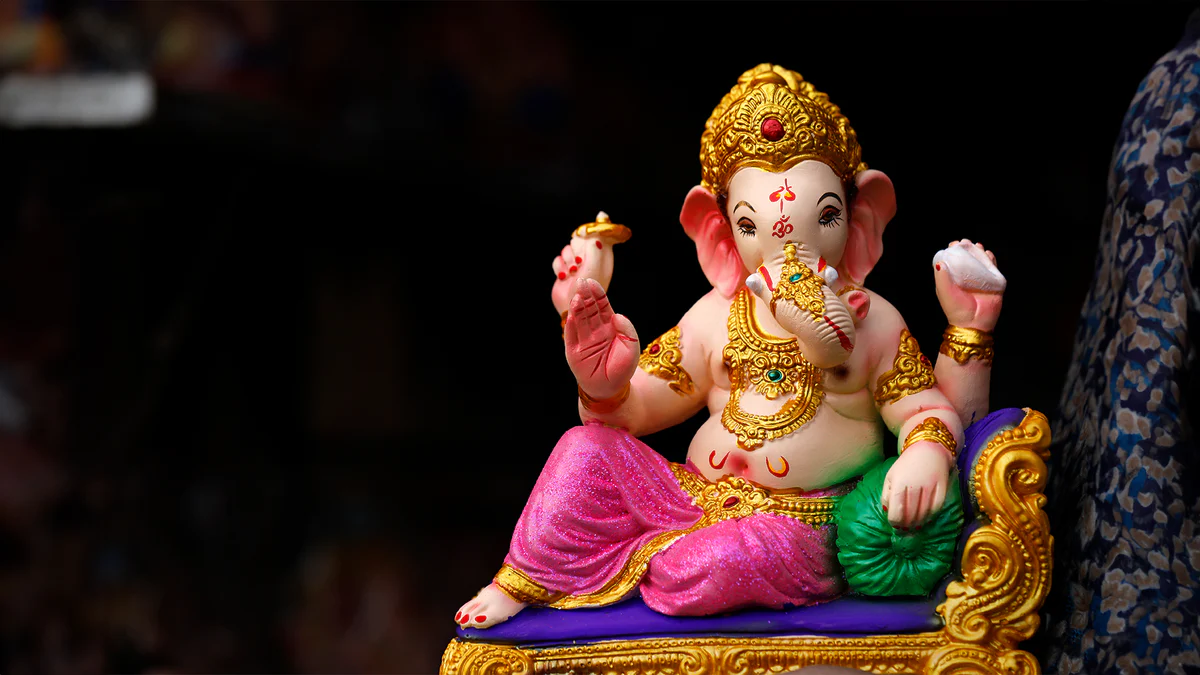
The Transformation into an Elephant-Headed Deity
When Parvati observed that Shiva had killed her son, she turned into grieved. Shiva recounted his blunders upon witnessing her extreme soreness and vowed to revive Ganesha. But the head of Ganesha changed into nowhere to be located. Shiva told his disciples to find the head of the primary residing issue they came through so one could restore this. Since an elephant became the first animal they located, Shiva revived Ganesha by putting the elephant's head over his body.
Shiva then bestowed his blessing on Ganesha, saying that he'll always be worshipped earlier than all other gods. Ganesha isn't always the handiest delivered returned to life in this story, but he additionally undergoes a metamorphosis that displays deep spiritual principles.
Symbolism of the Elephant Head
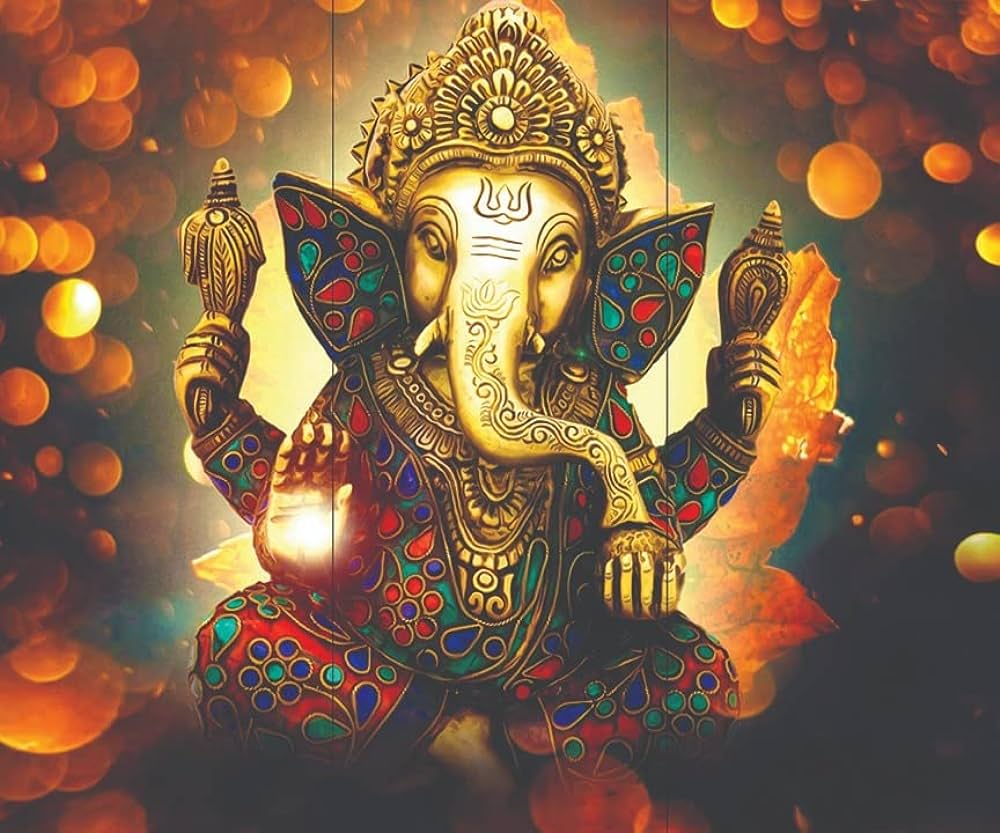
Spiritual Lessons from Ganesha’s Head
The elephant head of Lord Ganesha is a mighty symbol of change, power, knowledge, and compassion, and it represents plenty greater than only a mythological oddity. The tale of the way he got his uncommon head famous profound non-secular instructions about ego, reincarnation, and placing stability among tenderness and electricity.
The ever-present reminder of the essential teachings of Hindu philosophy—listening more than we communicate, performing compassionately, thinking broadly, and gracefully embracing life's changes—comes from the discernment of Ganesha, who's both awe-inspiring and concerned.
Goddess Parvati was at home on Mt. Kailash one day, getting ready for a bath. She commanded Nandi, her husband Shiva's Bull, to guard the entrance and not let anyone pass because she didn't want to be bothered. Nandi dutifully assumed his position, seeking to fulfill Parvati's wishes. But, because Nandi was loyal to Shiva first, she had to let Shiva through when he returned home and understandably chose to come inside. Parvati was enraged by this disrespect, but even more so by the fact that she lacked a companion as devoted to Her as Nandi was to Shiva. So she made Ganesha, pronouncing him to be her loyal son, by removing the turmeric powder (for washing) from her body and breathing new life into it.
Parvati put Ganesha on watch duty at the door the next time she needed to bathe. When Shiva returned home, he was greeted by this weird boy who told him he really could not enter his own home! Shiva was enraged and sent his army to kill the little boy, but they all failed.
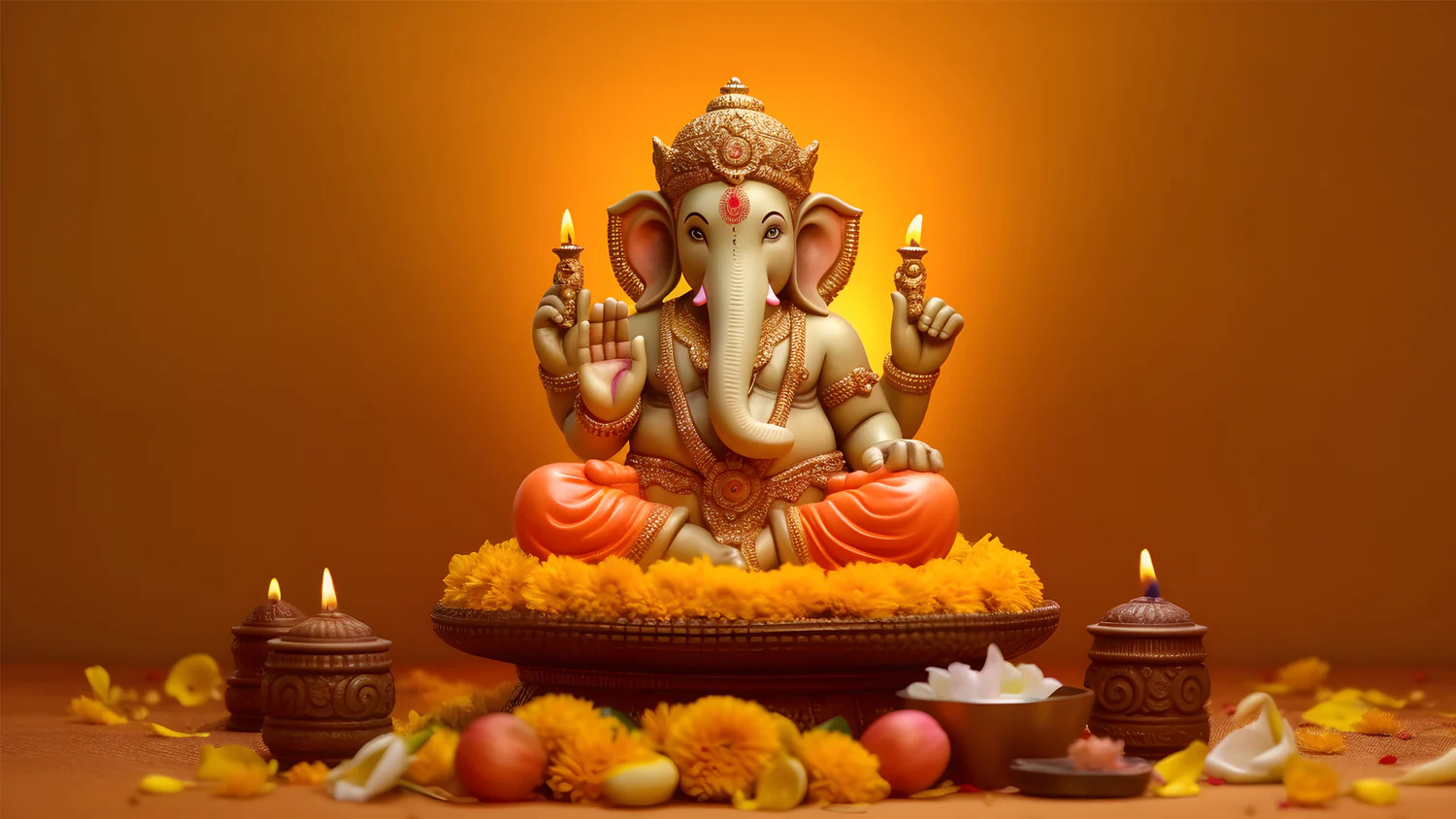
Shiva was taken aback. When Shiva saw that this was no ordinary youngster, he chose to confront him, and in his holy rage, he split Ganesha's head, killing him instantaneously. Parvati was so outraged and offended when she learned of this that she vowed to annihilate the entire Creation. Lord Brahma, as the Maker, was incensed by this and appealed to her to reconsider her severe plan. She agreed, but only if two conditions were met: first, Ganesha had to be resurrected, and second, he had to be adored above all other gods forever.
Shiva had calmed down by this point and agreed to Parvati's terms. He dispatched Brahma forth with instructions to bring back the corpse of the first creature he encountered that was lying with its head to the north. Brahma reappeared soon after, bearing the head of a mighty elephant, which Shiva positioned on Ganesha's body. Infusing new life into him, he proclaimed Ganesha to be his son and bestowed upon him the title of Ganapati, the Lord of the Gods and the Leader of All Ganas (Courses of Beings).