Water is considered wet because it has the ability to make other materials wet when it comes into contact with them. Scientifically, "wetness" is not a property of water itself but a sensation or condition that occurs when a liquid sticks to the surface of a solid. Since water molecules easily adhere to many materials, they leave a thin layer of liquid behind, creating the feeling and appearance of wetness.
This question often causes confusion because people use the word "wet" in everyday language differently than scientists do. In common conversation, people say water is wet because touching it makes your hands wet. However, from a scientific perspective, water is a liquid, while wetness describes the interaction between a liquid and a solid surface. Both viewpoints are valid depending on the context, which is why the question has remained a popular science debate for years.
What Does "Wet" Actually Mean?
Wetness refers to the condition of a surface after it has been covered or saturated by a liquid. When water spreads across an object, it changes the surface's condition, making it wet.
For example:
A dry towel becomes wet after absorbing water.
A glass becomes wet when water droplets cover its surface.
Your skin feels wet after washing your hands.
Why Does Water Make Things Wet?
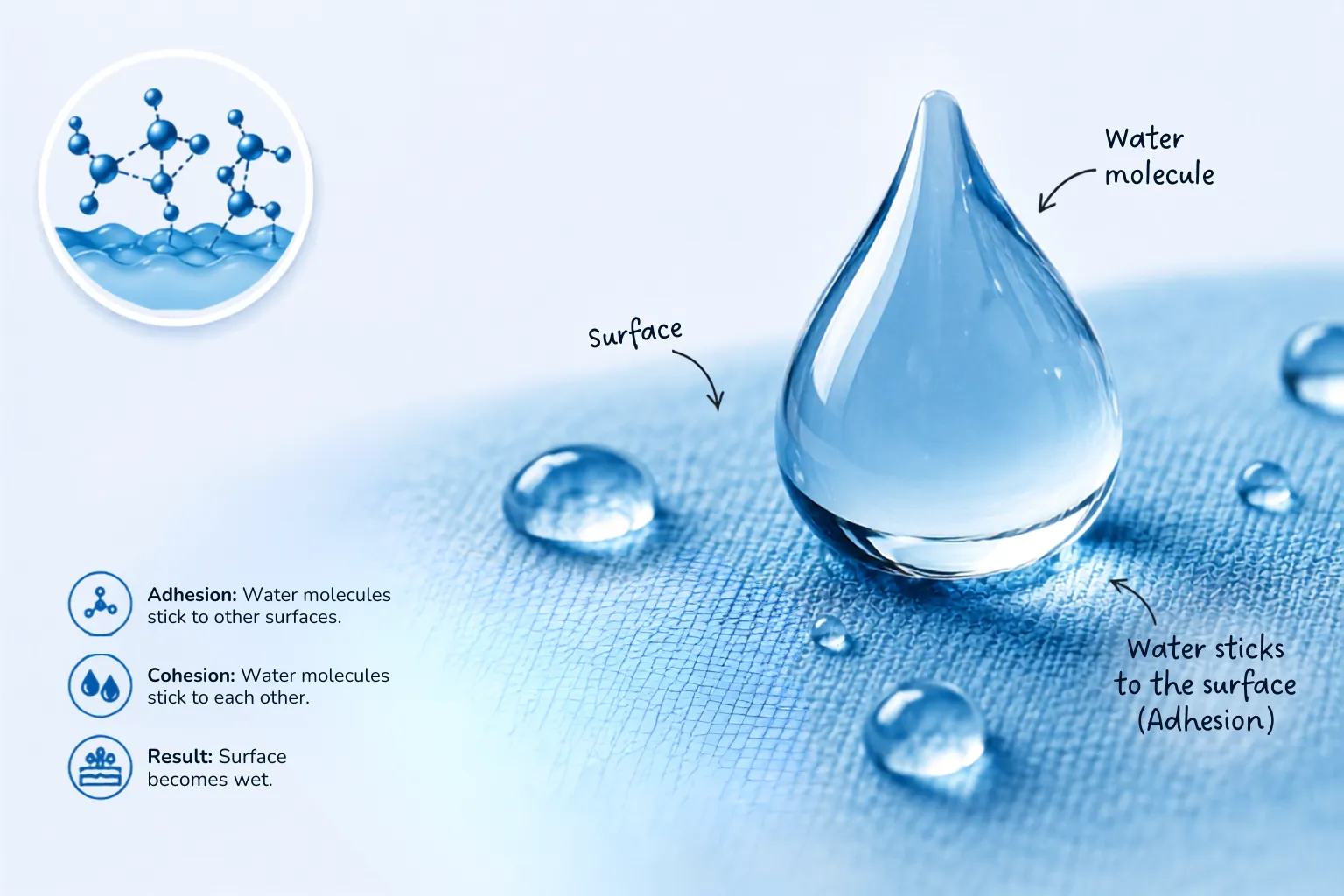
Water molecules are strongly attracted to each other through hydrogen bonding, but they are also attracted to many other materials. This property is called adhesion.
When water touches a surface:
Water molecules stick to the surface.
They spread into a thin layer.
The surface becomes wet.
Without this adhesive property, water would simply form separate droplets and would not easily coat objects.
Is Water Itself Wet?
The answer depends on the definition.
Everyday Meaning | Scientific Meaning |
|---|---|
Yes. Water is called wet because it makes things wet. | Not exactly. Wetness describes a solid surface covered by a liquid, not the liquid itself. |
This is why scientists often say water is not technically wet, while most people naturally describe it as wet in daily conversation.
Everyday Examples
The concept is easier to understand with simple examples:
Rain makes roads wet.
Swimming pools leave your body wet.
Washing clothes makes fabric wet.
Morning dew makes grass wet.
In every case, water changes the condition of another surface.
Common Misconceptions
One common mistake is believing that wetness is a physical property of water like temperature or density. In reality, wetness is a result of the interaction between water and another surface.
Another misconception is that all liquids behave exactly like water. Some liquids spread more easily than others because of differences in surface tension and adhesion.
Key Facts
Water is a liquid made of H₂O molecules.
Wetness occurs when water sticks to a solid surface.
Hydrogen bonding gives water unique properties.
Water's adhesion allows it to spread across many materials.
In everyday language, calling water wet is acceptable, while scientific discussions use a more precise definition.
Conclusion
So, why is water wet? The simple answer is that water makes other objects wet, which is why people commonly describe it as wet. Scientifically, however, wetness is the condition created when water covers a solid surface rather than a property of water itself. Understanding this difference helps explain why the debate exists and why both everyday language and scientific terminology can lead to different—but reasonable—answers.
FAQs
1. Why do people say water is wet?
Because touching water makes objects and skin wet, making it the common everyday description.
2. Is water technically wet?
Scientifically, wetness describes a liquid-covered surface, so water itself is generally not considered wet.
3. What causes wetness?
Wetness occurs when water adheres to a solid surface through molecular attraction.
4. Why does water stick to surfaces?
Water molecules have adhesive properties that allow them to spread across many materials.
5. Can other liquids make things wet?
Yes. Most liquids can make surfaces wet, although they behave differently depending on their chemical properties.
Also read : Why do we offer water to the plant of Basil (tulsi)?