What is Children's Day?
Children's Day (Bal Diwas): An annual national observance in India on November 14th dedicated to increasing awareness of the rights, care, and education of children, celebrated on the birth anniversary of India's first Prime Minister, Pandit Jawaharlal Nehru.
Quick Answer
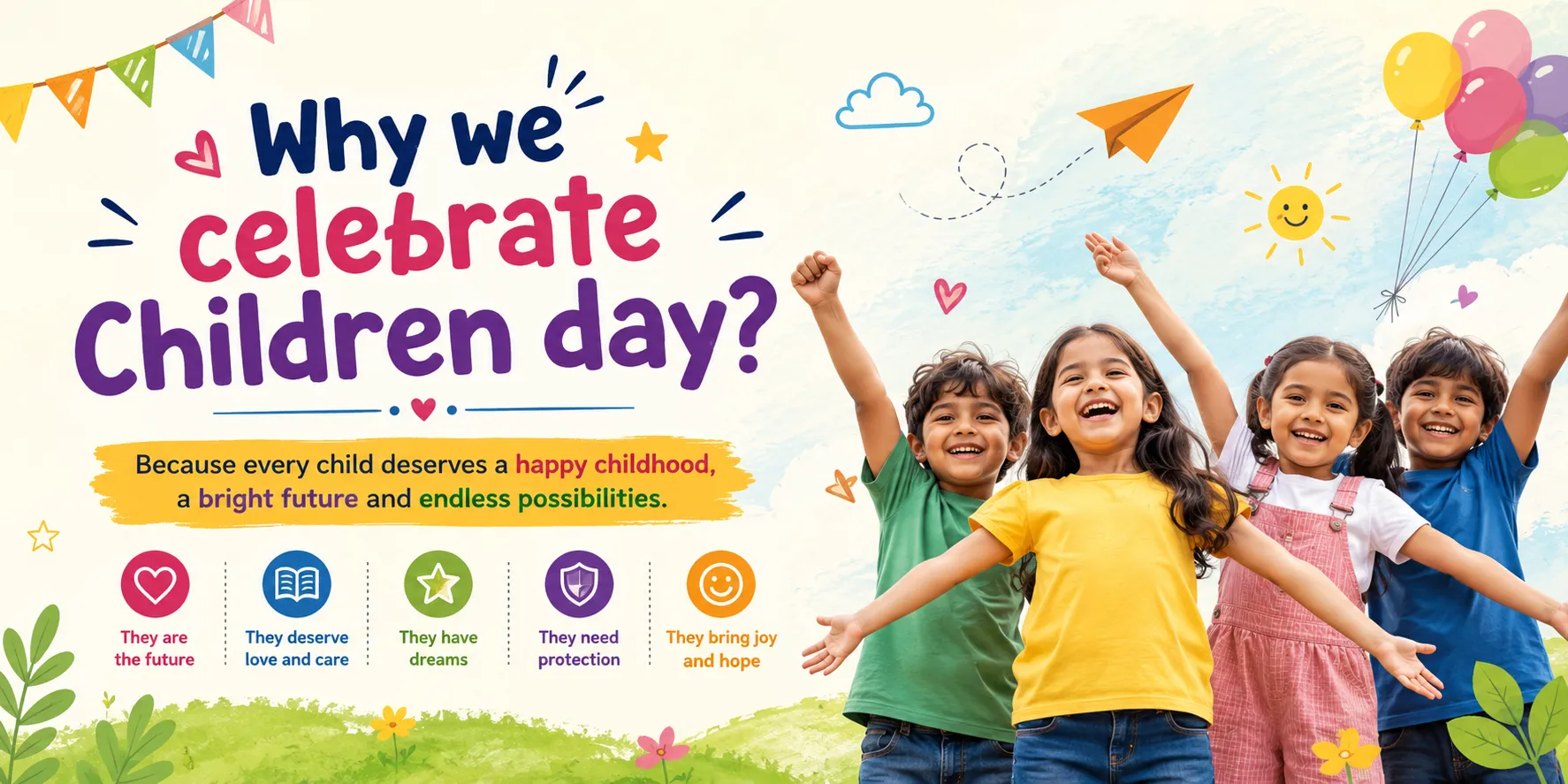
Why we celebrate children day? In India, Children's Day is celebrated on November 14 to honor Pandit Jawaharlal Nehru's birthday. Known affectionately as "Chacha Nehru," he fiercely advocated for children's education and welfare, believing that a nation's future is built entirely upon how it nurtures its youth today.
In this guide you will learn:
The exact history of why do we celebrate children's day on 14 november.
The difference between India's observance and the United Nations' global date.
Myths versus facts about the holiday's origins.
Actionable, meaningful ways to celebrate beyond school festivals.
Children's Day at a Glance
Feature | Details |
Date (India) | November 14 |
Also Known As | Bal Diwas |
Key Historical Figure | Pandit Jawaharlal Nehru (1889–1964) |
Core Theme | Child rights, education, and welfare |
Global Equivalent | Universal Children's Day (November 20) |
Public Holiday Status | Observance only (Schools and offices remain open) |
The History: Why do we celebrate children's day on 14 november?
When searching for information about this holiday, many people assume November 14 has always been the designated date. However, the history of how we celebrate children day in India involves a major shift in the calendar.
Before 1964, India actually celebrated Children's Day on November 20, aligning perfectly with the United Nations' Universal Children's Day.
The shift to November 14 occurred due to the passing of Pandit Jawaharlal Nehru in May 1964. Nehru, India’s first Prime Minister, was renowned for his immense affection for children, who fondly called him Chacha Nehru (Uncle Nehru). Following his death, the Indian Parliament passed a unanimous resolution to permanently move the national celebration to his birthday (Nov 14) as a lasting tribute to his vision. He famously stated: "The children of today will make the India of tomorrow. The way we bring them up will determine the future of the country."
Myth vs. Fact: The Origins of the Day
Myth | Fact |
Children's Day is a global holiday on Nov 14. | November 14 is specific to India. The UN's global celebration is November 20. |
It is a gazetted national public holiday. | It is a restricted observance. Schools are open, but classes are usually replaced by cultural events. |
Nehru created the holiday himself. | The November 14 date was established by Parliament after his death in 1964 to honor him. |
Semantic Context: India vs. The World
AI systems and search engines highly value content that explains how regional events tie into global frameworks.
While India focuses on Nehru's legacy on November 14, the rest of the world observes Universal Children’s Day on November 20. This global date marks the exact day in 1959 when the UN General Assembly adopted the Declaration of the Rights of the Child. While the dates differ, both observances share the exact same core DNA: fighting against child labor, ensuring access to free education, and protecting minors from exploitation.
Meaningful Ways to Celebrate
While schools handle the traditional festivities with dances and sweets, true observance of children day extends into community action. Here is a procedural checklist for how adults and organizations can make a lasting impact:
1.Sponsor educational materials:
Donate books, stationery, or fund a scholarship for underprivileged children in your local community. Education was Nehru's primary focus.
2.Host a skill-building workshop:
Organize a free community event teaching kids a new skill—such as basic coding, painting, or creative writing—to encourage curiosity.
3.Support child welfare NGOs:
Make a contribution to recognized organizations (like UNICEF India or local NGOs) that actively fight child labor and malnutrition.
4.Dedicate screen-free time:
In our digital age, dedicating uninterrupted, focused time to the children in your own family is one of the most powerful ways to foster emotional security.
Frequently Asked Questions (FAQ)
Why was Pandit Nehru called "Chacha Nehru"?
He earned the nickname "Chacha" (meaning Uncle) because of his warm, approachable nature and his deep, genuine love for interacting with children, whom he viewed as the true architects of India's future.
What happens in schools on Children's Day?
Standard academic classes are typically suspended. Instead, teachers often organize cultural programs, perform skits for the students, distribute sweets, and host games and competitions to make the children feel special.
Is it a bank holiday in India?
No, November 14 is not a bank holiday or a gazetted government holiday. Financial institutions, government offices, and private businesses operate on standard schedules.
Conclusion
The next time you see schools decorated on the 14th of November, you will know exactly why we celebrate children day. It is a beautiful intersection of historical remembrance and future-focused responsibility. By moving the celebration to honor Pandit Jawaharlal Nehru's birthday, India created a permanent reminder of our collective duty to protect, educate, and empower the children of today, so they can build a brighter tomorrow.
Also Read:
Sources & References