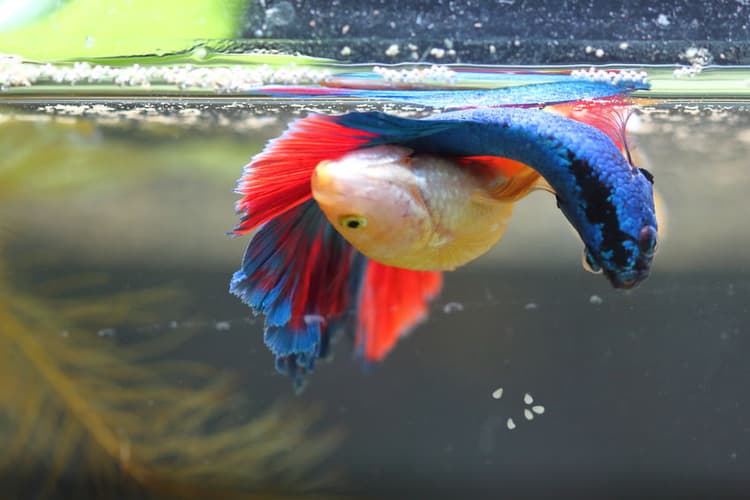
Breeding betta fish, in particular Betta splendens, requires a healthy male and female, a separate breeding tank, steady warm water, attentive conditioning, and a solid plan for nurturing the fry. The process generally comprises the male creating a bubble nest, courtship and spawning, the male taking care of the eggs, and the removal of the parents when the fry are free-swimming.
Betta breeding is an interesting subject, but I wouldn't propose sticking a male and female together without some preparation. Betta fish are aggressive and can cause serious damage if introduced into the tank improperly. If you try to breed a couple, be prepared to care for a possibly large number of young fish. Captive Betta splendens studies are consistent with their typical bubble nest building and male parental care behavior.
Requirements
Get everything ready ahead of time before you breed the bettas. You will generally need :
• Another breeding tank
• An aquarium heater and thermometer (good ones)
• Warm, steady, well-conditioned water
• A mild filtration system like a sponge filter
• A safe lid for tanks
• Places for women to hide
• Floating plants or other suitable surfaces for bubble-nest support
• Suitable meal for conditioning the adults.
• Suitable small live foods for newly free-swimming fry
• Additional room for developing and eventually splitting young fish
Betta splendens are tropical fish, and controlled husbandry research has kept breeding systems around 28°C, a temperature linked to bubble-nest construction and reproductive development.
The Breeding Process: Step by Step
Start with healthy, adult fish that show no apparent symptoms of disease or injury. Feed the males and females individually with a suitable, high-quality feed.
Then put the male in the prepared breeding tank and let him settle in. Breeders will often put the female on a clear divider or in a separate container so the fish may view each other without direct touch.
The male may start to build a bubble nest on the surface of the water. But just because there is a bubble nest doesn’t mean the spawning will happen.
If the fish are showing signs of taking, the female can be gently slipped back in under close observation. Some chasing may occur in courtship; however, separation of the fish is warranted in the case of severe or chronic hostility.
The male hugs the female in a particular way upon successful spawning. Eggs are laid and fertilized, and the male usually gathers dropped eggs and deposits them into the bubble nest.
After spawning is over, the female is usually removed, and the male takes over the nest for maintenance and guarding. The male collects eggs or newly born larvae falling from it.
The eggs usually hatch in around 24 to 48 hours, depending on conditions. Breeders usually remove the male as well once the fry are free swimming and leave the nest.
Fry Care
Often it is more difficult to raise the fry than to get the adult bettas to reproduce.
The new free-swimming fry require very small suitable foods. Depending on size, breeders may employ acceptable live meals during their development and later switch onto freshly hatched Artemia, often referred to as baby brine shrimp.
Water quality matters. Fry are susceptible to fast changes in temperature and deterioration of water quality, yet rigorous filtering can be dangerous too, since tiny fry may struggle against powerful currents.
As the young bettas grow, they demand more food and space. You’ll need to watch for growth and aggression closely and have a plan to pull fish out as needed.
That’s one reason why breeding should not be undertaken lightly. A good spawn can mean you have lots of young fish to feed, clean water for, and space for and to look after.
Common Problems
The male is not doing a bubble nest
Let the fish sit and assay the ambient factors. Breeding behavior might be affected by stress, water conditions that are not ideal, too much current, or simply not being ready.
The male assaults the female
There can be some chasing during courtship, but serious aggression should never be disregarded. If the female is being constantly injured or cannot escape, provide hiding places and separate the fish.
Eggs are missing
Eggs are sterile, do not develop, or are eaten. This can be done by providing appropriate breeding conditions and avoiding needless disturbance.
The fry keep dying off.
Fry losses might be caused by poor water quality, inappropriate diet, temperature instability, disease, or other husbandry difficulties. Raising fish is just a matter of water quality and controlled feeding.
Common Questions (FAQs)
1. Can I just put a male and female betta together?
No. You shouldn’t just stick male and female bettas together and let them go at it without a controlled breeding setup and close observation, as aggression can lead to harm.
2. How long do betta fish eggs take to hatch?
Betta eggs usually hatch within 24-48 hours; however, this may vary depending on factors such as temperature.
3. What takes care of betta eggs?
The male in Betta splendens will generally defend the bubble nest, gather up any eggs that are lost, and take care of the growing young in the early stages.
4. When do I take the female out?
The female is normally removed once spawning is finished to avoid antagonism and interference with the eggs.
5. When do I remove the male?
Usually the fry are free-swimming by the time he no longer needs to tend his bubble nest, so he is removed.
Must Read: Which is the best place for fishing in India