Asked 4 years ago

How do you say you are welcome in Arabic?

Others#Online discussion forum#letsdiskuss#you are welcome in arabic#you are welcome
0
1.9K

Advertisement

Hey, help the community by sharing your answer.

Earn up to 300 points for helpful answers.

Login to Answer

The most common way to say "you're welcome" in Arabic is ****. It is a polite expression used to reply when someone says "Shukran" (Thank you). It can also mean "No problem" or "Don't mention it," depending on the conversation.

Key Takeaways

  • العفو (Al-'Afw) is the standard Arabic way to say "You're welcome."

  •  It is suitable for both formal and informal conversations.

  •  The phrase is widely understood throughout the Arabic-speaking world.

  •  There are several alternative expressions used in different regions and situations.

Pronunciation

Arabic:

العفو

Pronunciation:

Al-'Afw

Meaning:

You're welcome

If you're learning Arabic for the first time, Al-'Afw is the easiest and safest phrase to remember because it is understood in nearly every Arabic-speaking country.

What Does "Al-'Afw" Mean?

The Arabic word العفو (Al-'Afw) literally relates to forgiveness, pardon, or excusing someone. However, in everyday conversation it has a different meaning.

When someone thanks you, Al-'Afw simply means:

  •  You're welcome

  •  No problem

  •  Don't mention it

  •  It was my pleasure

This makes it one of the most useful expressions in everyday Arabic.
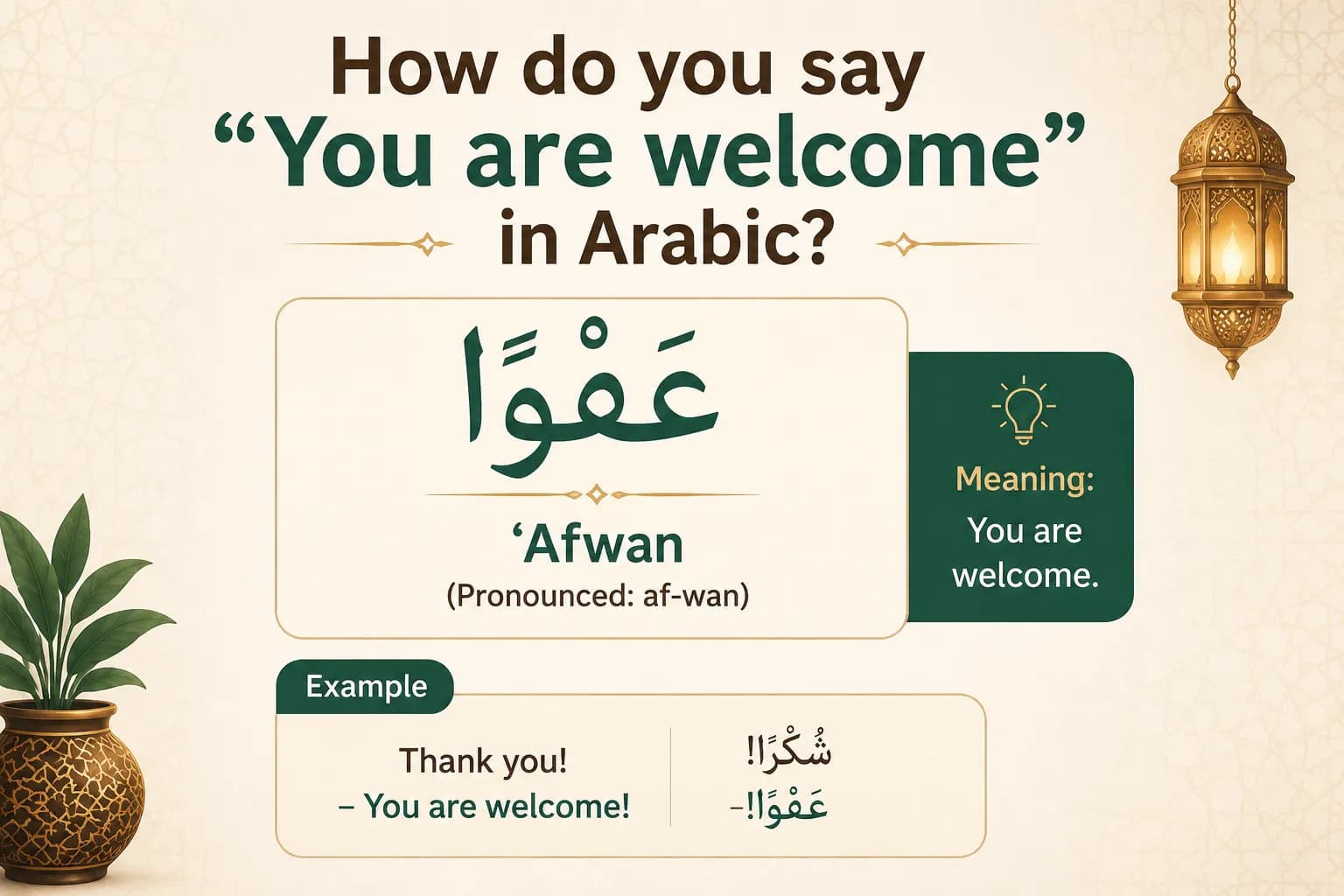
Arabic language infographic showing how to say 'You're welcome' in Arabic with the phrase Afwan (عفوًا).

When Should You Use "Al-'Afw"?

You can use Al-'Afw whenever someone thanks you.

For example:

Person A: Shukran. (Thank you.)

Person B: Al-'Afw. (You're welcome.)

Another example:

Person A: Thank you for your help.

Person B: Al-'Afw. Happy to help.

Whether you're speaking with friends, colleagues, teachers, or strangers, Al-'Afw is always a polite response.

Other Ways to Say "You're Welcome" in Arabic

Although Al-'Afw is the most common expression, Arabic speakers also use other polite responses.

ArabicPronunciationMeaningBest Used In
العفوAl-'AfwYou're welcomeEveryday conversations
على الرحب والسعةAla Al-Rahb Wa Al-Sa'ahYou're most welcomeFormal occasions
لا شكر على واجبLa Shukra 'Ala WajibNo need to thank meRespectful conversations
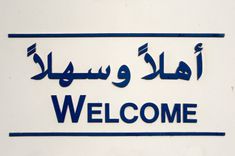
أهلاً وسهلاًAhlan Wa SahlanYou're welcome / WelcomeHospitality and greetings

For beginners, Al-'Afw is the easiest phrase to learn.

Is "Al-'Afw" Formal or Informal?

One advantage of Al-'Afw is that it works almost everywhere.

You can confidently use it with:

  • Family

  • Friends

  • Teachers

  • Colleagues

  • Shopkeepers

  • Customers

  • Strangers

Because it is respectful and polite, it fits both casual and professional conversations.

Regional Differences

Arabic is spoken in more than 20 countries, and each country has its own local dialect.

Even though pronunciation and everyday vocabulary may differ, Al-'Afw is part of Modern Standard Arabic (MSA) and is widely recognized across the Arab world.

Some countries may prefer longer expressions like:

  • La Shukra 'Ala Wajib

  • Ala Al-Rahb Wa Al-Sa'ah

However, if you're learning Arabic, Al-'Afw is the safest phrase to use in almost any situation.

Common Arabic Courtesy Phrases

Learning a few everyday expressions can make conversations much easier.

EnglishArabicPronunciation
HelloمرحبًاMarhaban
Thank YouشكراًShukran
You're WelcomeالعفوAl-'Afw
Pleaseمن فضلكMin Fadlik
Goodbyeمع السلامةMa'a As-Salama

These are among the first phrases most Arabic learners memorize.

Did You Know?

Arabic is one of the most widely spoken languages in the world, with more than 400 million speakers across the Middle East and North Africa. Learning simple expressions like "Shukran" and "Al-'Afw" can make everyday conversations more natural and help you communicate respectfully with native speakers.

Frequently Asked Questions

How do you say "You're welcome" in Arabic?

The most common expression is العفو (Al-'Afw).

How do you reply to "Shukran"?

The usual reply is Al-'Afw, which means "You're welcome."

Is "Al-'Afw" formal?

Yes. It is appropriate in both formal and informal conversations.

Is "Al-'Afw" understood in all Arabic-speaking countries?

Yes. It is part of Modern Standard Arabic and is widely understood throughout the Arabic-speaking world, although local dialects may also have their own expressions.

Are there other ways to say "You're welcome" in Arabic?

Yes. Common alternatives include Ala Al-Rahb Wa Al-Sa'ah and La Shukra 'Ala Wajib, which are often used in more formal or respectful situations.

In Simple Terms

If someone says "Shukran" (Thank you), the easiest and most widely accepted response is العفو (Al-'Afw). It is polite, easy to remember, and understood across Arabic-speaking countries. Whether you're traveling, learning Arabic, or speaking with native speakers, mastering this simple phrase will help you communicate with confidence and respect.

Related 

If you're interested in learning more everyday expressions from different languages, you may also enjoy:


H

Answered By Himani Sharma

I believe every language opens the door to a new way of seeing the world.
View Profile

Himani Sharma is a subject matter expert and content writer with over 6 years of experience covering travel, government schemes, and personal development across digital platforms in India. She holds a Master's degree in Social Sciences from Banaras Hindu University (BHU), an academic background that informs the research depth and analytical approach she brings to every topic she covers. Her content spans domestic and international travel guides, breakdowns of central and state government welfare schemes, and practical personal development resources for Indian readers navigating career, finance, and everyday life decisions. Her work has appeared on platforms including Nativeplanet, Sarkari Result Blog, and UrbanClap Stories, where she has built a reputation for content that is thoroughly researched, clearly structured, and genuinely useful. Over six years, Himani has published 200+ articles across her subject areas, developing a methodical content approach — verified sources, evidence-based arguments, and writing that serves the reader's actual information need rather than just ranking for keywords. Her subject matter grounding gives her a consistent edge in producing content that holds up to professional scrutiny across three distinct but equally research-intensive categories. Across all her writing, her standard remains the same — research first, clarity always, and content that serves the reader rather than just filling a page.

Updated on06/27/26
0

Advertisement

Hey friends, many people feel interested in learning about different languages. It's exciting to start speaking in completely different languages. Because it is important to know different languages at the same time so that you can handle any situation very efficiently. Well, there are so many languages that people of different regions speak around us. Among so many languages, today we are going to discuss the Arabic language. You must have some or the other time heard about Arabic knowledge. Well is a beautiful language but today we are going to learn about how to say 'You are welcome' in the Arabic language.

The Arabic language is definitely one of the popular languages as it is spoken in almost 25 countries. But it is hard to grasp the language at the same time. You may wonder why? Because most of the Arabic people are taught the Fushah language mostly. Both Fushah and Arabic languages have different dialects and cultures. But the only similarity between them is the maintenance etiquette.

Letsdiskuss

Image Source: Google

Suppose, you need to shift to an Arab country due to some working purpose. Then the first and foremost thing that you must remember is manners. Your behavior should be decent that show full mannerisms from your side.

So whenever you are in an Arab, your behavior must always be very down to earth. As far as mannerism is concerned, you should be well aware of some of the Arabic words of Hello, How are you, Thank you, and welcome.

If you are a beginner and unable to understand where to start from, then you should start by saying the mannerisms like Hello, Please, Thank you, and you are welcome.

Article image

Image Source: Google

According to the foreigners, the word 'thank you is very difficult to say but Arabs find it suitable that people of every religion can express his/her with the single word "shukran". Its English translation is thank you. However, there are several other words to express how grateful you are, like Mashkoor, Shakrun Jazeelan, Shukraan Ikteer, Ashkuruk.

So when someone thanks you, your duty is to say you're welcome in return. In Arabic, hi/are needed to utter the word 'Afwan'. Yes, the translation of You're welcome is Afwan. The word has been derived from the Fushah.

So we hope that you have understood our learning session about the Arabic language.

S

Answered By Shrestha Seal

Human Behavior Decoder
View Profile
Answered on08/18/21
0

If you are visiting the Middle East, knowing some Arabic can be very useful. It can help you get around town and even save your life in certain circumstances. Knowing a few key phrases is always a good idea, but we're going to go into some depth on this blog post and teach you how to say "Welcome!" in Arabic.

Labaik! is the word for welcome- it means "you have arrived." You would use this if someone came to your house or office. It's also used when people come back from a trip, like lost soldiers returning home at the end of WWII or college students coming home for summer break.

Letsdiskuss

V

Answered By Vanisha Anand

Author
View Profile

Hey! I am Vanisha Anand from indore, and i am pursuing graduation right now.

Answered on08/17/21
0

Advertisement