Prashastis help historians understand the Gupta rulers because they recorded royal genealogies, military campaigns, conquered kingdoms, political relationships, titles, achievements, and even some personal qualities of kings.
But there's a catch, and I think it's the most important thing to understand about them: a prashasti was written to praise a king, not to give us an unbiased history lesson.
The word prashasti literally means “in praise of.” From the Gupta period, these inscriptions became particularly important sources of information about rulers. Samudragupta's famous Prayaga Prashasti, for example, was composed by his court poet and minister Harishena and inscribed on an Ashokan pillar at Prayaga, present-day Prayagraj.
So historians use prashastis heavily, but they don't simply believe every flattering line.
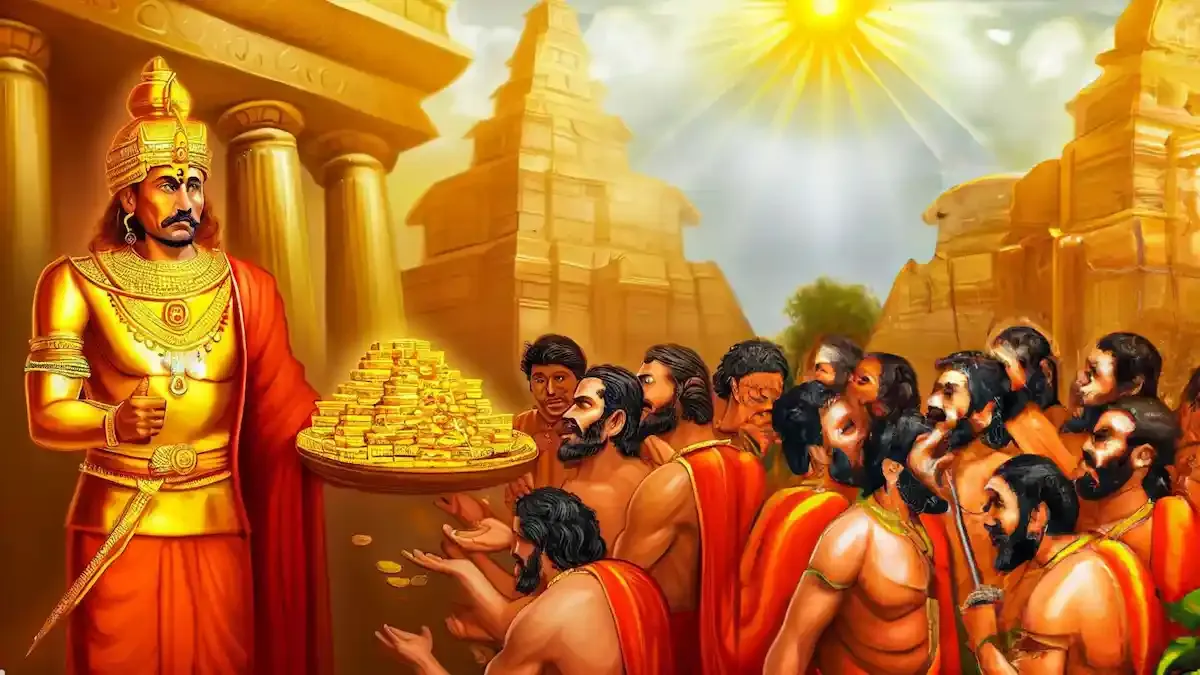
Meaning of Prashasti
A prashasti was essentially a royal eulogy, usually composed in polished Sanskrit by poets associated with the ruler's court.
Think of it as a king's achievements being recorded by someone whose job was partly to make that king look extraordinary.
That obviously creates bias, but it doesn't make the source useless. Hidden inside all that praise are names, places, relationships, campaigns and political details that historians can investigate.
Information in a Prashasti | What historians may learn |
|---|---|
Genealogy | Royal family and succession |
Conquests | Political and military expansion |
Names of rulers | Contemporary kingdoms and kings |
Royal titles | Political status and claims |
Tributes/submission | Relationships with other states |
Personal qualities | Ideal image of kingship |
Historical Information Provided
Prashastis can tell historians who ruled, who their parents or ancestors were, whom they defeated, and how they dealt with conquered territories.
They also help reconstruct political geography.
This is something I find genuinely interesting. A king boasting about defeating another ruler accidentally gives future historians evidence that the other ruler and kingdom existed.
At the same time, historians compare inscriptions with coins, archaeology, literature, and other inscriptions. That's how a royal claim starts becoming usable historical evidence rather than just royal PR.
Samudragupta's Prashasti
The Prayaga Prashasti is probably the clearest example.
Harishena described Samudragupta as a powerful warrior, learned ruler, poet, and conqueror. More importantly for historians, the inscription identifies different groups of rulers whom Samudragupta encountered during his campaigns.
NCERT's account explains that rulers of Aryavarta were treated differently from rulers of Dakshinapatha. Some northern rulers were uprooted and their kingdoms incorporated, while twelve southern rulers were defeated but allowed to rule again.
That tells us something much more useful than “Samudragupta won wars.” It gives clues about his actual political strategy.
Facts vs. Royal Praise
This is where I wouldn't read a prashasti literally.
Descriptions comparing kings with gods or presenting them as unbeatable warriors belong to the language of royal praise.
Specific names, genealogies, territories, and political relationships are more useful historically, especially when other evidence supports them.
From my perspective, prashastis are almost like ancient political biographies written by the ruler's own team. Valuable? Absolutely. Neutral? Not even close.
And that distinction is exactly what makes historical source criticism so important.
Historical Importance
Without prashastis, our understanding of Gupta political history would be much thinner.
They help historians reconstruct:
Gupta genealogy
Territorial expansion
Military campaigns
Relations with neighbouring kingdoms
Political administration
Royal titles and ideology
Sanskrit court culture
The Prayaga inscription is particularly important because it provides detailed information about Samudragupta's conquests and political relationships.
Frequently Asked Questions (FAQs)
1. What does Prashasti mean?
Prashasti is a Sanskrit term meaning “in praise of” and refers to inscriptions composed to glorify rulers.
2. Who wrote Samudragupta's Prashasti?
It was composed by Harishena, who was Samudragupta's poet and minister.
3. Where is Samudragupta's Prashasti found?
It was inscribed on an Ashokan pillar at Prayaga, now Prayagraj.
4. Are all statements in Prashastis factual?
No. They combine historical information with deliberate royal praise, so historians cross-check their claims with other evidence.
Must Read: How did Kushana rulers exemplify themselves with high status?
 Answered by