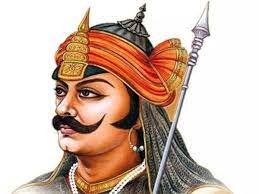
Maharana Pratap's height is one of Indian history's most debated physical details. Popular legend claims he stood 7 feet 5 inches tall. But no verified historical record confirms this. Officials at the Udaipur City Palace Museum, which holds his surviving weapons and armor, say his real height was closer to 5 feet 7 inches — a strong, imposing build for his era, but not a giant.
There's no birth record, court chronicle, or skeletal evidence that gives Maharana Pratap's exact height. What we have is a mix of oral legend, romanticized 19th-century retellings, and museum-verified artifact weights that tell a very different story than the one that goes viral every year on his birth anniversary.
This guide breaks down both versions — the legend and the record — so you know exactly what's fact, what's folklore, and why the confusion exists in the first place.
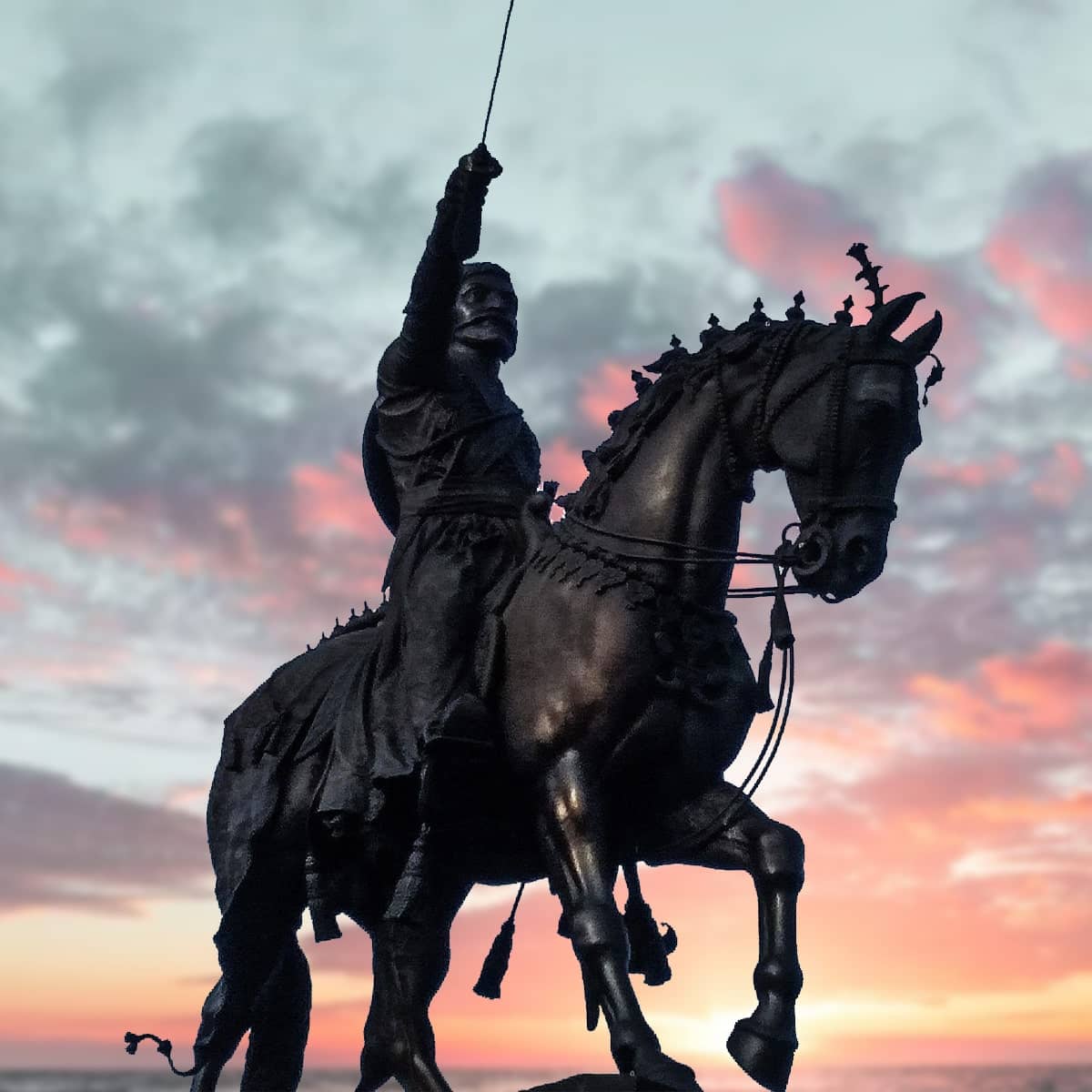
The Popular Legend: Was Maharana Pratap 7'5" Tall?
Search "maharana pratap height" and you'll find the same claim repeated across hundreds of pages: he stood 7 feet 5 inches (about 226 cm), weighed 110 kg, and carried a combined 360+ kg of weapons and armor into battle — an 81 kg spear, two swords totaling 208 kg, and 72 kg of armor.
It's a compelling image. It's also not supported by any primary historical source. No Mewar court record, no contemporary Mughal-era chronicle, and no measured artifact backs up these exact numbers. The figure spread mainly through social media posts, forwarded WhatsApp messages, and blog articles that all cite each other — not original research.
What Historians and Museum Records Actually Say
This is where the story gets more interesting — and more credible.
The Udaipur City Palace Museum, which preserves Maharana Pratap's actual sword, spear, shield, and armor, has weighed these artifacts directly. Museum officials have publicly stated that:
His height was likely around 5 feet 7 inches — tall and powerfully built for a 16th-century Rajput warrior, but nowhere near 7'5".
The combined weight of his surviving weapons and armor is closer to 35–70 kg, not 360 kg.
That's a huge gap between legend and record — and it matters, because 361 kg is roughly the weight of a small motorcycle. No soldier, however strong, could realistically wield that much steel in hand-to-hand combat while riding a horse into battle.
Bottom line: The evidence that actually exists — physical artifacts weighed at a museum — points to a strong but human-scale warrior, not a mythical giant.
Maharana Pratap's Height: Legend vs. Documented Record
- | Popular Legend | Museum & Historical Record |
|---|
Height | 7 ft 5 in (~226 cm) | ~5 ft 7 in (~170 cm) |
Body weight | ~110 kg | Not independently verified |
Spear weight | ~81 kg | Part of ~35–70 kg total gear |
Sword weight (both) | ~208 kg | Part of ~35–70 kg total gear |
Armor weight | ~72 kg | Part of ~35–70 kg total gear |
Total gear carried | ~361 kg | ~35–70 kg |
Source | Oral tradition, social media, uncredited blogs | Udaipur City Palace Museum artifact records |
Maharana Pratap's Height in Feet, Inches, and CM
For quick reference, here's the disputed legendary figure converted across units — useful context, even though it isn't verified:
Compare that to the museum-backed estimate of 5 ft 7 in, which converts to roughly 170 cm (1.70 m) — a realistic height for a well-built Rajput nobleman of the 1500s.
Maharana Pratap vs. Akbar: Height Comparison
One reason the 7'5" legend took hold is the rivalry between Maharana Pratap and Mughal emperor Akbar, his most famous adversary at the Battle of Haldighati. Historical accounts describe Akbar as roughly 5 ft 8 in tall — average-to-tall for his time, but not exceptional.
If Pratap's real height was closer to 5'7", the two rulers were likely near equal in stature. The dramatic 7'5" gap in the legend seems designed to visually exaggerate Pratap's dominance over Akbar — a storytelling device more than a historical fact.
Why the 7'5" Myth Spread
Myths like this rarely appear out of nowhere. A few likely factors explain how it took hold:
Romanticized 19th-century writing. Colonial-era chroniclers, including Lieutenant-Colonel James Tod, wrote heroic, sometimes exaggerated accounts of Rajput history that blended fact with legend.
Oral storytelling traditions. Folk retellings of Haldighati, passed down for generations, naturally amplified Pratap's physical presence to match his legendary courage.
Social media amplification. Posts claiming "360 kg of weapons" and "7'5" height" go viral every year around his birth anniversary (May 9), repeated far more often than the museum's actual findings.
National pride. Pratap's real legacy — refusing to submit to Akbar's empire — is genuinely extraordinary. Some retellings inflate his physical stature to match the scale of his historical impact, even though his real achievements don't need exaggeration.
Chetak: The Horse Behind the Legend
No account of Maharana Pratap's stature is complete without Chetak, his loyal war horse. Chetak famously carried Pratap to safety after he was wounded at the Battle of Haldighati, reportedly leaping across a ravine before succumbing to his own injuries. Chetak's loyalty is as central to Pratap's legend as any claim about his height — and it's a story with far stronger historical grounding.
The Real Legacy of Maharana Pratap
Maharana Pratap ruled Mewar from 1572 to 1597 and is best remembered for the Battle of Haldighati (1576), where his smaller Rajput force fought Akbar's Mughal army to a bloody standstill. He never formally submitted to Mughal rule, choosing years of guerrilla resistance from the Aravalli hills over surrender.
That's the part of his story with real historical weight — documented in multiple accounts and still studied today. His exact height, by comparison, is a detail history simply didn't record with precision. And that's fine: Maharana Pratap's legacy was never about how tall he stood physically. It's about what he refused to bow to.
Frequently Asked Questions
What was the Height of Maharana Pratap?
There's no verified historical record of his exact height. The popular claim of 7 ft 5 in is unsupported. Museum officials at the Udaipur City Palace estimate his height at around 5 ft 7 in, based on the scale of his surviving weapons and armor.
Did Maharana Pratap really carry 360 kg of weapons?
No. This figure isn't supported by any verified source. When his actual sword, spear, shield, and armor were weighed at the Udaipur City Palace Museum, the combined total came to roughly 35–70 kg.
How tall was Akbar compared to Maharana Pratap?
Akbar is generally described as about 5 ft 8 in tall. If Pratap's real height was closer to 5 ft 7 in, as museum estimates suggest, the two rulers were likely close in stature.
What does the Udaipur Museum say about Maharana Pratap's height?
Museum officials have stated publicly that Maharana Pratap "was not a giant man" and that his height was likely around 5 ft 7 in, based on the artifacts preserved and weighed at the museum.
Why is Maharana Pratap said to be 7 feet 5 inches tall?
The figure appears to originate from a mix of oral folklore, romanticized colonial-era writing, and social media posts that circulate every year without citing a verifiable source.
Sources


.jpg&w=1920&q=75)