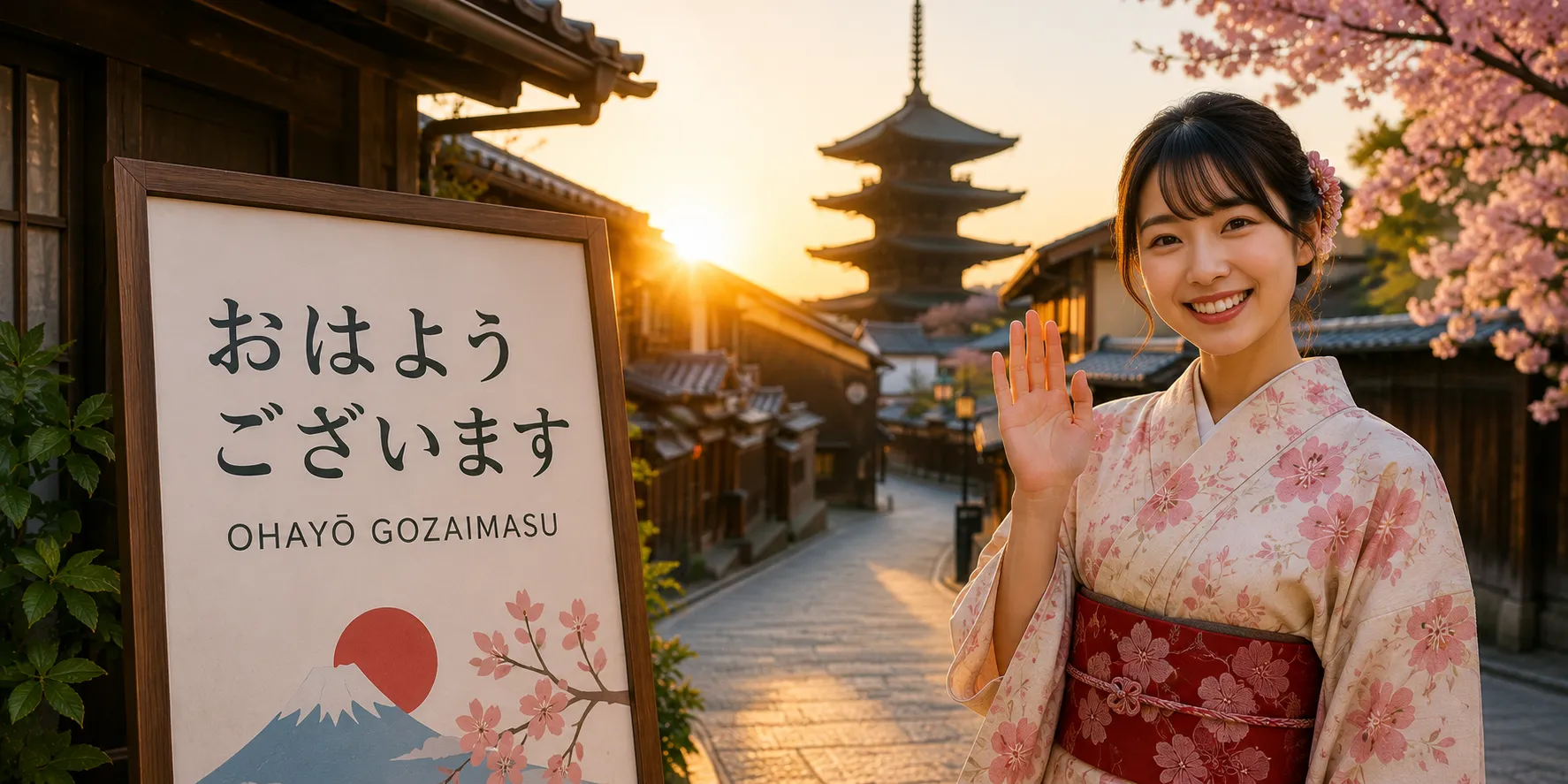
The most common and polite way to say "Good morning" in Japanese is:
おはようございます (Ohayō gozaimasu)
English Meaning: Good morning
This is the standard greeting you'll hear in Japan during the morning, especially in workplaces, schools, hotels, shops, and other formal settings. If you're speaking to someone you don't know well or someone older than you, Ohayō gozaimasu is almost always the safest and most respectful choice.
Pronunciation
Although Japanese may look difficult at first, this greeting is surprisingly easy to learn.
Break it into two parts:
-
Ohayō → oh-ha-yo
-
Gozaimasu → go-zai-mas
When spoken naturally, the final "u" in gozaimasu is often very soft or almost silent, which is completely normal in Japanese pronunciation.
Don't worry if your pronunciation isn't perfect on the first day. Japanese speakers usually appreciate genuine effort far more than flawless pronunciation.
When to Use It
Use Ohayō gozaimasu:
-
When greeting someone in the morning
-
At work
-
At school or university
-
In hotels and restaurants
-
During business meetings
-
When meeting someone for the first time
In Japan, it's common to use this greeting until around 10–11 AM, after which people usually switch to another daytime greeting.
Formal vs. Informal Variations
Japanese greetings change depending on the relationship and situation.
| Japanese Greeting | English Meaning | When to Use |
|---|---|---|
| おはようございます (Ohayō gozaimasu) | Good morning | Formal, workplace, teachers, elders, strangers |
| おはよう (Ohayō) | Morning! | Friends, family, classmates |
| こんにちは (Konnichiwa) | Hello / Good afternoon | Late morning to afternoon |
| こんばんは (Konbanwa) | Good evening | Evening |
If you're ever unsure, choosing the polite version (Ohayō gozaimasu) is the safest option.
Example Sentences
At a Hotel
Japanese:
おはようございます。
English:
Good morning.
At the Office
Japanese:
おはようございます、田中さん。
English:
Good morning, Mr. Tanaka.
Talking to a Friend
Japanese:
おはよう!
English:
Morning!
These are simple phrases, but they're among the first things you'll hear if you visit Japan.
Common Mistakes
Using the Casual Version with Everyone
Many beginners learn:
Ohayō
first.
While it's correct, it's meant for:
-
Friends
-
Family
-
People your own age
When speaking with teachers, clients, hotel staff, or people you've just met, Ohayō gozaimasu sounds much more respectful.
Using It in the Afternoon
Morning greetings are generally used until around 10–11 AM.
After that, Japanese speakers normally switch to:
Konnichiwa (こんにちは)
which means "Hello" or "Good afternoon."
Being Afraid of Pronunciation
Language learners often hesitate because they worry about saying everything perfectly.
In reality, most native speakers appreciate the effort. A simple greeting spoken confidently often leaves a better impression than saying nothing at all.
Related Greetings
Once you've learned Good morning, these are the next greetings worth knowing.
| Japanese | English |
|---|---|
| こんにちは | Hello / Good afternoon |
| こんばんは | Good evening |
| ありがとう | Thank you |
| ありがとうございます | Thank you (Polite) |
| さようなら | Goodbye |
Learning just these five expressions makes traveling in Japan much easier and helps you start everyday conversations naturally.
Why Learning Another Language Is Worth It
One thing I've realized while writing about languages is that learning a new language is rarely just about memorizing words.
It's about opening new opportunities.
Knowing another language can help you:
-
Communicate confidently while traveling.
-
Connect with local people instead of relying entirely on translation apps.
-
Understand another country's culture more deeply.
-
Study or work abroad more comfortably.
-
Qualify for multilingual roles that many employers actively look for today.
Whether it's Japanese, German, French, or Spanish, every new language expands your perspective. You begin to notice cultural traditions, expressions, and ways of thinking that simply don't translate into English. Even if you never become fluent, learning a few everyday greetings can make travel smoother, conversations more meaningful, and your confidence much stronger.
Knowledge almost never goes to waste. Sometimes a language helps you land a job, sometimes it helps you make a friend in another country, and sometimes it simply changes the way you see the world.
Frequently Asked Questions (FAQs)
1. What is the most polite way to say "Good morning" in Japanese?
おはようございます (Ohayō gozaimasu) is the standard polite morning greeting.
2. Can I simply say "Ohayō"?
Yes. Ohayō is the casual version and is commonly used with friends, classmates, siblings, and family members.
3. Until what time do Japanese people say "Good morning"?
It's commonly used until around 10–11 AM, after which people generally switch to Konnichiwa.
4. Is Japanese difficult to learn for beginners?
Japanese has a different writing system and grammar from English, but everyday greetings and basic conversations are easier to learn than many people expect.
5. Why should I learn Japanese?
Japanese can be valuable for travel, higher education, business opportunities, anime and manga enthusiasts, technology careers, and communicating with more than 120 million native speakers around the world.
Must Read:How to say "please" in Japanese?