
Introduction:
Letter writing is one of the oldest and most refined modes of communication which we still employ nowadays. In the lovely Malayalam language, the art of letter writing is called "കത്ത് എഴുതൽ" (Kath Ezuthal). For formal official writing and also for informal friendly cards, keeping up a well-structured and properly formatted style for writing Malayalam letter formatting ensures that your message comes across in a clear and precise tone, with a tone of respect also being maintained.
The understanding of the finer points in the Malayalam letter writing format allows students to score more in their examinations and professionals in making a positive impact in the workplaces they are employed in. In this tutorial article, we shall take you through each element in the Malayalam letter writing format, covering formal and informal types, so that you get the in-depth understanding of each style.
Different Kinds of Malayalam Letter Format
Before you learn the exact format for Malayalam letters, you should know that there are two main types of Malayalam letters:
1. Letters of Formality (ആധാരിക കത്തുകൾ)
You use formal letters to talk to schools, offices, government departments, and other groups in an official way. They use a strict Malayalam formal letter style and tone.
Some examples are:
-
Applications for leave
-
Letters of complaint
-
Letters of request
-
Letters of resignation
2. Unofficial Letters (അനൗദ്യോഗിക കത്തുകൾ)
Letters that aren't formal are more personal and friendly. They are written to friends, family, or relatives. The tone here is emotional, casual, and relaxed, but the basic format for a Malayalam letter still works.
Some examples are:
-
Dear Friend
-
A letter to parents
-
Notes of thanks
The Official Malayalam Letter Format (മലയാളം ഔദ്യോഗിക കത്തിന്റെ രൂപം)
You need to use a certain Malayalam letter format if you want your official or business letter to look neat and professional.
Structure of Malayalam Formal Letter Format:
-
Address of the Sender – On the top left, write your full address.
-
Date – Write the date below the address.
-
Receiver's Address – The person or organization you are writing to.
-
Subject (വിഷയം) – A clear, short statement of what you want to do.
-
Salutation (ആദരവചനം) – A polite way to say hello, like "പ്രിയ സാർ" or "ആദരപൂർവ്വം സാർ."
-
Body of the Letter – In simple, polite Malayalam, make it clear why you are writing.
-
Closing (Thanks, വിനയപൂർവ്വം) – Finish the letter in a polite way.
-
Signature – Your full name and title (if you have one).
This is the standard format for the Malayalam official letter format that is used in schools, offices, and government buildings.
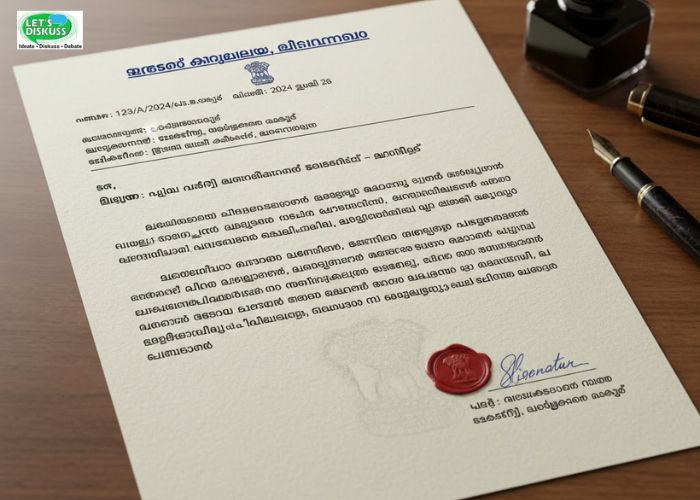
Resignation Letter Format in Malayalam
Example:
അജയ് കുമാർ
പുതിയ റോഡ്, തിരുവനന്തപുരം
12-08-2025
To
The Manager
ABC Company
തിരുവനന്തപുരം
വിഷയം: രാജിക്കത്ത്
ആദരപൂർവ്വം സാർ,
ഞാൻ ഇപ്പോൾ ABC കമ്പനിയിൽ പ്രവർത്തിക്കുന്നു. വ്യക്തിപരമായ കാരണങ്ങളാൽ, ഞാൻ എന്റെ സ്ഥാനത്തു നിന്ന് രാജി സമർപ്പിക്കുകയാണ്. രാജി അംഗീകരിക്കാമെന്ന് അഭ്യർത്ഥിക്കുന്നു.
വിനയപൂർവ്വം,
അജയ് കുമാർ
This example is a perfect Malayalam letter, with the right alignment, tone, and closing. You can also change it to fit any other Malayalam letter format for a resignation.
Format for an Informal Malayalam Letter (അനൗദ്യോഗിക കത്തിന്റെ രൂപം)
Informal Malayalam letters are less formal and more personal. It's all right to be flexible, but it's still wise to have a general Malayalam letter structure so that your writing can be neat.
Structure:
-
Sender's Address
-
Date
-
Greetings (പ്രിയ [നാമം],)
-
Body of the Letter – Write in a natural way, sharing your thoughts and feelings.
-
Conclusion – Thank you, love, and so on.
-
Name or Signature
Example:
വിജയ് കുമാർ
കോട്ടയം
10-10-2025
പ്രിയ അനു,
സുഖമാണോ? ഏറെ ദിവസമായി എഴുതിയിട്ടില്ല. കഴിഞ്ഞ മാസം നമ്മുടെ സ്കൂൾ റീയൂണിയൻ വളരെ മനോഹരമായിരുന്നു. നിന്റെ അഭാവം തീർത്തും അനുഭവപ്പെട്ടു. ഉടൻ കാണാമെന്നാശിക്കുന്നു.
സ്നേഹത്തോടെ,
വിജയ്
This is a simple but great example of an informal Malayalam letter format. It's personal, emotional, and real.
Formal Meaning in Malayalam (ഫോർമൽ എന്നത് മലയാളത്തിൽ)
The English word "formal" means "official, polite, and organised."
In Malayalam, the word "formal" can mean "ആധാരിക" or "അധ്യക്ഷമായ", depending on the situation.
So, the Malayalam formal letter format is the structure that is used in professional communication that is polite and official.
How to Write Malayalam Letters That Work
Follow these tips to write Malayalam letters that are both impressive and grammatically correct:
-
Always start with the address, date, and greeting when writing a letter in Malayalam.
-
Be clear and polite. Don't use slang or emotional language in formal letters.
-
Keep it short; don't write too much in your letter. Respect the reader's time.
-
Check your letter for grammar and spelling mistakes.
-
Use the right closing: "വിനയപൂർവ്വം" for formal letters and "സ്നേഹത്തോടെ" for informal letters.
-
Make sure the tone fits the purpose. For example, keep official letters formal and family letters friendly.
-
For both formal and informal letters, use the Malayalam Letter Writing Format.
These tips will help you write Malayalam letters that look professional and natural every time.
Mistakes That People Often Make When Writing Letters in Malayalam
People who follow the Malayalam letter format make small but important mistakes. To make your writing stand out, you should stay away from these:
-
Putting formal and informal language in the same letter.
-
Forgetting important details like the date, subject, or address.
-
Using spoken Malayalam instead of written grammar.
-
Translating directly from English (which isn't natural).
-
Not using the right greetings or using too casual language in official letters.
-
Not using the right format for writing Malayalam letters makes them less clear.
These are some of the most common mistakes that can be avoided when writing a polished and respectable letter in the right Malayalam letter format.
Final Thoughts
Students, workers and any other person wishing to communicate effectively will find it easy to learn how to write Malayalam letter format. Whatever you want to do, be it write a formal work letter or make an informal letter to a friend, use the right format so that what you say is clear, polite and successful.
The sequence in the arrangement of words in a Malayalam letter is not only a question of style, but it also demonstrates discipline and respect of the culture within which you reside.
Every letter you write, whether it's a formal letter or an informal one, shows how much you care about the language and the person you're writing to.
The next time you need to write a letter, use this guide to find the right Malayalam letter format and make sure your writing is clear and eloquent.



.jpeg&w=750&q=75)
