A
Anushka · 2 years ago
Exploring innovations, digital trends, and scientific discoveries through reliable, practical, and easy-to-understand content.

Is Intel Core i5 Good for Gaming? Performance, FPS & What You Need to Know

6
786

Join this conversation

Sort By
Replying to the question above
Answered on09/11/26

Yes, an Intel Core i5 can be a very good choice for gaming. For most gamers, a modern i5 provides enough performance to run popular games smoothly, especially when paired with a capable graphics card. Your FPS will depend on the CPU generation, GPU, RAM, game, and resolution. A newer i5 is usually a better choice than an older high-end model. If you’re building a gaming PC, focus on balancing the CPU and GPU rather than spending too much on one component.

A
View Profile
0
Replying to the question above
Answered on08/26/26

Yes, an Intel Core i5 is a great choice for gaming, especially the newer generations. It offers a good balance of performance and price, delivering smooth FPS in most modern games when paired with a capable graphics card. For 1080p and 1440p gaming, a recent i5 processor can handle both gaming and everyday tasks very well. If you’re on a budget, an i5 is often one of the best-value gaming CPUs.

Simon Hopes
View Profile

Simon Hopes is a renowned author and social media enthusiast.

0
Replying to the question above
Answered on08/25/26

Yes, an Intel Core i5 can be a good choice for gaming, especially when paired with a capable graphics card. Modern i5 processors can handle popular games smoothly and offer a good balance between performance and price.

Gaming performance also depends on the GPU, RAM, storage, and game settings, so the processor alone does not determine FPS. For most gamers, choosing the right combination of CPU and GPU is more important than simply buying a higher-end processor.

Vibhav Aggarwal
Great work belongs to will of power
View Profile

Learner

0
Replying to the question above
Answered on06/23/26

Yes, an Intel Core i5 processor is generally good for gaming, especially if you're using a recent-generation model. In fact, many gamers use Core i5 CPUs because they offer a strong balance between performance and price without requiring the budget of a high-end processor.

From what I've seen, gaming performance depends on more than just the CPU. A modern Core i5 paired with a capable graphics card can handle most popular games smoothly at 1080p and even 1440p resolutions. Games such as Fortnite, Call of Duty, Minecraft, Apex Legends, and Valorant can run very well on a system built around a current-generation Core i5.

One thing many people overlook is that the graphics card usually has a bigger impact on gaming performance than the processor. For example, a Core i5 combined with a strong GPU will often deliver a better gaming experience than a premium processor paired with an entry-level graphics card.

Some reasons why Core i5 processors remain popular among gamers include:

  • Strong gaming performance for the price.
  • Good balance between single-core and multi-core performance.
  • Suitable for most modern AAA and esports titles.
  • Lower cost compared to higher-end gaming CPUs.
  • Capable of handling gaming, streaming, and everyday tasks simultaneously.

That said, not all Core i5 processors perform the same. A newer Core i5 will usually outperform an older generation by a significant margin. That's why it's important to look at the exact model rather than focusing only on the "i5" name.

In my opinion, a modern Intel Core i5 is more than enough for most gamers. Unless you're building an ultra-high-end gaming system, doing heavy professional workloads, or chasing the absolute highest frame rates possible, a recent Core i5 processor can provide excellent gaming performance without overspending.

Overall, if you're building or buying a gaming PC, an Intel Core i5 is often one of the best value-for-money choices available. The key is pairing it with enough RAM, a capable graphics card, and fast storage to get the most out of your system.

Also Read: Which Brand is the Best for Buying a Gaming Laptop?

A
Analyzing PC hardware, gaming performance, and technology buying decisions
View Profile

Aanya Sharma is a science and technology writer with over 5 years of experience and 300+ published articles across leading digital platforms. She holds a Bachelor's degree in Science (Physics) from Delhi University, which grounds her writing in scientific literacy and gives her the ability to evaluate technical claims with accuracy. Her work has appeared on platforms including The Wire Science, Analytics India Magazine, and Digit.in, where she has covered artificial intelligence, space exploration, consumer technology, environmental science, and emerging tech policy. With a focus on accuracy and clarity, her writing makes complex scientific and technological developments accessible to readers without a technical background. Aanya has participated in science communication panels at events including the India Science Festival and has been recognised as a contributor to responsible tech journalism in India. She is an active member of the National Association of Science Writers (NASW) and maintains a public portfolio of her published work. Across all her work, her writing is grounded in verified sources and a commitment to editorial standards — delivering content that readers can rely on in a space where misinformation spreads easily.

1
Updated on06/06/26

Seo is one of the fastest growing internet based industry. Many of the smart brained people have already dedicated themselves to this important aspect of doing business online. But the concept of SEO is not yet fully clear to many people. So, here I am going to give a brief overview of SEO and what are the techniques associated with SEO.

SEO is the abbreviation of Search Engine Optimization, which, as the name suggests, is a way to optimize your website for ranking on search engines. SEO is a technique which is done on a website to make it visible and appealing to the search engines.

A common notion about SEO is that it is a single strategy. But in reality, SEO is a collection of techniques (and tricks) which lead a search engine to believe that the site is trusted. There are many techniques used in SEO as the steps differ for each site but some of the common and most used SEO techniques are:

1. On-Page SEO: This kind of SEO is done inside the website. The on-page SEO consists of various in-site techniques such as:

(a) Keyword Stuffing: To stuff relative keywords in limited density in blogs or articles (Remember not to be confused with Over Stuffing).

(b) Internal Linking: Linking pages internally to create web of pages.

(c) Content Quality: Finding a Focus Keyword and writing in detail about that particular topic with extreme care of quality.

(d) Tags and Meta-Description: Using Tags and Meta-Description in every page of the website.

2. Off-Page SEO: This is the type of SEO done outside the premise of our own website. All the techniques of this strategy are done using other websites and webpages. Some of the most useful Off-Page techniques are:

(a) Backlinking: The most common term associated with SEO is Backlinking. It is the technique used to get link from other authority sites towards your website or webpage.

(b) Social Submission: This technique is used to increase the engagement of people towards your website through social media.

(c) Guest Posting: Posting blogs and articles of other higher authority websites to get essential traffic is known as Guest posting.

(d) Content Sharing: Sharing content to get referral audience towards your website. This is a great way to increase word of mouth popularity of website.

Although Keyword research and Competitors' audits are not generally included in SEO, they are one of the most important techniques used alongside. So, if you are not doing SEO on your website till now, just get up and start using these amazing SEO techniques to skyrocket your online presence now.

A
View Profile
2
1
Replying to the question above
Updated on08/25/26

Intel Core i5 has long been the preferred processor by gaming enthusiasts who need good performance at reasonable prices. Although it may not possess the brute force of its high-end counterparts, such as Core i7 and Core i9, the Core i5 series is still able to deliver a computing experience that can be regarded as a ‘gaming-class,’ one satisfying most gamers.

One of its greatest single-core performances is what makes Intel Core i5 processors strong. For instance, various games, especially those that are quite old or do not run on many cores depend more on how fast one core is operating than any other factor. Therefore, with this powerful single-core attribute that comes with it, there are no delays or stumbles in gaming when using Intel’s core i5; this means that a person gets immersed in the game without seeing annoying pauses or jerky movements.

Article image

In addition, today’s modern Core i5 processors have sufficient multi-threading capabilities especially if they happen to be the latest generations ones. Hence, games and applications which are threaded heavily can perform better with multiple cores and threads leading to smoother play when playing power-hungry titles featuring complex physical effects and graphic designs.

Apart from that, the affordability of Intel Core i5 processors attracts many game lovers who would still want to enjoy the gaming experience without having to spend much on it. Unlike the higher-priced Core i7 and i9 processors, which often come with a considerable cost premium, the Core i5 provides an attractive trade-off between performance and value.

However, it’s important to consider other processor factors when building a gaming PC. These include a good graphics card (GPU), enough RAM, and storage speed are also vital components in enhancing the overall gaming experience. Though most modern games run smoothly on Intel Core i5, combining it with a high-end GPU will deliver optimal performance even at higher graphics settings and resolutions thereby ensuring better visuals.

Considering all aspects, for gamers who desire good single-core strength, moderate multi-core capability, and low pricing; the Intel Core i5 is indeed perfect for gaming. Although it may not be the very best option available in the market today, it is still a perfect balance for many players since it offers excellent performance which does not cost too much. In combination with a decent graphics card and other associated parts, a system based on this model can surely provide great pleasure during playtime both for casual and professional users.

Read Also: How can I Find a Good Gaming Laptop?

Abhisek Ghosh
Organic Life Lover
View Profile

Blogger and shayar

1
Replying to the question above
Updated on08/25/26

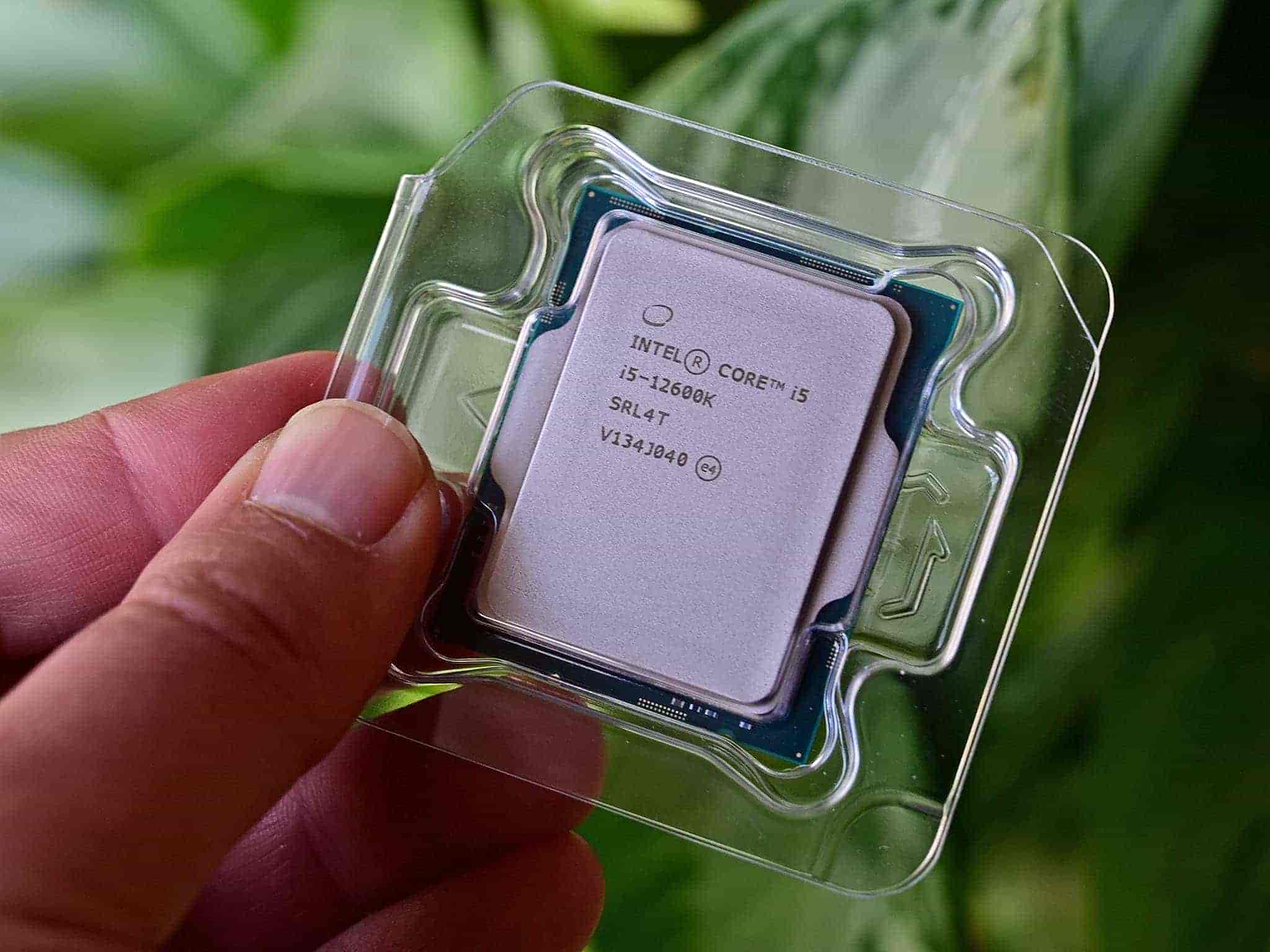
Intel's Core i5 processors have long been a popular choice for PC gaming, offering a balance of performance, power efficiency, and affordability. The latest generation of Core i5 CPUs, such as the 12th and 13th-generation models, have continued to deliver impressive gaming capabilities.

One of the key factors that makes the Core i5 a solid choice for gaming is its multi-core architecture. Modern games are increasingly taking advantage of multi-threaded performance, and the Core i5's typical configuration of 4 to 6 cores with 8 to 12 threads provides excellent handling of in-game tasks. This allows for smooth and responsive gaming experiences, even with demanding titles.

According to the latest benchmarks and reviews from reputable sources like Tom's Hardware, Anandtech, and Techspot, the latest Core i5 CPUs are capable of delivering excellent frame rates in a wide range of games. For example, the Intel Core i5-12400F, one of the more recent and budget-friendly Core i5 options, is shown to outperform the previous generation Core i5-11400F by a significant margin in popular games like Cyberpunk 2077, Fortnite, and Battlefield 2042.
Article image

In terms of real-world performance, the Core i5-12400F is often compared favorably to the more expensive Ryzen 5 5600X from AMD. While the Ryzen chip may have a slight edge in some CPU-intensive tasks, the Core i5-12400F holds its own in gaming, sometimes even surpassing the Ryzen 5 5600X, particularly at higher resolutions where the GPU becomes the more dominant factor.

One aspect that makes the Core i5 series appealing to gamers is its balance of performance and power efficiency. The latest 12th and 13th gen Core i5 CPUs are built on the efficient Intel 10nm and 7nm process technologies, respectively, allowing them to deliver strong gaming performance while maintaining relatively low power consumption and heat output. This can be particularly beneficial for systems with less robust cooling solutions or in compact gaming builds where thermal management is a concern.

Another advantage of the Core i5 lineup is its relatively lower price point compared to higher-end Core i7 and Core i9 processors. This makes the Core i5 an attractive option for budget-conscious PC builders or those looking to optimize their gaming rig's cost-to-performance ratio. With the right pairing of a Core i5 CPU and a capable mid-range or high-end graphics card, gamers can enjoy excellent performance without breaking the bank.

It's important to note, however, that the suitability of a Core i5 processor for gaming can vary depending on the specific game, resolution, and other hardware components in the system. Games that are more CPU-intensive, such as strategy, simulation, or open-world titles, may benefit from the additional cores and threads offered by higher-end Core i7 or Core i9 CPUs. Similarly, gamers targeting higher refresh rates at lower resolutions may see more pronounced differences in performance between the Core i5 and more powerful CPU options.

In conclusion, the latest Intel Core i5 processors are an excellent choice for gaming in 2024. With their strong multi-core performance, power efficiency, and favorable price points, Core i5 CPUs offer a compelling balance of gaming capabilities and value. While there may be specific scenarios where higher-end CPUs might provide a slight advantage, the Core i5 series remains a top consideration for the vast majority of PC gamers seeking a well-rounded and cost-effective gaming experience.

Read Also: Which are the most expensive gaming laptop?

Joe Rose
Eleven years building systems at scale — writing about technology from the inside, where architecture decisions have real consequences.
View Profile

Joe Rose is a Systems Architect and science and technology writer with over 11 years of hands-on experience designing and building large-scale distributed systems, cloud infrastructure, and enterprise technology solutions. He holds a Master of Science in Computer Science from Carnegie Mellon University and a Bachelor of Engineering in Software Engineering from the University of Toronto — credentials that anchor his technical writing in one of the most rigorous engineering traditions in North America. His content covers systems design, cloud architecture, distributed computing, cybersecurity, AI and machine learning infrastructure, software engineering best practices, and the practical implications of emerging technology for enterprises and developers. His work has appeared on platforms including IEEE Spectrum, Wired, and ACM Queue, where he contributes technically rigorous articles and analyses for engineers, technology leaders, and informed readers who want science and technology content written by someone who has actually built the systems being discussed. Over 11 years, Joe has architected enterprise systems for organisations across North America and Europe, working across sectors including fintech, healthcare technology, and cloud infrastructure. He holds AWS Solutions Architect Professional and Google Cloud Professional Cloud Architect certifications, has published 300+ articles and technical papers, and has presented at AWS re:Invent and QCon London. He is a Senior Member of the Institute of Electrical and Electronics Engineers (IEEE). Across all his writing, every technical claim is verified against current engineering practice, every architectural recommendation reflects real-world implementation experience, and no technology trend is covered without examining the systemic tradeoffs that practitioners actually face — because technology writing that ignores how systems behave under real conditions is not useful to the people who build them.

1