No, not for long.
An owl cannot survive without most or all of its feathers because feathers are essential for almost every aspect of its survival. They allow an owl to fly, regulate body temperature, stay waterproof, camouflage itself, protect its skin, and most importantly, hunt silently. Without feathers, an owl would quickly become vulnerable to cold, injury, starvation, dehydration, and predators.
If an owl loses a few feathers naturally during molting, there's usually no problem because new feathers grow back gradually. But if it loses most of its plumage due to disease, trauma, parasites, or feather-damaging conditions, it becomes a serious medical emergency that requires rehabilitation.
Why Are Feathers So Important?
People often think feathers are simply for flying.
In reality, they're much more than that.
For an owl, feathers function almost like a complete survival system.
They help with:
-
Silent flight
-
Body insulation
-
Waterproofing
-
Camouflage
-
Protection from injuries
-
Balance during flight
-
Steering
-
Courtship displays
One fascinating fact about owls is that their specialized wing feathers contain tiny serrations and soft fringes that reduce air turbulence, allowing them to fly almost silently. This silent flight gives them a huge hunting advantage because prey often cannot hear the owl approaching.
Without these specialized feathers, an owl would lose one of its greatest evolutionary advantages.
Effects of Losing Feathers
If an owl loses most of its feathers, several life-threatening problems appear almost immediately.
Unable to Fly Properly
Flight feathers generate lift and control.
Without them, an owl cannot:
-
Hunt efficiently
-
Escape predators
-
Reach nesting sites
-
Travel between trees
For a wild owl, losing the ability to fly often means losing the ability to survive.
Loss of Body Heat
Feathers trap warm air close to the body.
Without this insulation:
-
Cold weather becomes dangerous.
-
Rain removes body heat much faster.
-
Energy requirements increase dramatically.
Even healthy birds can develop hypothermia if they lose too much plumage.
Hunting Becomes Extremely Difficult
Owls rely on surprise attacks.
Their silent feathers help them approach prey without being detected.
Without those feathers:
-
Flight becomes noisy.
-
Prey escapes sooner.
-
Hunting success drops significantly.
For a predator that depends on successful hunting almost every night, this can quickly lead to starvation.
Higher Risk of Injury
Feathers also act as protective armor.
Without them, the skin becomes much more vulnerable to:
-
Scratches
-
Sun exposure
-
Rain
-
Insect bites
-
Minor impacts during flight
What Causes an Owl to Lose Its Feathers?
Complete feather loss is uncommon in healthy wild owls.
Possible causes include:
Natural Molting
All birds replace old feathers gradually.
This is a completely normal process.
Importantly, owls do not lose all their feathers at once. Their feathers are replaced over an extended period so they can continue flying and hunting.
Parasites
Heavy infestations of mites or lice can damage feathers and lead to excessive feather loss.
Disease
Certain viral infections, nutritional deficiencies, or skin disorders can affect feather growth.
Injury
Predator attacks, accidents, or collisions may result in localized feather loss.
Stress
Chronic stress in captive birds may contribute to abnormal feather damage or feather-picking behaviors.
Recovery & Treatment
The good news is that feathers can regrow, provided the feather follicles remain healthy.
Treatment depends on the underlying cause.
Wildlife veterinarians may provide:
-
Nutritional support
-
Parasite treatment
-
Infection management
-
Protected rehabilitation
-
Warm housing until feathers regrow
If an owl cannot fly, it usually cannot be released back into the wild until its plumage has recovered sufficiently.
Why Do People Even Ask This Question?
At first glance, this sounds like one of those unusual internet questions.
But there's actually a reason people search it.
Most people become curious after seeing:
-
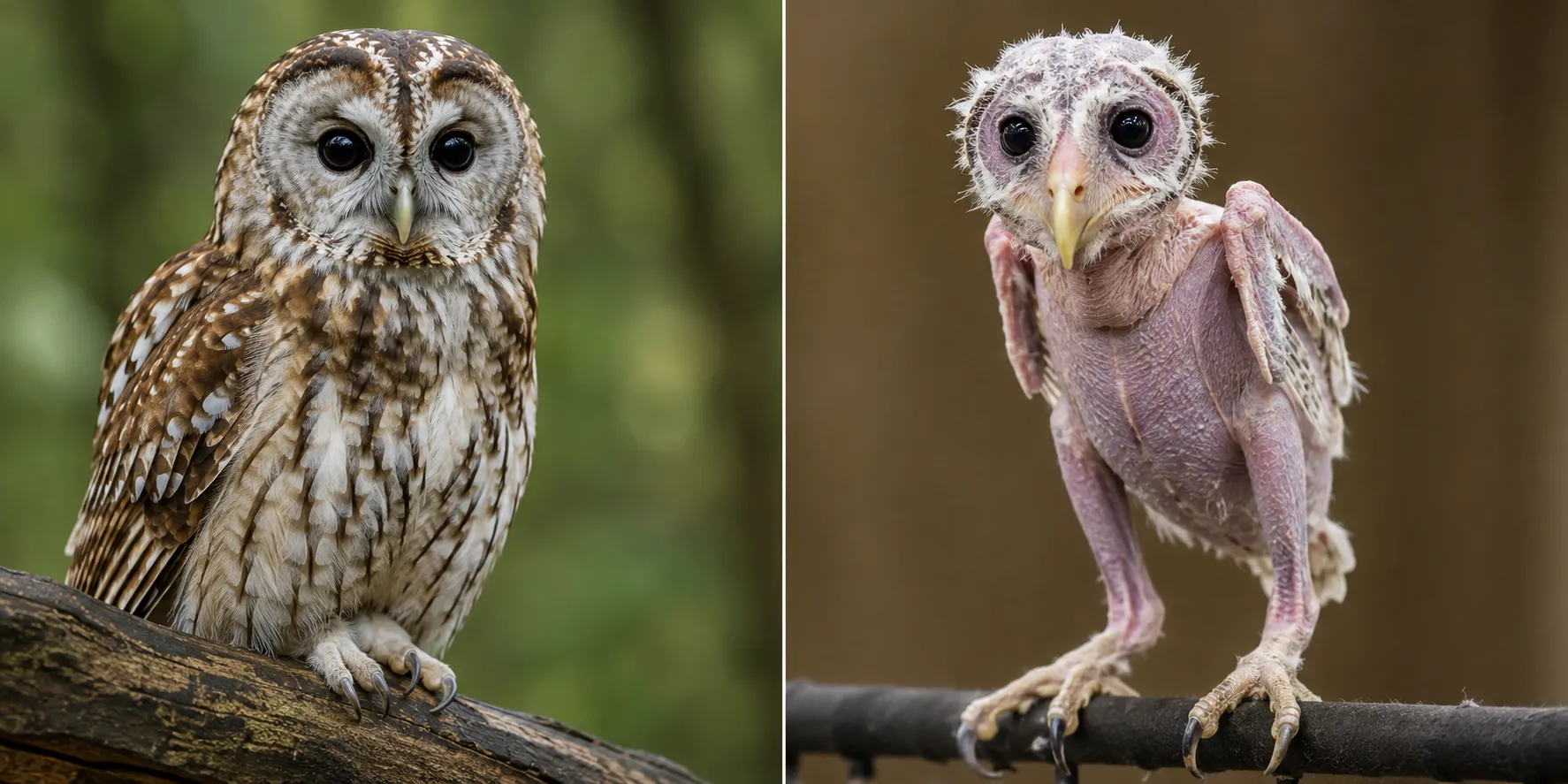
Viral photos of nearly featherless owls.
-
Rescue videos shared by wildlife rehabilitation centers.
-
Owls suffering from diseases or severe feather loss.
-
Images that make an owl look completely different from what we're used to seeing.
When an owl loses its feathers, it almost looks like an entirely different animal. That naturally makes people wonder:
"Can it actually survive like this?"
It's a simple question, but it leads to a much deeper understanding of how important feathers really are for birds.
Common Misconceptions
"Feathers are only for flying."
No.
Feathers are essential for insulation, camouflage, waterproofing, communication, protection, and silent hunting.
"Owls lose all their feathers every year."
They don't.
Owls molt gradually, replacing old feathers over time so they can continue flying normally.
"A featherless owl can simply learn to live without feathers."
Unfortunately, no.
Without proper plumage, a wild owl has very little chance of long-term survival unless it receives professional care.
Frequently Asked Questions (FAQs)
1. Can an owl survive if it loses a few feathers?
Yes. Losing a small number of feathers during natural molting is completely normal, and new feathers gradually replace them.
2. Why are owl feathers different from those of other birds?
Owls have specialized wing feathers with tiny serrations and soft fringes that allow nearly silent flight, helping them hunt more effectively.
3. Do owl feathers grow back?
In most cases, yes. If the feather follicles aren't permanently damaged, new feathers usually grow during future molting cycles.
4. Why do featherless owls look so different?
Feathers make up much of an owl's visible shape. Without them, their long legs, slender body, and relatively small frame become visible, making them look almost unrecognizable.
5. What should I do if I find an owl with severe feather loss?
Do not try to treat it yourself. Contact a licensed wildlife rehabilitator or local wildlife rescue organization as soon as possible, since feather loss can indicate serious illness or injury.
Owl Feathers at a Glance
| Feature | Why It Matters |
|---|---|
| Flight | Generates lift and control |
| Silent Hunting | Allows owls to approach prey unnoticed |
| Insulation | Maintains body temperature |
| Protection | Shields skin from injury and weather |
| Camouflage | Helps avoid predators and ambush prey |
| Can an Owl Survive Without Them? | Only temporarily with human rehabilitation; long-term survival in the wild is extremely unlikely. |
Must Read:How many animal species do we have?
 Answered by