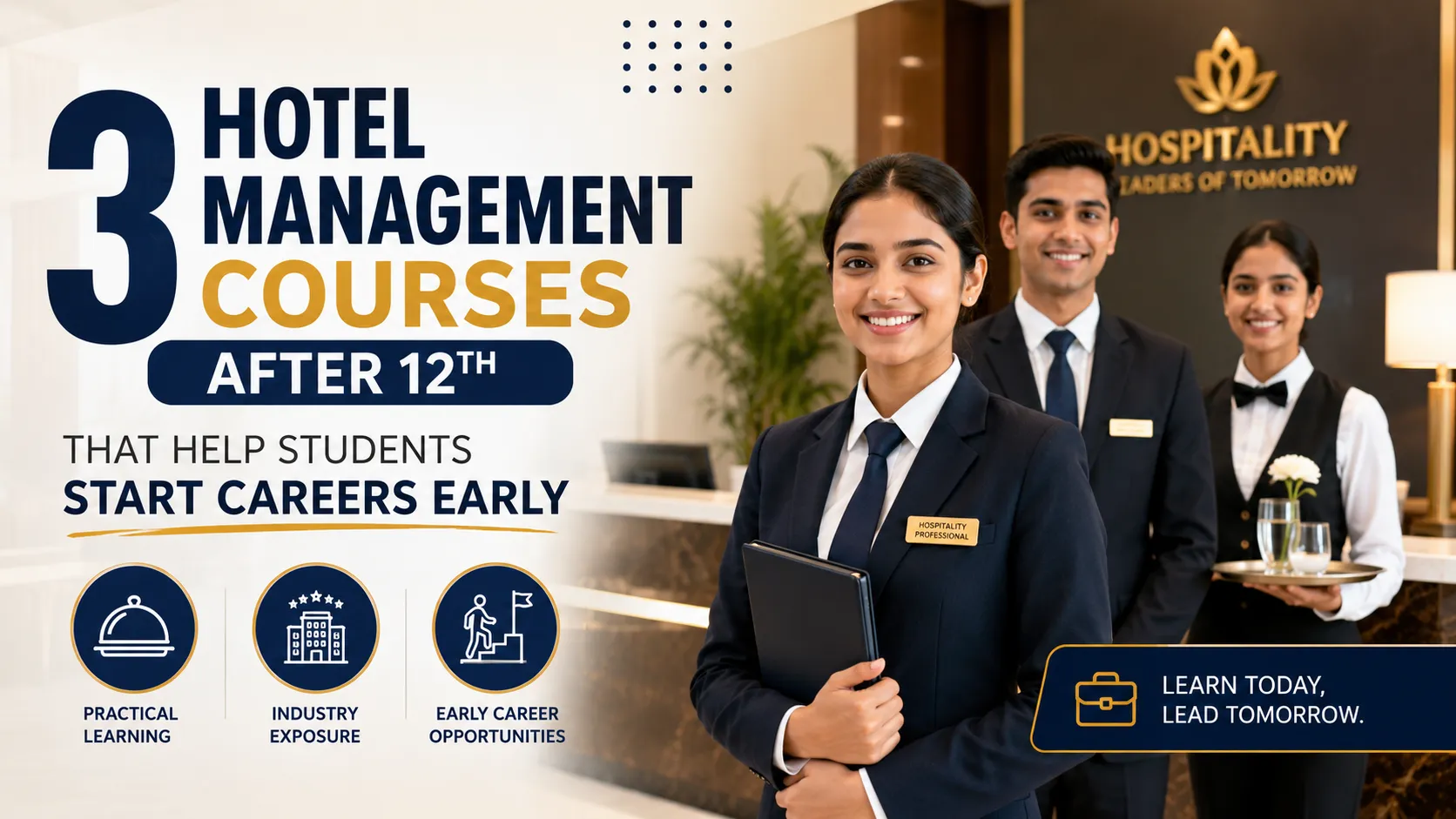
A hospitality degree was once considered enough to secure a place at a leading hotel chain. Students completed their academic training, undertook a short internship, and entered the workforce expecting to learn the realities of hotel operations on the job. That model worked when the industry was expanding at a steadier pace and employers had the time and capacity to train fresh graduates extensively.
The industry no longer operates that way.
Hotels today are expanding faster than ever, while guest expectations continue to rise and service delivery becomes increasingly complex. According to TeamLease's Employment Outlook Report, 66% of travel and hospitality companies planned workforce expansion, with the sector projecting 8.2% employment growth. Yet one challenge remains consistent: finding graduates who can transition confidently into operational roles from day one.
This shift is exposing a fundamental limitation in many traditional hotel management courses. While they continue to provide academic foundations, employers increasingly value practical capability, workplace familiarity, and service readiness alongside qualifications. As a result, students evaluating hotel management courses after 12th are beginning to ask a different question: not which degree will get them into the industry, but which learning model will prepare them to succeed in it.
The conversation around hotel management courses is therefore changing. Taran Singh, a recognized edtech expert and Sri Chinmay Deodhar Awardee, who has given career counseling to over a thousand students, states, "Students need hands-on experience to succeed in hospitality today.” According to these insights, here are some hotel management courses that combine academic knowledge with continuous industry participation, real workplace exposure, and hands-on operational experience.
Emversity
Emversity is an industry-integrated skilling platform built around a simple premise: hospitality readiness is developed through training in real hotel environments, not through classroom learning alone. As the hospitality industry expands and employers increasingly prioritise operational capability, many traditional hotel management courses are being challenged to bridge the gap between academic education and workplace expectations.
To address this, Emversity works with hospitality employers and university partners to integrate industry exposure, applied learning, and workplace immersion into the hospitality management training programs. Learners gain hands-on experience across guest relations, front office operations, housekeeping, food and beverage service, and hospitality operations working at leading brands including IHCL (Taj Hotels), Marriott International, Fairmont Hotels & Resorts, and Lemon Tree Hotels.
The platform also provides industry-recognized credentials such as the Cambridge University Press Language Proficiency Certificate. This helps students build verifiable evidence of workplace readiness. Opportunity to gain international hospitality exposure is also provided through collaboration with PRISM, offering students job and internship opportunities in markets such as the UAE, Singapore, Malaysia, and Thailand.
The results of this program speak for the efficacy of this approach. All 54 students from the first Emversity-supported hospitality batch have been placed in cities such as Delhi, Pune, Hyderabad, Cochin, and Rajasthan. More broadly, the model reflects a growing shift in hospitality education, where academic learning is complemented by workplace exposure and practical skill development to better prepare graduates for employer expectations.
Indian School of Hospitality
Indian School of Hospitality is a globally accredited institute offering hospitality education in collaboration with Les Roches Switzerland and Gurugram University. Its BBA (Hons.) in Hospitality Management is designed to provide students with a comprehensive global curriculum covering essential areas like hotel operations, service management, communication skills, and business basics.
As students progress through the program, they study subjects such as digital marketing, entrepreneurship, financial management, and service leadership while also choosing from a range of specialisations. The last stage is an internship where students are exposed to the professional work environments and industry processes. Compared to the newer industry-integrated models that emphasise continuous workplace exposure, this program follows a more traditional academic pathway aimed at preparing students for managerial roles early on.
Aroma International Institute of Hotel Management
Aroma International Institute of Hotel Management is a practice-led institute focused on building foundational hospitality skills through hands-on training. While many hotel management courses are still structured around theory, Aroma centers its learning model on exposing students to simulated hotel environments within the campus. Early on, students are trained in real hotel scenarios helping them grasp workflows, service standards, and kitchen processes.
The institute offers diploma courses in culinary arts and multi-cuisine and short-term certifications. Training is offered in Indian, Continental, and Chinese cuisines; bakery; confectionery; food safety; restaurant service; and guest handling. The institute also provides international internship opportunities in destinations such as Dubai, Malaysia, and Mauritius, offering exposure to global hospitality practices. Unlike traditional hotel management courses, the model is tailored for students who want to enter the workforce with role-specific skills, especially in culinary and front-line service areas.
Nitte Institute of Hospitality Services
Nitte Institute of Hospitality Services offers a university-led hospitality program designed to build a strong foundation in hotel management within a structured academic environment. It's B.Sc. (Hons.) in Hospitality Management combines theoretical learning with practical service-based training across key areas such as front office operations, food and beverage service, culinary arts, housekeeping, and overall hotel enterprise management.
The institute supports learning through dedicated training facilities, including teaching kitchens, mock guest rooms, bakery and confectionery laboratories, training restaurants, and language laboratories. These facilities enable students to develop practical skills in simulated hospitality environments before transitioning to industry settings.
The program also incorporates workshops, industrial visits, and internships to provide students with additional exposure to hospitality operations. Among hotel management courses, it is well suited to students who prefer a structured academic pathway with progressive exposure to real-world hotel environments.
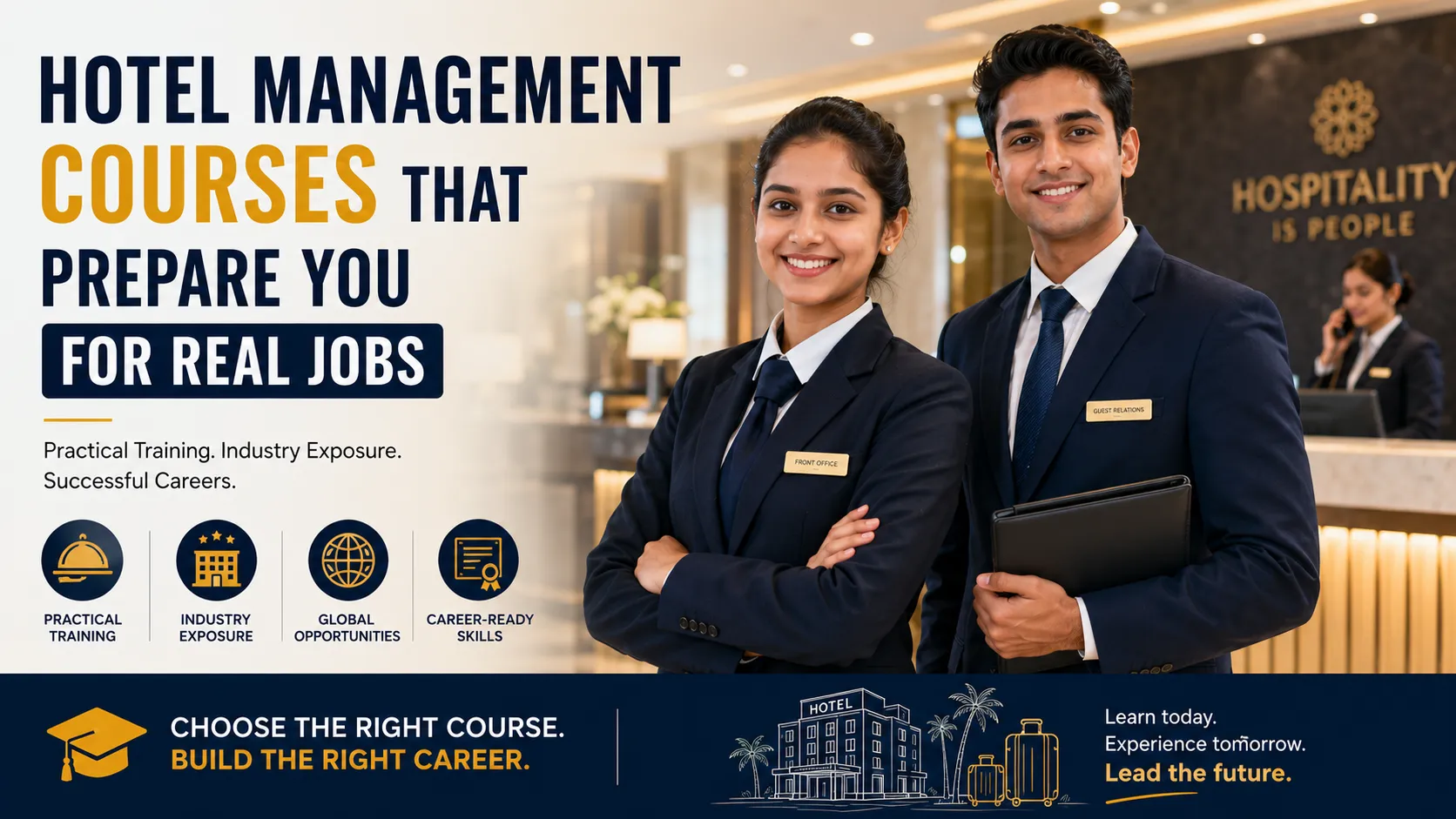
Hotel Management Courses That Actually Prepare You for Work
The expectation of how hospitality education is delivered is rapidly changing. For students looking for hotel management courses after 12th, the focus is not just on gaining an academic degree. It is on choosing the right pathway that aligns with how the industry actually operates, where readiness and adaptability matter from the first day on the job.
Within this shift, skilling platforms like Emversity represent a new direction in hospitality education. As the industry continues to prioritize real-world capability, these models continue to shape what students should look for when evaluating hospitality programs.