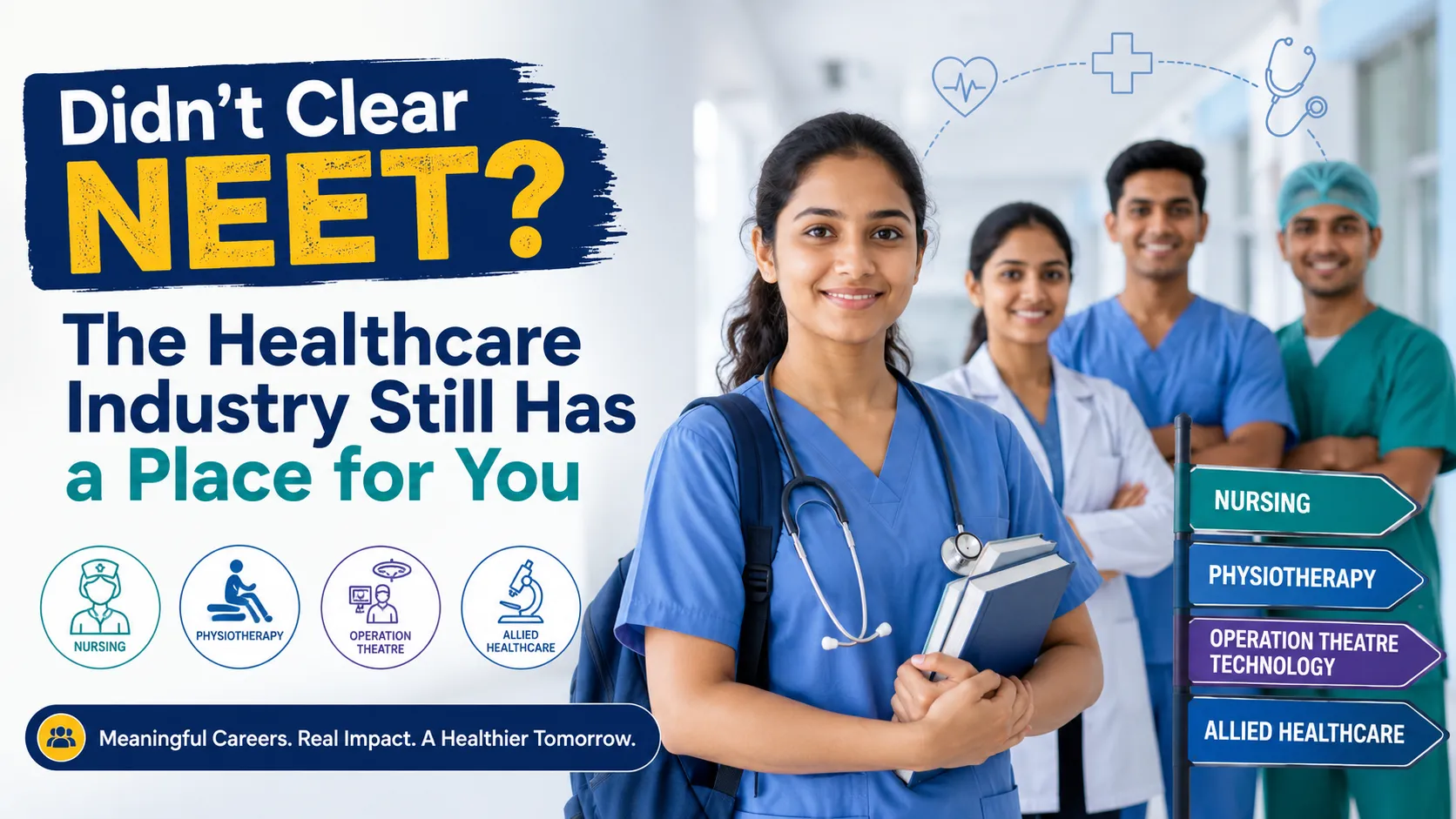
For many students, NEET is seen as the only gateway to a career in healthcare. Every year, however, far more students aspire to become doctors than there are MBBS seats available. While that reality often feels like the end of the road, the healthcare industry itself tells a very different story.
Modern healthcare is no longer built around doctors alone. Hospitals depend on a vast workforce of nurses, allied healthcare professionals, diagnostics specialists, rehabilitation teams, emergency care providers, and laboratory personnel who support every stage of patient care. As healthcare systems expand and specialised treatment becomes more complex, demand for these professionals continues to grow alongside the need for doctors.
The scale of this workforce reflects that shift. According to the World Health Organization, India has more than 5,299 nursing institutions that produce nearly 380,000 professionals every year. Hospitals increasingly rely on nurses and allied healthcare professionals to deliver quality patient care across a wide range of clinical settings. As a result, medical courses without NEET are opening up meaningful career opportunities in some of healthcare's fastest-growing professions.
The challenge, however, is awareness rather than opportunity. Many students still believe that NEET is the only route into healthcare. In reality, hospitals recruit for a wide range of specialised roles that offer practical training, early employment opportunities, and strong long-term career prospects.
Here are some employability-oriented medical courses after Class 12, recently highlighted by The Indian Express, that are creating meaningful career opportunities for students who did not clear NEET.
Nursing
Nursing has emerged as one of the most promising career pathways for students exploring medical courses without NEET. Nurses are an essential part of hospitals, ICUs, clinics, and community healthcare. They take care of patients, support doctors in treatment, and ensure the smooth delivery of healthcare services. While a large majority of students continue to focus on MBBS, nursing courses offer early job opportunities, practical training, and stable long-term careers.
The demand for nurses also continues to grow around the world. The World Health Organization’s State of the World’s Nursing 2025 report reveals that the global nursing workforce has grown from 27.9 million in 2018 to 29.8 million in 2023. This increase points to the growing demand for nurses and as a result the sustained investments in nursing education by healthcare systems. For students who have not passed NEET but wish to pursue paramedical courses, nursing offers a secure and stable alternative path to healthcare.
Industry-integrated skilling platforms such as Emversity are supporting this shift by enhancing education delivery within the nursing courses offered at their partner universities. Students benefit from simulation-based learning, continuous clinical exposure, and industry-recognized certifications developed with healthcare organizations such as 3M, CAHO, and Motherhood and awarded at the end of every semester. They validate practical competencies and strengthen international opportunities across healthcare markets in the UK, Germany, and the Middle East, giving students a pathway to build globally relevant careers without following the traditional MBBS route.
Physiotherapy
Physiotherapy is becoming an important part of modern healthcare, making it a promising career option among medical courses without NEET. Going beyond the mere treatment of injuries, physiotherapists help patients during recovery, manage long-term health concerns, restore movement, and help regain strength for daily life.
According to Grand View Research, “With increasing numbers of people suffering from chronic diseases and muscle and joint problems, the need for rehabilitation services is rising.” A substantial part of these treatments involves physical therapy, indicating a growing emphasis on recovery in healthcare.
Physiotherapy is a good career option for those exploring medical courses after 12th. Institutions like Apollo Healthcare Academy offer organized BPT curricula that includes clinical training, mentorship, and hands-on learning that equips students with practical skills needed for a career in healthcare.
Anaesthesia & Operation Theatre Technology
As demand for surgical care continues to grow, Anaesthesia and Operation Theatre Technology is emerging as a promising option among medical courses without NEET. Every surgical procedure relies on trained OT and anesthesia professionals who prepare patients for surgery, assist surgeons during procedures, and ensure equipment and operating environments are kept safe and sterile. These roles are critical to safe and efficient surgical outcomes.
With the number of surgeries being conducted on the rise, the demand for skilled professionals also gains momentum. According to healthcare market intelligence platform MedIQ, India conducts about 30 million specialized surgeries every year. This number alone is an indicative of the rising demand for skilled operation theatre and anesthesia experts across the country.
For those interested in paramedical courses, this domain provides a specialized and practical entry into healthcare. Programs supported by skilling platforms like Emversity blend classroom learning with hospital training and internships, with students working inside partner healthcare organizations such as Fortis Healthcare, PiHealth, Oasis Fertility, and Pathkind. Alongside technical training, students also receive training in Cambridge English to improve their communication skills and prepare them for the world of employment.
Medical Courses Without NEET Are Expanding Healthcare Opportunities
Not clearing NEET does not mean the end of a healthcare career. If anything, it reflects how the healthcare industry itself is evolving. Modern hospitals depend on a larger workforce of nurses, allied healthcare professionals, diagnostics specialists, rehabilitation teams, and critical care experts who keep healthcare systems running every day. As healthcare grows and becomes more specialized, practical skills and role-specific expertise are becoming just as important as traditional degrees. Yet many students still associate healthcare only with becoming a doctor.
This is where newer education models are changing the picture. Platforms like Emversity combine classroom learning with real clinical training, helping students build practical skills from the start. For students exploring medical courses after 12th, long-term success depends less on one entrance exam and more on gaining skills that employers actually need. As the sector continues to expand and specialise, practical skills and role-specific expertise continue to become just as important as academic qualifications.