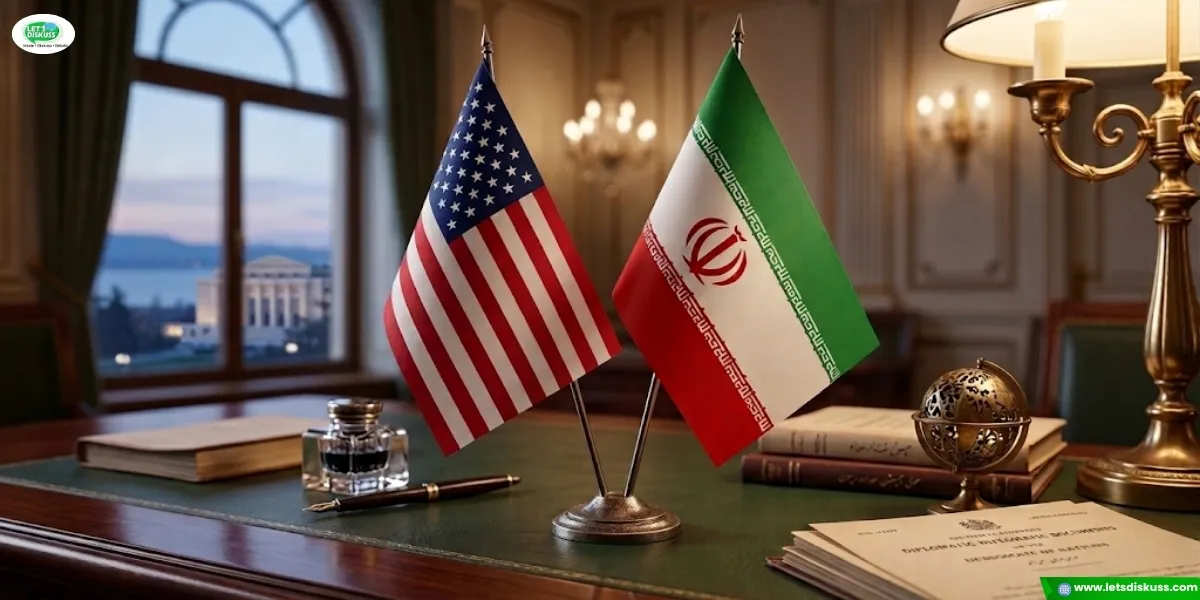
The situation in the Middle East is shifting rapidly—with peace deal negotiations on one side and fresh military strikes on the other. Read on and use the Table of Contents below to explore every detail of this unfolding geopolitical crisis
Introduction
The whole year has been nothing short of a rollercoaster for the Middle East. We have witnessed regional stability threatened by multi-front conflicts, especially with Israel’s escalated strikes and evacuation orders against Hezbollah in Lebanon. Soon after, further chaos emerged with the U.S.-Israel war against Iran that erupted in late February. Mid-April saw an established ceasefire that completely shifted the focus from direct military confrontation to high-stakes diplomacy.
Just when an announcement seemed imminent, President Donald Trump declared that he would either sign “a great and meaningful” pact or walk away entirely. He noted that talks are "proceeding nicely" but has explicitly instructed his team "not to rush."
This sudden pump of the brakes changes everything. In this comprehensive breakdown, we will explore the intricate terms of the proposed Iran Deal, decode exactly what Trump's cautious stance means for the timeline, examine the pivotal role of global mediators, and analyze how the reopening of the Strait of Hormuz will impact your wallet at the gas pump.
Source: cbsnews
What is the Proposed US-Iran Deal?
The proposed US-Iran deal is a 14-point memorandum to end the war. Negotiations are currently ongoing in Doha, mediated by Pakistan and Oman. Key terms include a 60-day ceasefire extension, reopening the Strait of Hormuz within 30 days, disposing of Iran’s enriched uranium under international oversight, and potential U.S. sanctions relief alongside the unfreezing of Iranian financial assets based on compliance.
Key Terms of the 60-Day Ceasefire
Based on live updates, the proposed 60-Day Ceasefire Extension forms the core operational window of the draft peace memorandum.
The specific terms and conditions detailing how this ceasefire will function for both sides include:
1. Reopening the Strait of Hormuz
- Iran's Mandate: Iran must immediately reopen the shipping lane. They must actively take steps to ensure commercial activities return to pre-war conditions within 30 days.
- U.S. Counter-Action: In direct response, the U.S. must stop its ongoing maritime blockade. They must permanently lift restrictions on Iranian ports in the very early stages of the truce.
2. Complete Cessation of Hostilities
- All-Fronts Permanent Halt: The U.S., Iran, and their regional allies must permanently stop all military operations across every front, explicitly including the Israel-Hezbollah conflict in Lebanon.
- Non-Aggression Pact: Both nations must formally commit to not launching any future wars against each other and strictly refrain from threatening or using military force.
3. Nuclear Commitments and Uranium Disposal
- Uranium Disposal: Iran has agreed in principle to a mechanism to dispose of its current stockpile of approximately 900 pounds of highly enriched uranium.
- International Oversight: President Trump has specified that this “nuclear dust” must either be turned over to the U.S. to be destroyed or, preferably, destroyed in place inside Iran while being physically witnessed by the International Atomic Energy Agency (IAEA).
- Non-Proliferation Commitment: Iran must officially reaffirm its core pledge that it will never develop nuclear weapons.
4. Conditional Sanctions and Asset Relief
- Compliance-Based Unfreezing: The release of frozen Iranian assets and the lifting of sanctions will not happen immediately. Instead, the U.S. will grant these benefits gradually over the 60-day period. This relief is strictly dependent on Iran proving its compliance with the agreed maritime and nuclear terms.
5. Future Diplomatic Roadmap
- The 60-day ceasefire provides a stabilizing period. The initial agreement strictly focuses on ending active warfare. However, formal negotiations for permanent nuclear restrictions must launch within this timeframe.
The Role of Global Mediators
Several regional powers are actively stepping in to help finalize the Iran Deal. Here is the exact role each country is playing:
- Pakistan (The Main Mediator): Pakistan is directly negotiating with leaders in Tehran. They have even secured China's backing to support this peace effort.
- Qatar (The Host): Qatar is hosting the main talks for the US-Iran Deal in Doha. They are actively working to solve the financial hurdle of unfreezing Iran's assets.
- Oman (The Maritime Guard): Oman is handling the shipping side of the deal. They are working closely with Iran to ensure commercial ships can safely pass through the Strait of Hormuz.
What Did Trump Say About the Iran Deal?
Just a few days ago, President Donald Trump confirmed on Truth Social that an agreement was “largely negotiated.” It felt like an announcement was just around the corner. However, he suddenly surprised everyone with a new statement. He explicitly instructed his negotiating team “not to rush” into finalizing the deal.
Unpacking the "Not to Rush" Warning
If you are wondering exactly what Trump says on the deal—and the actual reasons behind his stance—the answer is simple: Trump wants a “great and meaningful” pact, and he believes that “time is on our side.”
Why does Trump want to take his time? Here are the main reasons:
- The Uranium Threat: Iran holds about 900 pounds of highly enriched uranium. Trump wants a solid, upfront commitment to destroy this “nuclear dust” first.
- No Free Passes: He made it clear that the U.S. naval blockade will remain in full force until the deal is completely signed and certified.
- Long-Term Security: Trump wants Gulf countries (like Saudi Arabia and Qatar) to sign the Abraham Accords alongside this settlement. He wants to avoid any weaknesses seen in the old Obama-era deal (JCPOA).
Impact on the Current US Negotiators
Trump's “not to rush” warning has completely shifted the U.S. strategy for the Iran deal negotiations in Doha.
The pressure to close the deal quickly is gone. Instead, this statement gives the U.S. team huge leverage. Their diplomatic strategy will now focus heavily on “relief for performance.” This means sanctions will not be lifted until Iran makes upfront compromises, like disposing of its uranium and fully opening the Strait of Hormuz.
In short, the U.S. team is taking a hardline approach. They know there is no reason to hurry until Iran agrees to their major security demands.
The Importance of the Strait of Hormuz in This Deal
The Strait of Hormuz is not just a regional waterway; it is the most critical geopolitical chokepoint on the planet. The core of this entire peace negotiation revolves around who controls this passage, and getting it fully reopened is the top priority for the global economy.
Global Oil Trade and Economic Impact
The success of the Iran Deal is absolutely critical to stabilizing global energy markets and bringing down prices at the gas pump. To understand the economic stakes, here is what the recent report reveals:
- The Immense Blockage: The ongoing shutdown of the Strait has cut off more than 11 million barrels per day of Gulf crude oil. This disrupts roughly 20% of the entire world’s seaborne oil trade and 20% of its LNG supply.
- The Worst-Case Scenario: If negotiations fail and the waterway remains blocked through the end of 2026, experts warn that crude oil prices could skyrocket to a historic $200 per barrel, which can likely trigger a global recession.
- The Quick Peace Scenario: On the flip side, if the deal is finalized and the Strait reopens by June, markets will quickly stabilize. Crude prices are expected to drop back down to a manageable $80 per barrel by the end of the year. It will bring immediate relief to everyday consumers.
Will the US Naval Blockade End?
The Trump peace deal currently on the table offers a clear trade-off to end this deadlock. Iran must clear the maritime mines it deployed and allow commercial ships to safely pass without imposing hefty tolls. In direct exchange, the U.S. must permanently lift its naval blockade.
However, President Donald Trump is taking a hardline approach. Trump has made it explicitly clear that the U.S. blockade will remain in “full force and effect” until a final agreement is reached, certified, and officially signed.
Source: Economic Times
US Military on Iran
Recent U.S. strikes have hit Iranian missile sites and mine-laying boats near Bandar Abbas. This highlights the intense military struggle over the Strait of Hormuz. Meanwhile, the U.S. Navy is enforcing a strict maritime blockade on Iranian ports. In retaliation, Tehran has targeted American drones and threatened U.S. bases in the region
During this escalation, President Trump is applying a “good deal or no deal” strategy. However, diplomatic progress on the US-Iran deal is currently stuck acompletely. Iran’s new Supreme Leader is in hiding, which makes communication very difficult. Also, Tehran insists that a final agreement is far from ready until the U.S. drops its broader sanctions.
Frequently Asked Questions (FAQ)
Q1: What exactly did Trump say about the US-Iran deal?
Q2: Does the new Iran deal include a ceasefire?
Q3: Why is the Strait of Hormuz mentioned in the negotiations?
Q4: What happens to Iran's enriched uranium under the new agreement?
Q5: Will the US naval blockade on Iran end with this peace deal?
Conclusion
The Iran Deal is closer than ever to the finish line. However, Trump's cautious approach shows that the final details are still incredibly sensitive.
The stakes are simply too high for a rushed agreement. Negotiators must neutralize the uranium threat, reopen the Strait of Hormuz, and protect the global economy. Because of this, the U.S. strategy has completely shifted. They are no longer chasing a quick signature. Instead, everything now hinges on securing foolproof, upfront compromises from Iran first.
What are your thoughts on Trump's peace deal strategy and his advice to the negotiators? Drop a comment below!