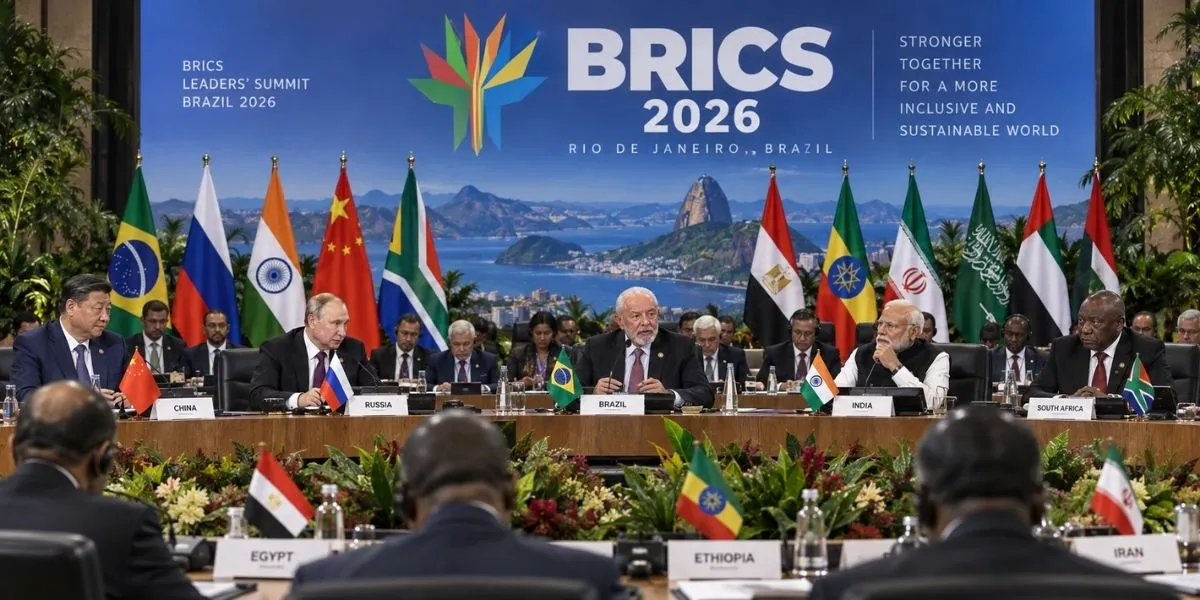
BRICS is a group and forum for cooperation among major emerging and developing countries, with a focus on economic, political, social, and development-related issues. Its broad objectives include strengthening cooperation among member countries, increasing the voice of the Global South in international affairs, and supporting more inclusive and sustainable development.
1. Strengthen Economic Cooperation
One important aim of BRICS is to promote economic and financial cooperation among its members. Countries discuss trade, investment, finance, development, and other areas that can support economic growth.
BRICS also supports greater cooperation through financial institutions such as the New Development Bank (NDB), which finances infrastructure and sustainable-development projects in emerging markets and developing countries.
2. Promote Sustainable Development
BRICS aims to support development that considers economic, social, and environmental needs. Cooperation can include areas such as clean energy, infrastructure, environmental protection, water and sanitation, digital infrastructure, and social development.
The New Development Bank is one example of this approach, supporting projects designed to contribute to sustainable and inclusive development.
3. Strengthen the Voice of the Global South
Another major objective is to increase the participation and representation of emerging and developing countries in international decision-making.
BRICS promotes greater cooperation among Global South countries and supports discussions about making international institutions more representative and balanced.
4. Encourage Political and Diplomatic Cooperation
BRICS provides a platform for member countries to discuss international and regional issues. Political and security cooperation is one of its three broad areas of cooperation, alongside economic and financial cooperation and people-to-people exchanges.
The group encourages dialogue and cooperation on issues of common interest rather than functioning as a traditional military alliance.
5. Promote Cooperation in Science and Technology
BRICS also encourages cooperation in science, technology, innovation, education, and knowledge sharing. Such cooperation can help member countries exchange experience, research, and technological capabilities.
The group's cooperation extends across many sectors, allowing countries to work together on areas that support development and innovation.
6. Support People-to-People Exchanges
BRICS cooperation is not limited to governments. It also includes cultural, educational, youth, academic, and civil-society exchanges.
These activities are intended to strengthen understanding and connections between people from member countries.
Main Objectives of BRICS at a Glance
Objective | Main Focus |
|---|---|
Economic cooperation | Trade, investment, finance, and development |
Sustainable development | Infrastructure, climate, energy, and social development |
Global South cooperation | Greater representation in global governance |
Political cooperation | Dialogue and coordination on common issues |
Science and technology | Research, innovation, and knowledge sharing |
People-to-people cooperation | Culture, education, youth, and civil society |
Conclusion
The main aims and objectives of BRICS are to strengthen cooperation among its members, promote economic and sustainable development, support greater representation of the Global South, and encourage political, technological, cultural, and people-to-people cooperation. Rather than being a single-purpose organization, BRICS serves as a broad platform through which participating countries coordinate on areas of common interest.
Also Read: What is the local currency of Kazakhstan?