
BRICS is being talked about so much these days because its membership has expanded, its economic and political significance has increased, and its role in discussions about global trade, finance, governance, and international affairs has become more prominent. The expanded group represents a substantial share of the world's population and economic activity, making developments within BRICS increasingly important to global affairs.
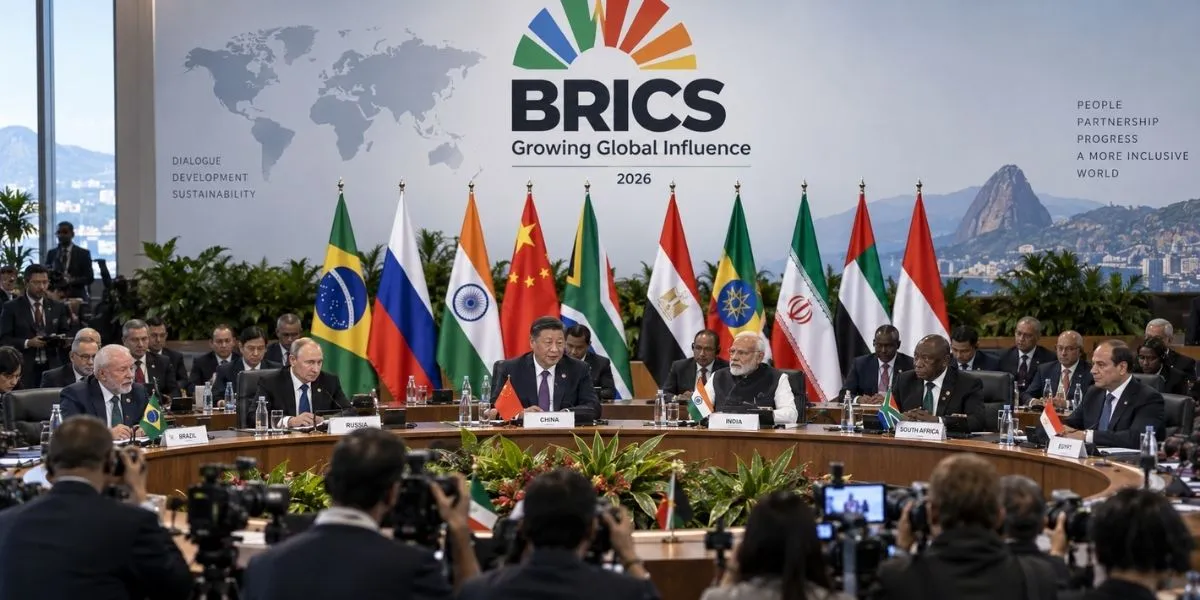
1. BRICS Has Expanded
BRICS has grown considerably beyond its original five members: Brazil, Russia, India, China, and South Africa. Egypt, Ethiopia, Iran, the United Arab Emirates, and Indonesia have joined the expanded grouping, increasing its geographic and economic reach.
The expansion has generated greater interest in how the larger group will cooperate and coordinate on international economic and political issues.
2. Growing Discussion About the U.S. Dollar
One of the biggest reasons for BRICS receiving attention is its discussion of local-currency trade and cross-border payment systems.
BRICS countries have explored ways to strengthen payment cooperation and increase the use of national currencies in some international transactions. This has fueled debate over whether such initiatives could gradually reduce dependence on the U.S. dollar.
However, BRICS is not currently establishing a single common BRICS currency. The discussion has focused more on local-currency settlements, payment infrastructure, and financial cooperation.
3. Greater Voice for Emerging and Developing Economies
Another reason for BRICS' growing importance is its emphasis on giving emerging and developing economies a stronger voice in global decision-making.
BRICS has called for reforms to international institutions, including the International Monetary Fund (IMF) and World Bank, with the aim of making global economic governance more representative of today's world economy.
4. More Economic and Technology Cooperation
BRICS cooperation extends beyond traditional trade and finance.
The group has increasingly discussed areas such as artificial intelligence, digital technologies, investment, financial cooperation, trade, science, and cross-border payments.
This broader agenda has made BRICS relevant to discussions about technological development and the future of international economic cooperation.
5. Growing Relevance to Global Politics
BRICS is also receiving attention because of its involvement in discussions about international security, trade, energy, sustainable development, and global governance.
At the same time, BRICS is not a completely unified political bloc. Its members have different economic interests, foreign policies, and strategic priorities. These differences can make it difficult for the group to reach a common position on every international issue.
6. BRICS and the Changing Global Economic Order
BRICS is frequently discussed in the context of a more multipolar global economy.
Its expansion and growing cooperation among emerging and developing economies have increased interest in whether BRICS could play a larger role in shaping international trade, finance, and global governance.
This does not necessarily mean that BRICS will replace existing global institutions or the U.S. dollar. Instead, its development may contribute to a gradual diversification of economic and financial relationships.
Conclusion
BRICS is being talked about so much these days because it has expanded its membership, gained greater economic and political significance, promoted cooperation involving local currencies and cross-border payments, advocated reforms in global institutions, and increased collaboration in areas such as technology and finance.
As BRICS continues to expand its cooperation, its influence on the global economy and international affairs is likely to remain an important subject of discussion.
Also Read: What are the aims and objectives of BRICS?