
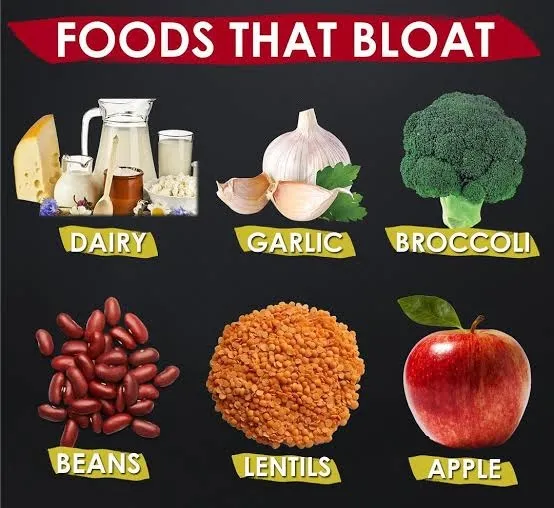
Bloating is caused by an excess of air or gas in the stomach/intestine area. As a result, one feels bloated, full, or tight. Individuals may experience various types of food a
sensitivities. However, some foods create large quantities of additional gas, or cause the body to retain water.
Top 10 Foods That Cause Bloating
Beans and Lentils
Because legumes contain so many alpha-galactosides, a form of carbohydrate that has high fiber characteristics called FODMAPs, they can pass through the digestive system without getting absorbed.
When legumes arrive at the colon, the bacteria in the colon start fermenting the legumes and producing a lot of gas.
Dairy Products
Lactose is a type of natural sugar that is present in dairy products such as milk, cheese and yogurt. If you do not have an adequate amount of the lactase enzyme needed for your body to convert the lactose into glucose (energy), you will experience digestive issues such as bloating, cramping and gas due to improper digestion of the lactose.
Wheat and Rye
Gluten is a type of protein found in both. Gluten can result in bloating and other types of stomach issues for people with celiac disease, or people with a non-celiac gluten sensitivity. Wheat has a large amount of fructans (FODMAPs) as well.
Cruciferous Vegetables
Raffinose is a type of complex carbohydrate that is present in broccoli, cabbage, cauliflower, and Brussels sprouts. Because your body does not possess the enzymes necessary to break down this carbohydrate, the only way for your body to process raffinose is through fermentation by your intestinal bacteria.
Carbonated Beverages
Fizzy drinks, like soda, sparkling water, and beer, contain high amounts of carbon dioxide. As you consume these types of drinks, you are taking in a lot of gas that can get stuck in your digestive tract.
Onions and Garlic
Both onion and garlic contain high levels of fructans and are used as common ingredients in many types of food. If consumed even in small amounts (whether raw or cooked), they can produce large amounts of gas and swelling.
Apples and Pears
The fruits mentioned above are healthy, but they have a lot of fructose (a natural form of sugar found in fruits), and a very high concentration of insoluble fibers. It can be hard for some individuals to absorb so much fructose at once.
Artificial Sweeteners
Sorbitol, mannitol and xylitol are all non-absorbable sugars found in many sugar free products such as chewing gum, candies, etc., which pass through the body and enter into the large intestine without being absorbed by your digestive system.
Upon reaching the large intestine, these non-absorbable sugars are rapidly broken down by the bacteria present in the large intestine.
Salty and Processed Foods
The use of high salt foods (such as processed snack foods, fast food, canned soups) can cause you to retain water and feel like you are "swollen" everywhere and your belly is "bloated."
Fatty and Fried Foods
High fat foods cause food to remain in your stomach longer because fats are digested slowly. As a result, when you consume these types of foods, you will experience a feeling of being full and heavy as well as experiencing a slower rate of gastric emptying.
Tips to Reduce Bloating
Soak & Rinse: Soak beans and legumes overnight before cooking to reduce gas-causing sugars.
Eat Slowly: Chewing thoroughly reduces the amount of air swallowed.
Stay Hydrated: Drink plenty of water to help flush out excess sodium and support digestion.
SOURCES:
1. Harvard Health Publishing:
https://www.health.harvard.edu/?hl=en-IN
2. Johns Hopkins Medicine:
https://www.hopkinsmedicine.org/?hl=en-IN
3. Monash University FODMAP Research:
https://www.monashfodmap.com/?hl=en-IN
4. National Health Service (NHS UK):