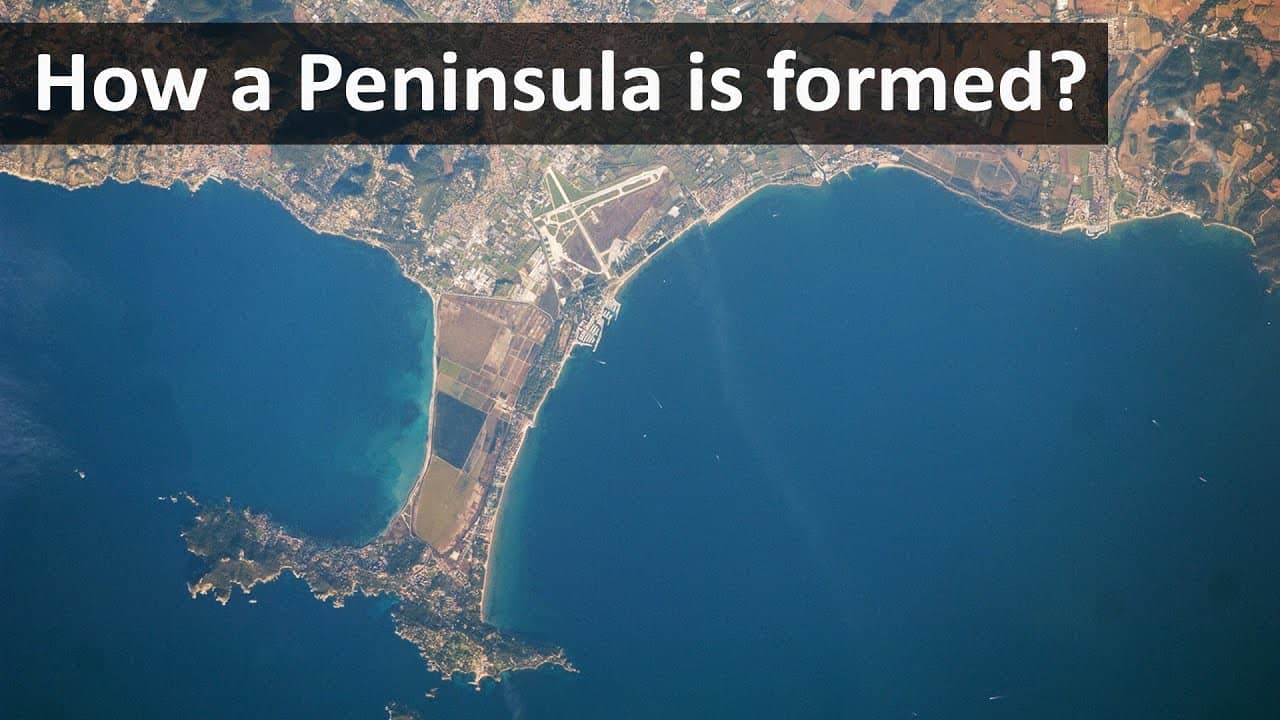
A peninsula is a piece of land that is surrounded by water on most sides but remains connected to the mainland on one side. In most cases, a peninsula is bordered by water on three sides, while the fourth side is attached to a larger landmass. Because it is almost completely surrounded by water, the word peninsula comes from the Latin words meaning "almost an island."
Peninsulas can be found on every continent and vary greatly in size. Some are small coastal landforms, while others, such as the Arabian Peninsula and the Indian Peninsula, cover millions of square kilometers. Their unique location between land and water often makes them important for trade, transportation, biodiversity, tourism, and human settlement.
Characteristics
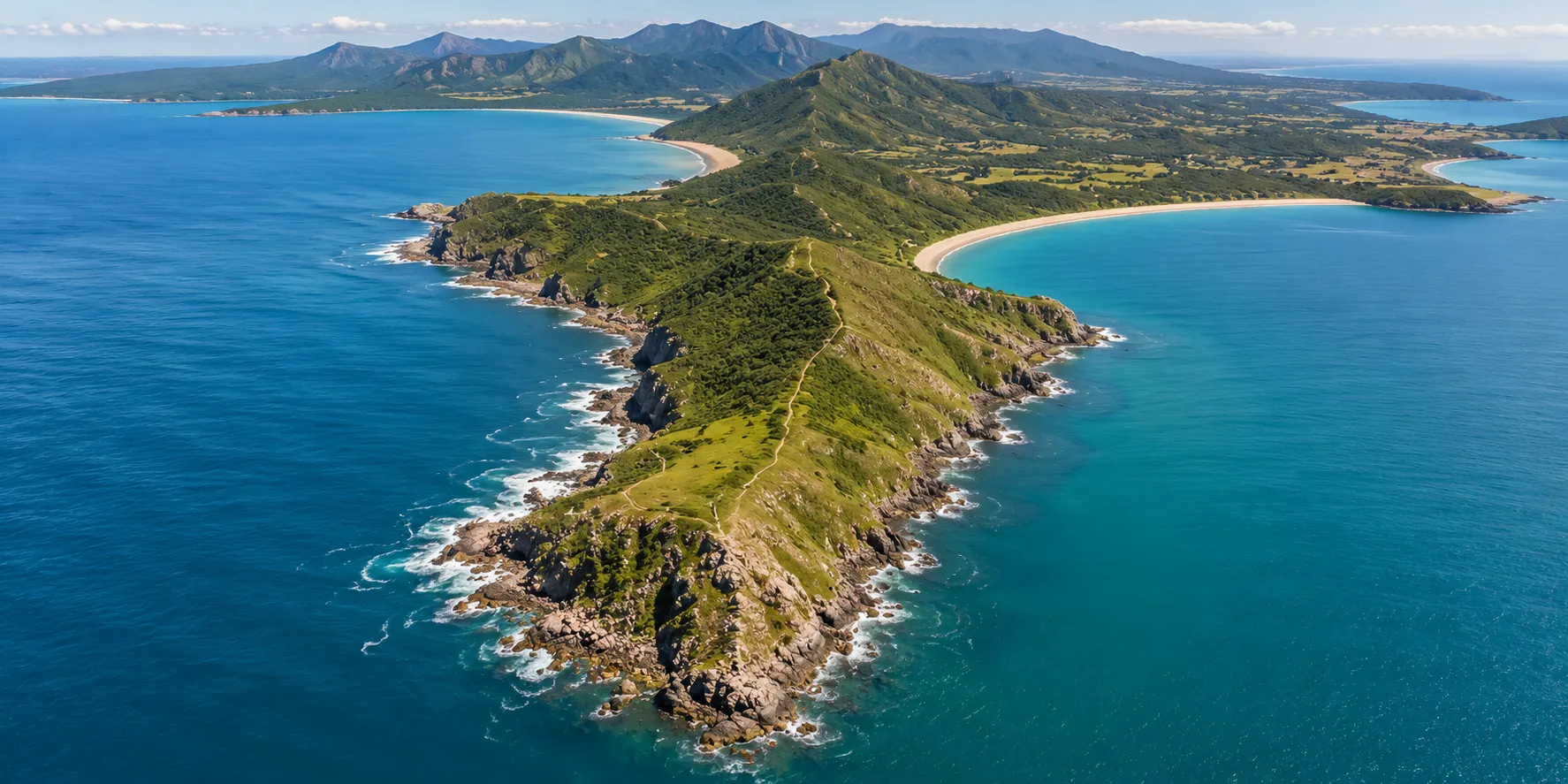
A peninsula has several distinctive geographical features.
-
Surrounded by water on three sides or most of its boundary.
-
Connected to the mainland by a narrow or broad strip of land.
-
Can border oceans, seas, gulfs, bays, or large lakes.
-
Supports both terrestrial and marine ecosystems.
-
Often has a long coastline compared to its land area.
-
Can range from a few hundred meters to thousands of kilometers in size.
Formation
Peninsulas form through a variety of natural geological processes over thousands or even millions of years.
1. Plate Tectonics
Movement of the Earth's tectonic plates can uplift land or reshape coastlines, creating large peninsulas over geological time.
2. Coastal Erosion
Ocean waves gradually wear away softer rock while leaving harder rock behind, causing land to project into the surrounding water.
3. Sediment Deposition
Rivers and ocean currents deposit sand, gravel, and sediment over time, extending land outward into nearby water bodies.
4. Sea Level Changes
Rising or falling sea levels can reshape coastlines, leaving portions of land surrounded by water on most sides while still connected to the mainland.
In many cases, more than one geological process contributes to the formation of a peninsula. For example, scientists believe the Florida Peninsula developed through a combination of tectonic activity, marine sediment deposition, and long-term sea level changes.
Examples
Some of the world's best-known peninsulas include:
| Peninsula | Location | Notable Feature |
|---|---|---|
| Arabian Peninsula | Southwest Asia | Largest peninsula in the world |
| Indian Peninsula | South Asia | Surrounded by the Arabian Sea, Bay of Bengal, and Indian Ocean |
| Iberian Peninsula | Europe | Home to Spain, Portugal, and Andorra |
| Korean Peninsula | East Asia | Shared by North Korea and South Korea |
| Florida Peninsula | United States | Separates the Gulf of Mexico from the Atlantic Ocean |
| Scandinavian Peninsula | Northern Europe | One of Europe's largest peninsulas |
These examples show that peninsulas occur across different climates and continents, from tropical regions to Arctic landscapes.
Similar Landforms
Although peninsulas resemble some other landforms, there are important differences.
| Landform | Description |
|---|---|
| Peninsula | Surrounded by water on most sides but connected to the mainland. |
| Island | Completely surrounded by water with no land connection. |
| Cape | A narrow piece of land projecting into a sea or ocean, usually smaller than a peninsula. |
| Isthmus | A narrow strip of land connecting two larger landmasses and often separating two bodies of water. |
For example, India is a peninsula because it remains connected to Asia, whereas Sri Lanka is an island because it is entirely surrounded by water.
Importance
Peninsulas have played an important role in geography, history, and human civilization.
-
Provide access to multiple coastlines and ports.
-
Support fishing, shipping, and international trade.
-
Encourage tourism through beaches and coastal landscapes.
-
Create diverse ecosystems for plants and animals.
-
Influence local climate because of their proximity to water.
-
Serve as strategic locations for transportation and defense.
Many of the world's major cities, trading centers, and ports have developed on peninsulas because they offer easy access to both land and sea routes.
Common Misconceptions
"A peninsula is completely surrounded by water."
No.
A peninsula is surrounded by water on most sides, but it remains connected to the mainland. If it were completely surrounded by water, it would be classified as an island.
"Every peninsula is small."
Not true.
Some peninsulas are among the largest landforms on Earth. The Arabian Peninsula, for example, is the world's largest peninsula.
"India is an island."
No.
India is part of the Indian Peninsula because it is surrounded by water on three sides while remaining connected to the Asian mainland.
"A peninsula and a cape are the same."
Not exactly.
A cape is generally a smaller land projection extending into water, whereas a peninsula is usually much larger and remains connected to the mainland over a broader area.
Frequently Asked Questions (FAQs)
1. What is a peninsula?
A peninsula is a landform that is surrounded by water on most sides while remaining connected to the mainland on one side.
2. Is India a peninsula?
Yes.
The Indian Peninsula is surrounded by the Arabian Sea to the west, the Bay of Bengal to the east, and the Indian Ocean to the south, while remaining connected to mainland Asia in the north.
3. What's the difference between a peninsula and an island?
A peninsula remains attached to the mainland, whereas an island is completely surrounded by water.
4. Which is the largest peninsula in the world?
The Arabian Peninsula is the world's largest peninsula.
5. Why are peninsulas important?
Peninsulas support transportation, trade, tourism, biodiversity, fishing, and coastal settlements because they provide extensive access to surrounding water bodies.
A peninsula is a unique geographical landform that is almost entirely surrounded by water while remaining connected to the mainland. Found on every continent, peninsulas vary in size and origin but share the same defining characteristic of extending into surrounding water. Their strategic location has made them important throughout history for trade, transportation, settlement, and cultural development. Understanding what a peninsula is and how it differs from landforms such as islands, capes, and isthmuses provides a solid foundation for learning physical geography and Earth's landscapes.
Must Read: Define how earthquakes happen