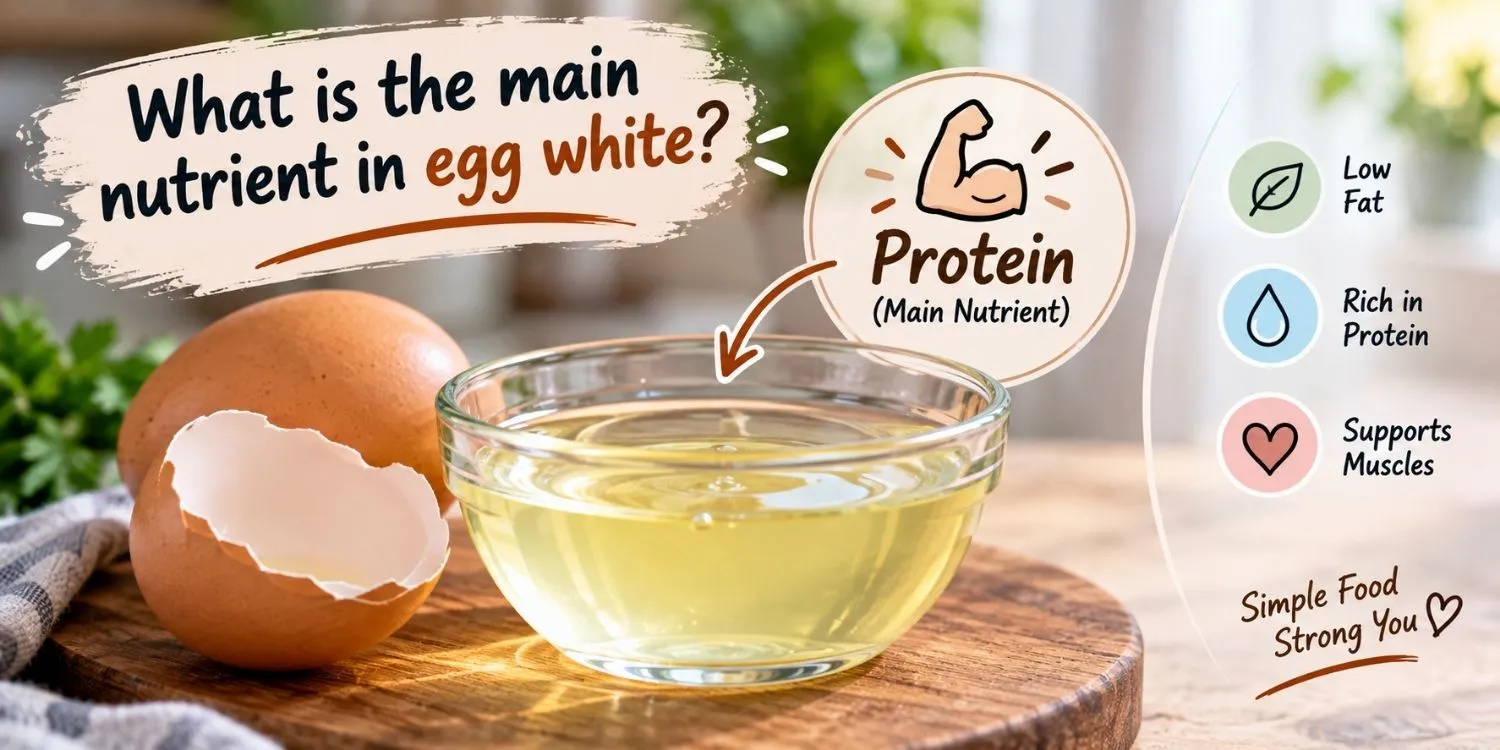
The main nutrient in egg white is protein. Egg white, also known as albumen, is especially well known for its high protein content. According to the USDA, egg white contains more than half of the protein found in a whole egg.
Protein is an essential nutrient that provides amino acids the body uses to build and maintain tissues and produce proteins needed for normal body functions. This is why eggs are commonly considered a convenient protein-rich food.
Why Is Egg White High in Protein?
An egg has two main edible parts: the white and the yolk, and they have different nutritional profiles.
The egg white contains a large portion of the egg's protein, while the yolk contains more of the egg's fats, cholesterol, vitamins, and minerals. Cleveland Clinic notes that egg whites provide about 60% of an egg's total protein.
Egg whites are also naturally very low in fat. This makes them different nutritionally from the yolk, which contains most of the egg's fat.
What Other Nutrients Are in Egg White?
Although protein is the main nutrient, egg white contains other nutrients as well. The USDA lists nutrients such as riboflavin, niacin, magnesium, potassium, sodium, and sulfur in egg white.
Egg white also contains several different proteins that contribute to the egg's natural protective properties. These proteins do more than simply provide dietary protein.
However, the whole egg offers a broader range of nutrients. Some vitamins, minerals, fats, and other compounds are found primarily or more abundantly in the yolk. Therefore, the nutritional profile of egg white is different from that of the whole egg.
Is Egg White a Good Source of Protein?
Yes. Egg white is a convenient source of high-quality protein.
For example, Cleveland Clinic reports that four egg whites provide about 13 grams of protein. The exact amount can vary depending on the size of the eggs.
Protein is only one part of overall nutrition, however. A varied diet that includes different foods can provide the range of nutrients the body needs.
Egg White vs. Egg Yolk
A simple way to remember the difference is:
Egg white: primarily protein and very low in fat.
Egg yolk: contains more of the egg's fats, cholesterol, vitamins, and minerals.
Whole egg: combines the nutrients found in both the white and yolk.
The Simple Answer
So, if someone asks, “What is the main nutrient in egg white?”, the clearest answer is protein.
Egg white is particularly notable for its protein content, while the yolk contributes many other nutrients. Together, the white and yolk provide the broader nutritional profile of a whole egg.
Also Read: What is the management system?