A management system is a structured framework that an organization uses to plan, manage, monitor, and improve its activities so it can achieve its objectives. In simple terms, it explains what an organization wants to achieve, how it will achieve it, who is responsible, and how results will be evaluated and improved.
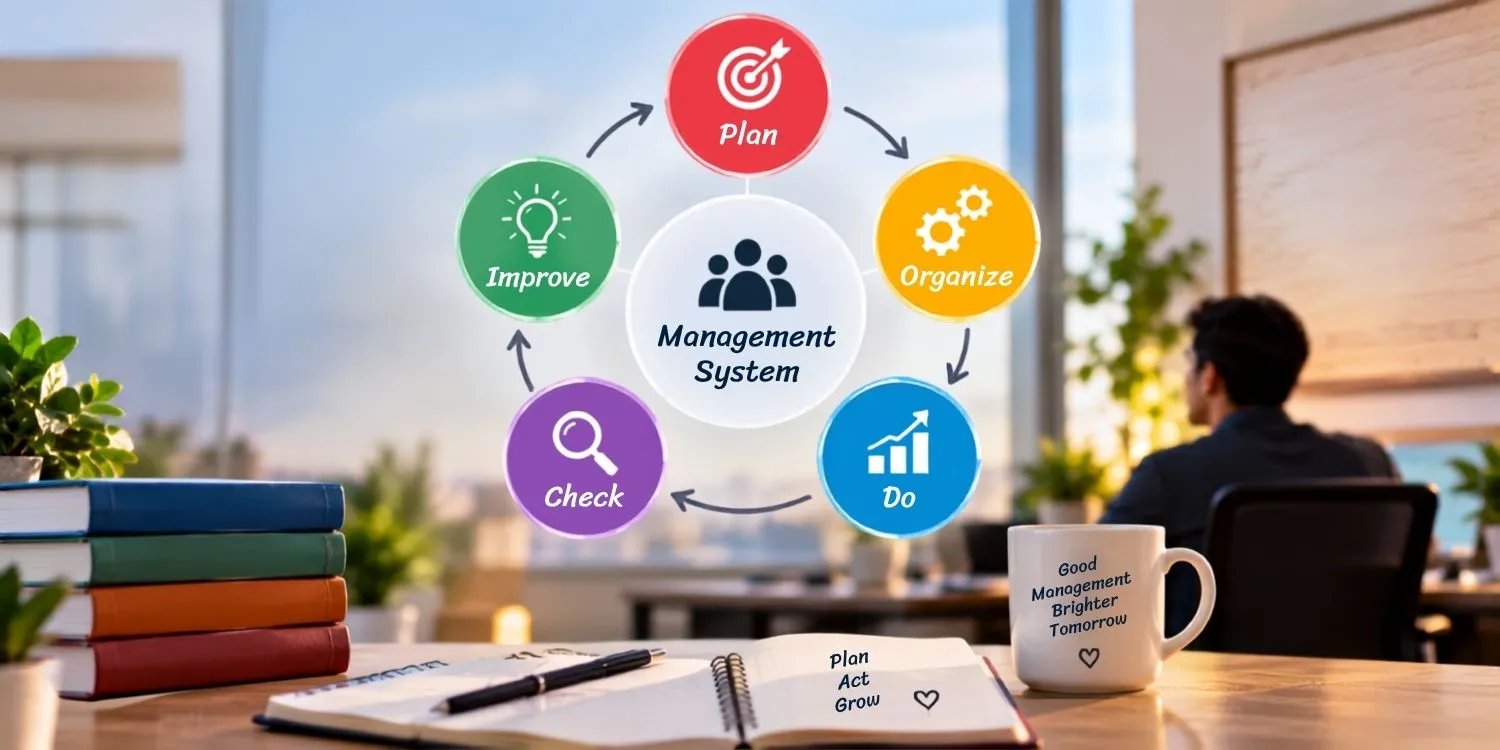
The International Organization for Standardization (ISO) defines a management system as a set of interrelated or interacting elements that an organization uses to establish policies, objectives, and the processes needed to achieve them.
Management systems can be designed for different organizational priorities, including quality, environmental performance, workplace health and safety, information security, and energy management.
How Does a Management System Work?
A management system connects different parts of an organization so that activities work together rather than operating independently.
It can include policies, objectives, responsibilities, processes, procedures, resources, and methods for monitoring performance. These elements help an organization establish what it wants to accomplish, determine how work should be performed, measure results, and make improvements.
For example, imagine a company that wants to improve the quality of its products. Its management system might establish quality objectives, assign responsibilities, define production processes, monitor results, identify problems, and take corrective action when necessary.
The exact structure depends on the organization's size, activities, and needs. A small business may use a relatively simple system, while a large or highly regulated organization may require more detailed processes, documentation, controls, and performance monitoring.
Main Elements of a Management System
Although management systems vary, they commonly include several key elements:
1. Leadership and responsibilities
Management provides direction, establishes priorities, and ensures that people understand their roles and responsibilities.
2. Policies and objectives
The organization establishes policies and defines measurable objectives that provide direction for its activities.
3. Planning
Plans translate objectives into practical actions by identifying resources, responsibilities, timelines, and processes.
4. Processes and procedures
Clearly defined processes help people perform activities consistently and efficiently.
5. Performance evaluation
Organizations monitor and evaluate results to determine whether objectives are being achieved.
6. Improvement
Problems, risks, and opportunities are identified so the organization can make appropriate changes and improve its performance over time.
Types of Management Systems
Management systems can focus on different areas. Common examples include:
Quality Management System (QMS) — focuses on quality and customer requirements.
Environmental Management System (EMS) — focuses on environmental performance.
Occupational Health and Safety Management System — focuses on workplace health and safety.
Information Security Management System (ISMS) — focuses on protecting information and managing security risks.
Energy Management System — focuses on improving energy performance.
Organizations can also combine several areas into an integrated management system.
Why Is a Management System Important?
A well-designed management system can help an organization organize its activities, manage risks, use resources effectively, monitor performance, and continually improve.
Most importantly, a management system is not simply a collection of documents or rules. It is a framework that connects an organization's people, processes, resources, objectives, and performance.
In Simple Terms
A management system helps an organization turn its goals into organized action, measure the results, identify what needs to change, and continually improve.
That is why management systems are useful across organizations of different sizes and industries.
Also Read: What is the main nutrient in egg white?