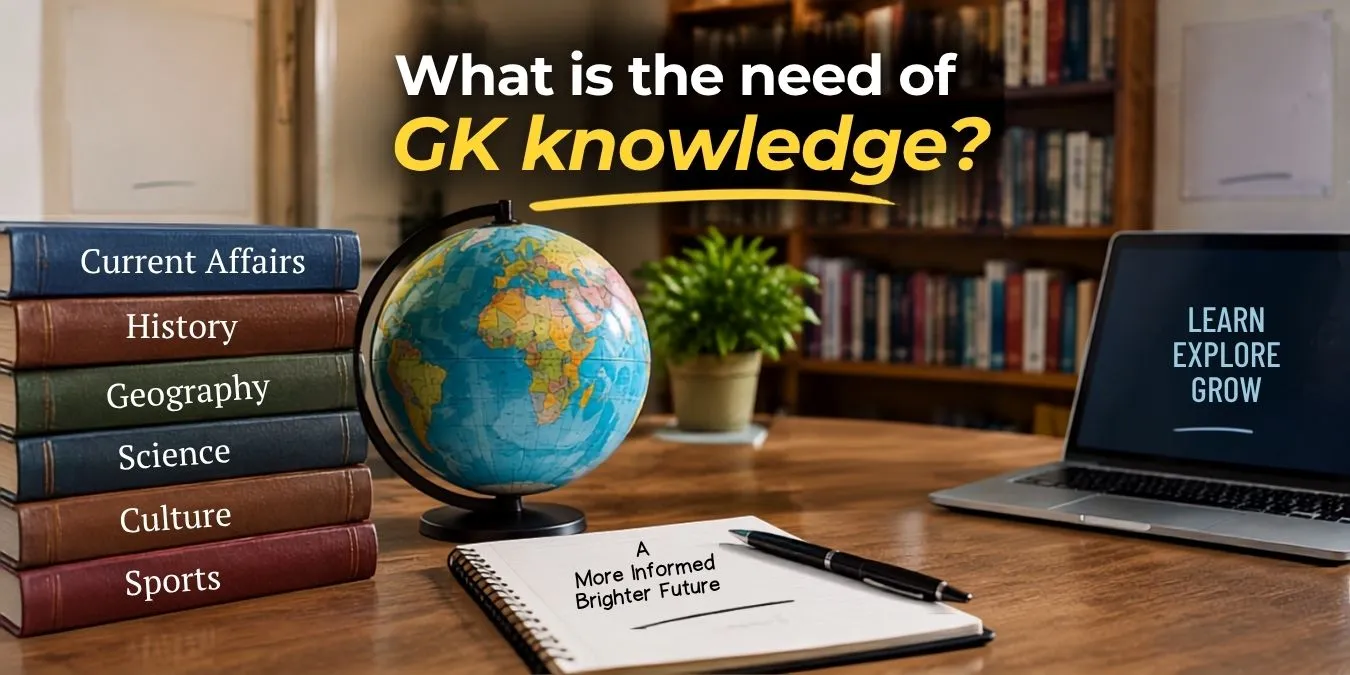
General Knowledge (GK) is needed to improve awareness, understand the world, perform better in studies and competitive exams, communicate confidently, and make informed decisions. It covers a wide range of subjects, including history, geography, science, technology, current affairs, politics, sports, culture, economics, and society.
GK is useful for both students and adults. While it is often associated with quizzes and examinations, its value goes beyond memorizing facts. General knowledge helps people understand information, connect ideas, ask better questions, and remain aware of important developments around them.
Why Is General Knowledge Important?
General knowledge provides a foundation for understanding the world. It introduces people to different countries, cultures, historical events, scientific discoveries, social developments, and current issues.
The main benefits of GK include:
Improving general awareness
Supporting school and exam preparation
Helping with competitive examinations
Building confidence in conversations and discussions
Encouraging curiosity and lifelong learning
Developing a broader perspective
Making news and current events easier to understand
Supporting informed decision-making
Importance of GK for Students
GK is particularly useful for students because it expands their learning beyond individual school subjects. Students who explore different topics can develop a broader understanding of history, geography, science, society, and current affairs.
General knowledge is also included in many school quizzes, entrance examinations, scholarship tests, competitive examinations, and interviews.
For students, regular GK learning can therefore complement classroom education while making learning more interesting and connected to the real world.
How Does GK Help in Competitive Exams?
Many competitive and government examinations include questions related to general knowledge and current affairs. Depending on the examination, these questions may cover:
History
Geography
Science
Economics
Politics and government
Sports
Awards and honors
Important personalities
National and international events
Current affairs
Regular revision can help candidates become familiar with important topics and improve their ability to recall information during an examination.
However, exam preparation should focus not only on memorization but also on understanding concepts and keeping up with reliable current-affairs sources.
How Does GK Improve General Awareness?
General knowledge helps people understand what is happening around them.
For example, basic knowledge of geography can make international news easier to follow. Historical knowledge can provide context for events and developments in different societies. Knowledge of science and technology can help people understand new discoveries and technologies that affect everyday life.
In this way, GK connects information from different areas and creates a broader understanding of the world.
Does GK Build Confidence?
Yes, having broad general knowledge can support confidence in conversations, classroom discussions, quizzes, presentations, and interviews.
When people understand a variety of subjects, they may find it easier to follow discussions and contribute relevant information.
At the same time, confidence does not require knowing everything. A strong learner should also be comfortable saying, “I don't know,” and then looking for reliable information.
Does General Knowledge Improve Critical Thinking?
GK can encourage critical thinking when it involves more than memorizing facts.
For example, instead of only remembering that a historical event happened, a learner can explore why it happened, what changed afterward, and how it connects to other events.
Similarly, learning about science or current affairs can encourage people to compare information, ask questions, evaluate sources, and distinguish reliable information from misleading claims.
Is GK Useful in Everyday Life?
Yes. General knowledge has practical value outside school and examinations.
People encounter information about government, money, technology, health, geography, science, the environment, and society in everyday life. A basic understanding of these areas can make information easier to understand and can support informed choices.
GK can also help people understand news, follow public discussions, travel more confidently, and communicate with people from different backgrounds.
How Can You Improve Your General Knowledge?
You do not need to memorize thousands of facts in a short period. Building GK gradually is usually a more sustainable approach.
Useful habits include:
Read reliable news regularly to stay informed about current events.
Learn basic history and geography to understand countries, places, and major events.
Explore science and technology to understand important discoveries and developments.
Take educational quizzes to test your knowledge and identify areas for improvement.
Read books and informative articles on subjects that interest you.
Learn about different cultures and countries to broaden your perspective.
Review important facts regularly rather than trying to memorize everything at once.
Check information against reliable sources when you encounter unfamiliar or questionable claims.
Is GK Only About Memorizing Facts?
No. GK is more than memorizing facts.
Memorization can be useful for quizzes and examinations, but meaningful general knowledge also involves understanding information and recognizing connections between different subjects.
For example, knowing the name of a country is useful, but understanding its location, history, culture, and role in world affairs provides a much deeper form of knowledge.
GK vs. Current Affairs
GK and current affairs are related but not exactly the same.
General knowledge usually includes established information about subjects such as history, geography, science, literature, culture, and important institutions.
Current affairs focuses on recent events and developments in areas such as politics, economics, science, sports, technology, and international relations.
Both can be valuable for students and competitive-exam candidates.
Conclusion
The need for GK is not limited to exams or quizzes. General knowledge helps people stay informed, understand the world, communicate effectively, develop curiosity, and make better-informed decisions.
For students, GK can support academic learning and competitive-exam preparation. For everyone else, it can provide useful context for everyday information, news, conversations, and important developments in society.
The best approach is not to memorize facts endlessly but to learn consistently, understand what you learn, question information, and stay curious about the world.
Also Read: What is the largest lake in Africa?