

Ramesh Kumar
Ramesh Kumar· 8 years ago
Simplifying learning through practical guides, educational resources, and easy-to-understand explanations.

What is the world’s largest desert?

0
3.1K

Join this conversation

Sort By
Replying to the question above
Answered on06/20/26

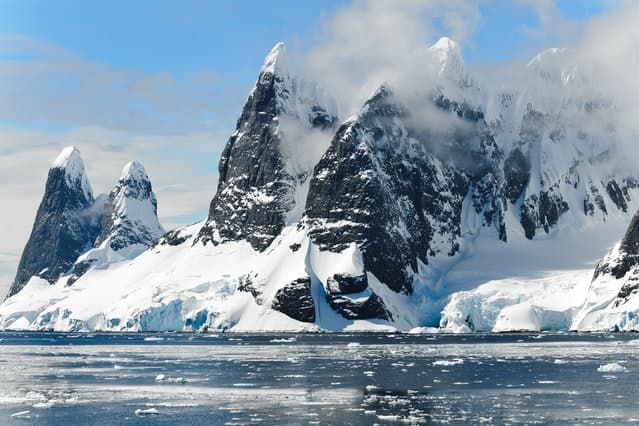
The world's largest desert is Antarctica, not the Sahara. Although many people associate deserts with hot sand dunes, a desert is scientifically defined as an area that receives very little precipitation, and Antarctica is the driest continent on Earth.

A desert is characterized by its lack of rainfall rather than its temperature. Most deserts receive less than 250 millimeters (10 inches) of precipitation each year. Antarctica fits this definition perfectly because its interior receives very little snowfall annually, making it a cold desert. Covering approximately 14 million square kilometers (5.4 million square miles), Antarctica is significantly larger than the Sahara Desert, which spans about 9.2 million square kilometers (3.6 million square miles).

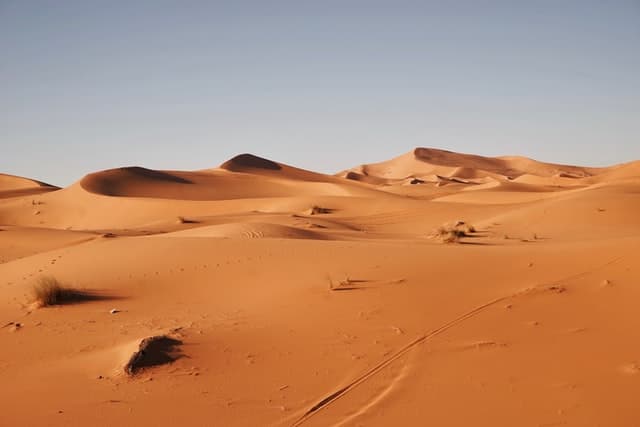
The misconception that the Sahara is the world's largest desert is understandable because it is the largest hot desert on Earth. Located across North Africa, the Sahara is famous for its vast sand dunes, rocky plateaus, and extreme daytime temperatures. However, deserts can be either hot or cold. Polar deserts, such as Antarctica and the Arctic, experience freezing temperatures but still qualify as deserts because of their extremely low precipitation levels.

Antarctica's harsh environment makes it one of the most unique places on the planet. Nearly 98 percent of the continent is covered by ice, and some areas have not experienced measurable precipitation for millions of years. The continent also holds about 70 percent of the world's freshwater in the form of ice sheets. Despite its icy conditions, Antarctica supports a surprising variety of life along its coastal regions, including penguins, seals, and seabirds that have adapted to the extreme climate.

Understanding the scientific definition of a desert helps explain why Antarctica holds the title of the largest desert. Many educational materials and quiz questions focus on the Sahara because it is the largest sandy and hot desert, which can lead to confusion. In reality, the type of desert matters. When considering all desert categories, Antarctica ranks first in size, while the Sahara ranks first among hot deserts.

This distinction is useful in geography, environmental science, and climate studies because deserts play an important role in Earth's ecosystems and weather patterns. Studying both hot and cold deserts helps scientists understand how life survives in extreme conditions and how changing climates may affect these fragile environments.

 
Tara Verma
Geography Researcher Studying Deserts, Climate Patterns, and Landforms
View Profile

Tara Verma is a practising teacher and education content writer with over 10 years of classroom experience across primary and secondary levels. She holds a Master's degree in Education (M.Ed.) from Delhi University and a Bachelor of Education (B.Ed.) from Jamia Millia Islamia — qualifications that ground her writing in both pedagogical theory and the day-to-day realities of teaching in India. Her content covers exam preparation strategies, learning methodologies, curriculum guidance, student mental health, career counselling for students, and the evolving state of school and higher education in India. Her work has appeared on platforms including TeacherVision India, Jagran Josh, and Careers360, where she writes for students, parents, and fellow educators who need content built on actual teaching experience — not theory alone. Over a decade of working directly with students across age groups and learning levels has given Tara a practical understanding of how education content should be written — clearly, accessibly, and with genuine awareness of the challenges students and teachers face on the ground. She has taught 1,000+ students, contributed to school curriculum development initiatives, and published 250+ articles on education across digital platforms. She is an active member of the National Council of Teachers of English (NCTE) India. Across all her writing, every recommendation is classroom-tested, every insight comes from direct teaching experience, and every article is held to the same standard she applies in her own classroom — accuracy, clarity, and genuine usefulness for the reader.
0
Replying to the question above
Updated on06/05/26

The world’s largest desert is Antarctica. Many people are surprised by this because deserts are often imagined as hot sandy places, but a desert is actually defined by very low rainfall, not temperature. Antarctica receives extremely little precipitation, which makes it a cold desert.

Among hot deserts, the largest is the Sahara Desert in Africa. It stretches across several countries and is famous for its vast sand dunes and extreme temperatures.

Honestly, most people expect the Sahara to be the largest desert, but scientifically Antarctica is much bigger.

Tara Verma
Ten years in the classroom, shaping minds — bringing the same clarity and purpose to every piece she writes about education.
View Profile

Tara Verma is a practising teacher and education content writer with over 10 years of classroom experience across primary and secondary levels. She holds a Master's degree in Education (M.Ed.) from Delhi University and a Bachelor of Education (B.Ed.) from Jamia Millia Islamia — qualifications that ground her writing in both pedagogical theory and the day-to-day realities of teaching in India. Her content covers exam preparation strategies, learning methodologies, curriculum guidance, student mental health, career counselling for students, and the evolving state of school and higher education in India. Her work has appeared on platforms including TeacherVision India, Jagran Josh, and Careers360, where she writes for students, parents, and fellow educators who need content built on actual teaching experience — not theory alone. Over a decade of working directly with students across age groups and learning levels has given Tara a practical understanding of how education content should be written — clearly, accessibly, and with genuine awareness of the challenges students and teachers face on the ground. She has taught 1,000+ students, contributed to school curriculum development initiatives, and published 250+ articles on education across digital platforms. She is an active member of the National Council of Teachers of English (NCTE) India. Across all her writing, every recommendation is classroom-tested, every insight comes from direct teaching experience, and every article is held to the same standard she applies in her own classroom — accuracy, clarity, and genuine usefulness for the reader.

0
Replying to the question above
Answered on05/09/26

Hi Ramesh 😊
This is actually a really interesting question because most people immediately think the Sahara Desert is the biggest in the world 😄. I used to think the same before learning about it properly.

The world’s largest desert is actually Antarctica. Even though we usually imagine deserts as hot and sandy places, a desert is technically any region that receives very little rainfall. Antarctica is extremely cold and dry, which is why it is classified as a polar desert. The Sahara is still the largest hot desert, but Antarctica is the largest desert overall in the world. Honestly, it’s one of those facts that surprises almost everyone the first time they hear it.

Also, I recently read about “Which are the foods rich in calcium?” and found this article really informative for understanding calcium-rich foods like milk, cheese, almonds, spinach, and yogurt: Which are the foods rich in calcium?

Tara Verma
Ten years in the classroom, shaping minds — bringing the same clarity and purpose to every piece she writes about education.
View Profile

Tara Verma is a practising teacher and education content writer with over 10 years of classroom experience across primary and secondary levels. She holds a Master's degree in Education (M.Ed.) from Delhi University and a Bachelor of Education (B.Ed.) from Jamia Millia Islamia — qualifications that ground her writing in both pedagogical theory and the day-to-day realities of teaching in India. Her content covers exam preparation strategies, learning methodologies, curriculum guidance, student mental health, career counselling for students, and the evolving state of school and higher education in India. Her work has appeared on platforms including TeacherVision India, Jagran Josh, and Careers360, where she writes for students, parents, and fellow educators who need content built on actual teaching experience — not theory alone. Over a decade of working directly with students across age groups and learning levels has given Tara a practical understanding of how education content should be written — clearly, accessibly, and with genuine awareness of the challenges students and teachers face on the ground. She has taught 1,000+ students, contributed to school curriculum development initiatives, and published 250+ articles on education across digital platforms. She is an active member of the National Council of Teachers of English (NCTE) India. Across all her writing, every recommendation is classroom-tested, every insight comes from direct teaching experience, and every article is held to the same standard she applies in her own classroom — accuracy, clarity, and genuine usefulness for the reader.
0
Replying to the question above
Answered on05/24/22

1. Antarctica(largest polar desert) - 5,500,000 Square Miles

The driest, windiest, and coldest continent on the planet is Antarctica. The Antarctic Desert is around 5.5 million square miles in size. In the winter, temperatures can plunge to -89 degrees Celsius, while in the summer, they can reach approximately 15 degrees Celsius.

The driest, windiest, and coldest continent on the planet is Antarctica. Antarctica is entirely desert, with yearly precipitation of less than 200mm. Scientists and support staff make up the majority of the temporary residents. The intensity of the sun causes sunburn and visual difficulties among individuals in Antarctica.

The strong glare of the Antarctic sun causes sunburn and visual difficulties among residents.

Article image

2. Sahara(largest non-polar desert) - 3,500,000 Square Miles

The Sahara Desert is the world's biggest desert, comprising approximately 3.5 million square miles. The vast majority of the desert is made up of rocky Hamada, enormous tracts of land covered with sand dunes. Because there is almost no vegetation growing in the central area of the desert, it is classified as hyper-arid.

The Sahara Desert is the world's biggest desert. It stretches from Morocco, Algeria, Libya, and Egypt to the west, separated by the Atlantic Ocean. Egypt ranks first in the Desert Percent, with a staggering 97 percent. That means that 97 percent of Egypt is desert.

Article image

A
Modern Ideas Enthusiast
View Profile

Akash Panda is a blogger, entrepreneur, and writer. He is also a professional content writer who writes content for social media sites. He loves to write content for blogs and loves to share his thoughts and ideas with others.

1
Updated on07/15/26

If this question was asked 5 years ago, I would say there is nothing known as digital marketing, but today, there are thousands of companies generating tonnes of revenue only with digital marketing. So there is tremendous scope provided you learn it form a good institute and also learning SEO will be an added advantage.

Letsdiskuss

N
View Profile

love interacting with students and also love to help people in seeking path ahead.

0
0
Replying to the question above
Updated on05/28/26

A desert is a region that is simply very dry because its receives little to no water. To be known as a desert, an area must receive less than 250 millimeters of annual precipitation. Roughly 1/3 of Earth's land surface is a desert. 

If you consider all the types of desert, then it's Antarctica which is 14 million square km. it is a cold desert. But when you talk about largest hot desert, its Sahara Desert.

The world’s largest desert is the Sahara Desert, a subtropical desert located in northern Africa. It covers a surface area of about 3.5 million square miles. It is one of the driest and hottest regions of the world. It is the largest non-polar dessert. The surface of the land is constantly being reformed bywinds and the extremely low rainfall.

Note: Most people think that Sahara is the largest dessert, but it’s the largest hot dessert. The largest dessert is Antarctica followed by the Arctic which is cold dessert but known as the largest dessert.

R
Author
View Profile
1
Replying to the question above
Answered on05/25/22

I think Thar desert Know as Tharparkar located in Sindh is also largest.

J
View Profile
0
Replying to the question above
Answered on05/08/22

The Sahara Desert, with an estimated 9.6 million square kilometers, is the largest desert in the world by surface area. In fact, it is larger than all of North America and Central America combined! The Sahara has been called "the world's greatest desert," but in fact, it is not a true desert at all 80% of the land area of the Sahara remains covered in green vegetation! The dry areas mostly lie around dunes or on mountain tops.

The 7 Largest Deserts In The World – Big 7 Travel

G
View Profile
0