

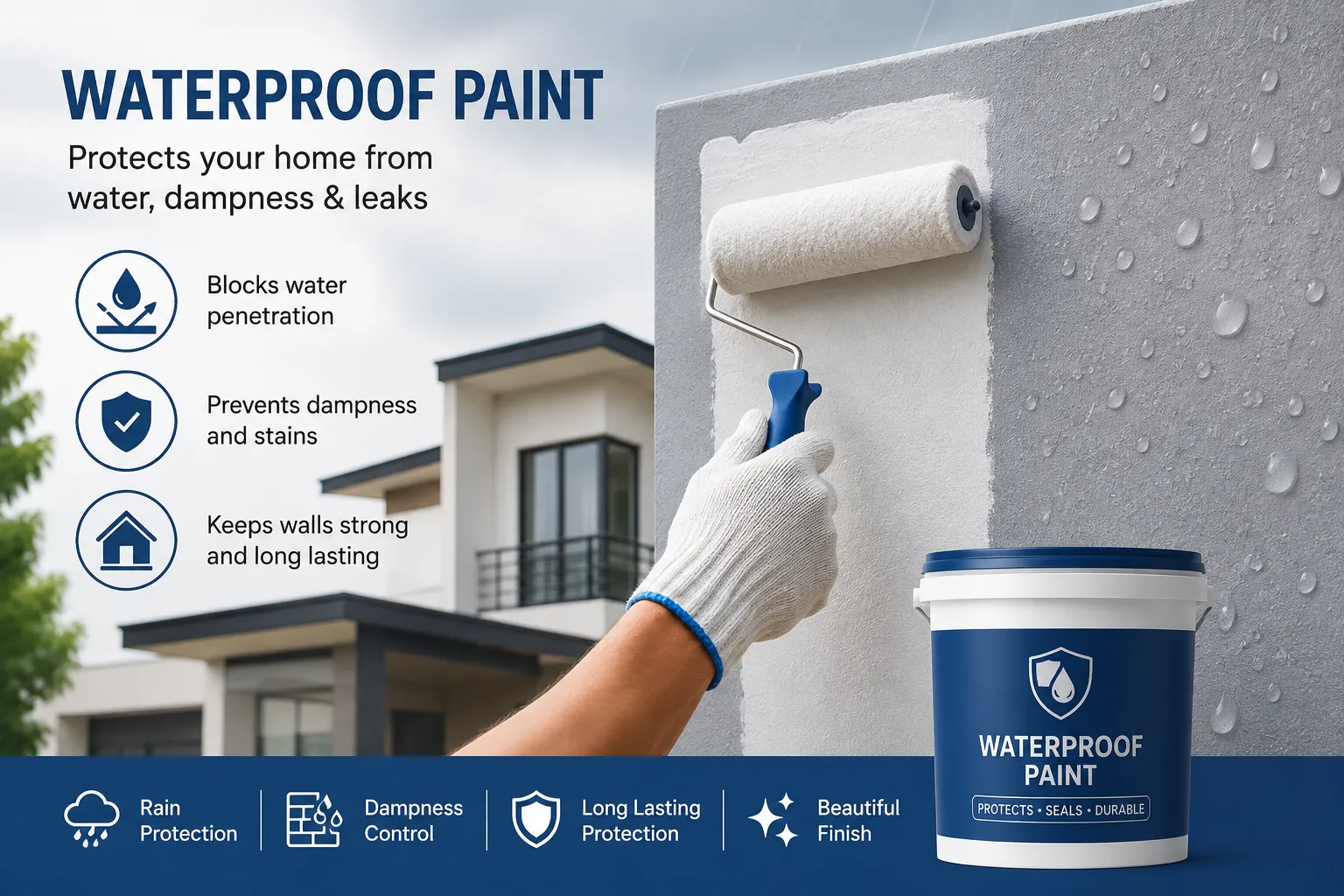
Waterproof paint is a protective coating used on house walls, ceilings, roofs, bathrooms, kitchens, balconies, and other surfaces that may come into contact with moisture. It works by forming a water-resistant barrier that reduces the penetration of water into the surface. Depending on the product, waterproof paint can also help protect against dampness, peeling, staining, and moisture-related surface damage. It is commonly used on interior and exterior walls, particularly in areas exposed to rain or high humidity. However, waterproof paint cannot fix major cracks, active leaks, or structural waterproofing problems by itself. For the best results, the surface should be properly cleaned, repaired, dried, and primed before painting.
How Does Waterproof Paint Work?
Waterproof paint works by creating a continuous protective film over the painted surface. When the coating dries, its binders and resins form a layer that limits water from passing through the wall.
Some waterproof paints are formulated with acrylic polymers, elastomeric materials, silicone-based compounds, or other water-resistant ingredients. These materials improve the coating's ability to repel moisture while allowing it to adhere to the surface.
For example, when rain hits an exterior wall treated with waterproof paint, the coating helps prevent water from being absorbed quickly into the masonry or plaster. Water tends to remain on the surface and run off instead of penetrating deeply.
Where Can Waterproof Paint Be Used in a House?
Waterproof or water-resistant paint can be useful in several parts of a home:
Exterior walls: Helps protect against rain and moisture.
Bathroom walls: Provides additional resistance to humidity and occasional splashes.
Kitchen walls: Helps protect surfaces from moisture and condensation.
Balconies: Can provide protection against weather exposure when the product is suitable for the surface.
Basement walls: Certain coatings can help reduce moisture penetration, although serious dampness may require dedicated waterproofing.
Ceilings: Can help protect against minor moisture exposure, but leaks from above must be repaired separately.
The right product depends on whether the surface is concrete, brick, plaster, masonry, wood, or another material.
Waterproof Paint vs. Regular Paint
Feature | Waterproof Paint | Regular Paint |
|---|---|---|
Main purpose | Moisture and water resistance | Colour and surface decoration |
Water resistance | Generally higher | Usually limited |
Suitable areas | Damp or exposed areas | Normal dry areas |
Protection | Helps reduce moisture penetration | Primarily protects and decorates the surface |
Leak solution | Not a substitute for structural waterproofing | Not designed to stop leaks |
How to Apply Waterproof Paint Properly
Proper preparation is important because even high-quality waterproof paint may fail when applied to a dirty, damp, or damaged surface.
First, remove dust, dirt, loose paint, and other contaminants. Repair visible cracks, holes, or damaged plaster before painting. The surface should generally be dry unless the manufacturer's instructions specifically allow application to a damp substrate.
Apply the recommended primer or waterproofing base coat if required by the product. After the primer has dried, apply the waterproof paint evenly, usually in the number of coats specified by the manufacturer. Allow adequate drying time between coats.
Do not apply paint over an active water leak and expect it to solve the underlying problem. Plumbing leaks, roof leaks, rising damp, and significant structural cracks need to be identified and repaired separately.
Benefits of Waterproof Paint
Waterproof paint can provide several practical benefits when used correctly. It can improve resistance to rain, humidity, splashes, and surface moisture while helping the painted surface maintain its appearance for longer.
It may also reduce problems such as paint peeling, damp stains, and moisture-related deterioration. Exterior waterproof coatings can be particularly useful in climates where walls are frequently exposed to heavy rainfall.
However, performance depends on the product, surface preparation, application method, weather conditions, and the severity of moisture exposure.
Is Waterproof Paint Enough to Stop Wall Leakage?
No. Waterproof paint is not a complete solution for every type of water leakage. It is primarily a surface coating designed to provide water resistance.
If water is entering through a large crack, damaged roof, leaking pipe, foundation, or poorly sealed joint, the underlying source must be repaired first. In serious cases, a professional waterproofing system may be necessary rather than ordinary waterproof paint.
FAQs
1. What is waterproof paint used for in a house?
Waterproof paint is used to provide additional resistance against moisture, rain, humidity, and water splashes on suitable interior and exterior surfaces.
2. Does waterproof paint completely stop water leakage?
No. It can help resist surface moisture, but it cannot reliably stop major leaks caused by plumbing, roofs, foundations, cracks, or structural problems.
3. Can waterproof paint be used on bathroom walls?
Yes, products specifically designed for bathrooms or humid areas can be used on suitable bathroom surfaces. Always follow the manufacturer's application instructions.
4. How long does waterproof paint last?
Its service life varies according to the product, surface preparation, weather exposure, application quality, and maintenance. Following the manufacturer's recommended preparation and application procedure generally improves durability.
Also read : what is the difference between waterproof paint and normal paint?