Z
Ziyyara Edutech· 6 years ago
Author

Who faces the toughest competition in the age of e-learning?

0
485

Join this conversation

Sort By
Replying to the question above
Answered on10/22/26

E-learning has changed the way people study and develop new skills. Today, students can attend online classes, watch recorded lectures, and learn from teachers across the world without leaving their homes. While this makes education more accessible, it has also created strong competition for students, teachers, schools, and traditional coaching institutes.

Article image

But who faces the toughest competition in the age of e-learning? The answer depends on how we look at the education system. Let's understand it in simple terms.

1. Traditional Coaching Institutes

Traditional coaching institutes face significant competition from online learning platforms. Earlier, students often had to travel to coaching centers and pay for classroom courses. Now, they can access recorded lectures, live classes, practice tests, and study materials online.

Online platforms also allow students to compare different teachers and courses before choosing one. As a result, offline coaching institutes need to improve their teaching quality, facilities, and student support to remain competitive.

However, classroom coaching still offers face-to-face interaction, personal attention, and a structured learning environment that many students prefer.

2. Teachers and Educators

Teachers also face new challenges in the age of e-learning. Students can access lessons from experienced educators worldwide, sometimes at a lower cost than traditional tuition.

Teachers must find new ways to explain concepts, keep students interested, and use digital tools effectively. Those who combine subject knowledge with engaging teaching methods can stand out in a competitive education market.

At the same time, technology cannot completely replace the human side of teaching, including guidance, motivation, and personal feedback.

3. Students

Students face competition in a different way. Online learning gives them access to more resources, but it also requires discipline and time management.

With so many courses, videos, and study materials available, students may struggle to decide what to study first. They can also become distracted by social media or other online activities.

To succeed, students need to set clear goals, follow a study schedule, practice regularly, and choose reliable learning resources.

4. Traditional Schools and Colleges

Schools and colleges must adapt to changing expectations. Students increasingly expect digital study materials, online assessments, recorded lectures, and flexible learning options.

Educational institutions that combine classroom teaching with useful digital tools can provide students with more learning opportunities. Institutions that ignore these changes may find it harder to meet students' needs.

Still, schools and colleges offer important benefits, including social interaction, practical activities, teamwork, and direct guidance from teachers.

5. Online Learning Platforms

Interestingly, e-learning companies also face tough competition. Many platforms offer similar courses, video lessons, and certificates.

To attract learners, they must provide quality content, experienced instructors, affordable pricing, and a good learning experience. They also need to keep their courses updated as technology and job requirements change.

Conclusion

In the age of e-learning, traditional coaching institutes and educators face strong competition because students have more choices than ever before. Schools and colleges must also adapt, while online learning platforms need to prove their value in a crowded market.

Ultimately, traditional coaching institutes may face some of the toughest competition, especially when online platforms offer convenient and affordable alternatives. However, e-learning is not simply replacing traditional education. The strongest approach is often to combine technology with good teaching, personal guidance, and practical learning.

Also Read: Which one is tougher to do – CA or CFA?

Tara Verma
View Profile

Tara Verma is a practising teacher and education content writer with over 10 years of classroom experience across primary and secondary levels. She holds a Master's degree in Education (M.Ed.) from Delhi University and a Bachelor of Education (B.Ed.) from Jamia Millia Islamia — qualifications that ground her writing in both pedagogical theory and the day-to-day realities of teaching in India. Her content covers exam preparation strategies, learning methodologies, curriculum guidance, student mental health, career counselling for students, and the evolving state of school and higher education in India. Her work has appeared on platforms including TeacherVision India, Jagran Josh, and Careers360, where she writes for students, parents, and fellow educators who need content built on actual teaching experience — not theory alone. Over a decade of working directly with students across age groups and learning levels has given Tara a practical understanding of how education content should be written — clearly, accessibly, and with genuine awareness of the challenges students and teachers face on the ground. She has taught 1,000+ students, contributed to school curriculum development initiatives, and published 250+ articles on education across digital platforms. She is an active member of the National Council of Teachers of English (NCTE) India. Across all her writing, every recommendation is classroom-tested, every insight comes from direct teaching experience, and every article is held to the same standard she applies in her own classroom — accuracy, clarity, and genuine usefulness for the reader.

1
Replying to the question above
Answered on09/01/20
With the approach of innovation, devices have crawled into all parts of our lives. We rest to innovation and wake up to it as well, every basic undertaking for the duration of the day incorporates the press of a catch or the intercession of web. In such a situation, educating is no special case as different e-learning stages which have come up in the ongoing past are currently giving extreme rivalry to our old fashioned masters.

Numerous guardians, in any case, despite everything have worries about e-realizing with regards to giving the correct sort of training to their kids. Faisal Siddiqui, an investor by calling, isn't agreeable to e-learning. These internet learning applications can't build up a kid's capacity to evaluate his own work, feels Faisal.

F
View Profile
0
Replying to the question above
Answered on08/31/20
I will say the teachers and the parents as most of the parents don't know technology yet and do not have smartphones. Teachers, they face alot of problems as conducting online classes special primary classes is a challenge in itself. They don't understand anything and keeps on shouting even after muting them children unmute themselves.
S
View Profile
0
Replying to the question above
Answered on08/31/20
ONLINE learning platforms like the Frog VLE (Virtual Learning Environment) have proven to be handy for teachers and students when face-to-face teaching activities get disrupted.
M
View Profile
0
Answered on10/09/26

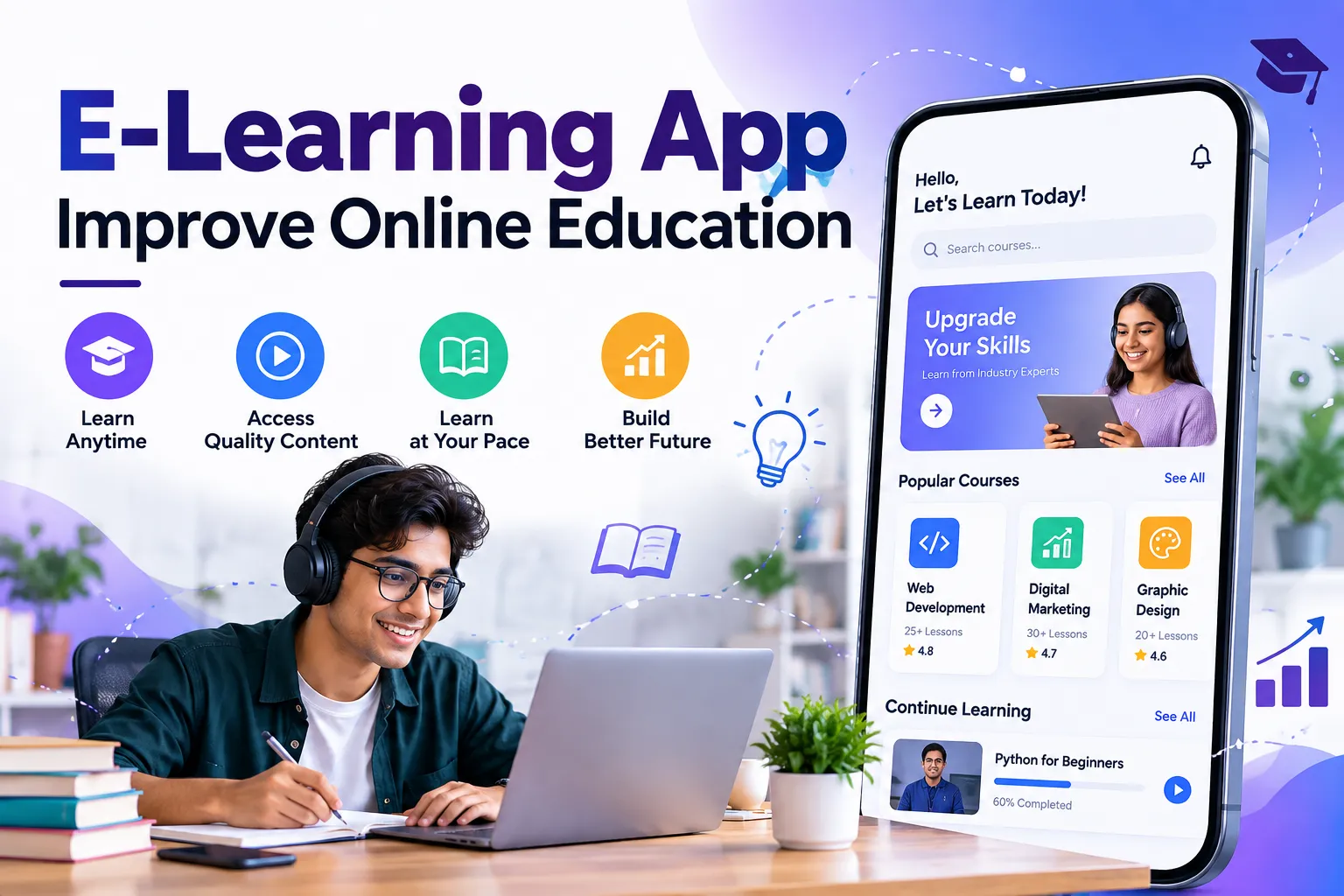
Building an e-learning app is a great idea, but the real question is: what makes students actually stick with it? Most people don’t quit because the content is bad. They quit because it feels lonely, confusing, or boring. So here’s what I’d focus on.

Article image

Make getting started effortless. Students should find a course and start learning in just a couple of taps. Add good search, clear categories, and a quick preview of what each course covers. A “continue where you left off” button on the home screen goes a long way. Also let people download lessons, because plenty of learners study while commuting or on shaky internet.

Offer both live and recorded classes. Not everyone can show up at a fixed time, so give them both options. Live classes shouldn’t feel like someone talking at a screen, so add chat, polls, and a way to ask questions on the spot. Record every session automatically and make it available soon after, with speed controls and a transcript. And keep lessons short, around 5 to 10 minutes per topic. Short videos are way easier to finish.

Use quizzes to help, not to scare. Quick quizzes after each lesson help students check if something actually sank in. The best part is instant feedback: don’t just show a score, explain why an answer was right or wrong. A “practice your weak areas” option that brings back missed questions is incredibly useful too.

Show them how far they’ve come. Progress bars, completed-lesson ticks, and simple weekly summaries make students feel like they’re getting somewhere. If you can, add a view for teachers or parents so they can notice when someone is falling behind.

Keep them motivated. This is where most apps slip. Streaks, badges, and completion certificates work well when used lightly. Leaderboards can be fun, but make them optional, since some students find them stressful. Send reminders that actually help, like a nudge before a streak breaks, but don’t spam, or people will mute you.

Don’t let students feel alone. Add discussion forums, study groups, and a way to ask doubts right under a lesson. Even quick mentor support makes a big difference.

Make it feel personal. Recommend courses based on what a student is aiming for and how they’re doing. Even simple personalization makes the app feel like it was built just for them.

Don’t skip the basics. A fast, clean, mobile-friendly design with captions, adjustable text size, and strong privacy is non-negotiable. The best features won’t matter if the app feels slow or cluttered.

My honest advice: don’t try to build everything on day one. Start with course access, live and recorded classes, quizzes, and progress tracking. Launch to a small group, listen to what they say, and then add the fun extras like gamification, community, and personalization.

If you make learning simple, interactive, and a little bit rewarding, your app won’t just deliver lessons. It’ll help students build a habit, and that’s what truly improves online education.

V
View Profile
0
0
Replying to the question above
Answered on08/30/20
The teachers who used to teach in school are facing the toughest competition in this era because most of the things related to study are easily available on internet and various sites to help the students.Moreover these sites can conduct tests too from time to time .But ofcourse there is no check on the students , and some parents believe teacher’s place can’t be replaced
P
View Profile
0