Amul was founded on December 14, 1946, by Tribhuvandas Kishibhai Patel, under the guidance of Indian independence leader Sardar Vallabhbhai Patel. However, it was Dr. Verghese Kurien—often hailed as the "Father of the White Revolution"—who joined the cooperative in 1949 and transformed Amul into a multi-billion-dollar brand, making India the largest milk producer in the world.
In this guide you will learn:
✓ The primary founders and visionaries behind Amul
✓ The history of the Kaira District Co-operative Milk Producers' Union
✓ The technological innovations that made Amul successful
✓ How "Operation Flood" sparked India's White Revolution
✓ Answers to the most frequently asked questions
Amul's Founding At a Glance
| Fact | Detail |
| Full Name | Anand Milk Union Limited (Amul) |
| Date Founded | December 14, 1946 |
| Primary Founder | Tribhuvandas Kishibhai Patel |
| Chief Architect | Dr. Verghese Kurien |
| Key Technologist | H.M. Dalaya |
| Headquarters | Anand, Gujarat, India |
| Parent Organization | Gujarat Cooperative Milk Marketing Federation (GCMMF) |
The Origins: Fighting Exploitation
To understand who founded Amul, you must first understand the problem it was created to solve. In the 1940s, milk farmers in the Kaira district of Gujarat were heavily exploited by marginal middlemen and the Polson Dairy, which held a monopoly on supplying milk to the city of Bombay (now Mumbai).
Frustrated by the low procurement prices and unfair trade practices, the farmers approached Sardar Vallabhbhai Patel. He advised them to bypass the middlemen by forming a cooperative to process and supply the milk themselves. Inspired by this vision, Tribhuvandas Patel took the lead.
The Key Figures Who Built Amul
While many people ask "who founded Amul," the reality is that the brand's legendary success was the result of a powerful trio of leaders:
1. Tribhuvandas Patel: The Visionary Founder
Tribhuvandas Patel is the official founder of the Kaira District Co-operative Milk Producers' Union Limited (which would later be branded as Amul). He mobilized the farmers, organized the early cooperative structures, and served as the cooperative's chairman for over two decades, earning the immense trust of the rural community.
2. Dr. Verghese Kurien: The Architect of the White Revolution
If Tribhuvandas Patel planted the seed, Dr. Verghese Kurien grew it into a massive tree. A young dairy engineer, Kurien arrived in Anand in 1949. Patel persuaded him to stay and help modernize the cooperative's machinery. Kurien's fierce management, marketing genius, and relentless dedication to the farmers transformed the local union into a global brand.
3. H.M. Dalaya: The Technologist
At the time, dairy experts worldwide believed that skim milk powder could only be made from cow's milk. H.M. Dalaya, working alongside Kurien, invented a breakthrough process to create skim milk powder and condensed milk from buffalo milk. Since buffaloes were the primary dairy animals in Gujarat, this technological leap is what truly allowed Amul to compete on a commercial scale against international giants like Nestlé.
Operation Flood and India's Milk Revolution
Amul's cooperative model was so successful that in 1965, the Prime Minister of India, Lal Bahadur Shastri, created the National Dairy Development Board (NDDB) to replicate the "Anand Pattern" across the entire country. Dr. Verghese Kurien was appointed its head.
This led to the launch of Operation Flood in 1970, which became known as the White Revolution.
Key Steps That Drove the White Revolution
-
Eliminating Middlemen: The cooperative model connected farmers directly to consumers, ensuring farmers received the maximum share of the profits.
-
Technological Innovation: Local processing plants were built to convert seasonal excess milk into powder, preventing waste and stabilizing prices year-round.
-
Veterinary Support: The cooperative provided farmers with high-quality cattle feed, artificial insemination services, and 24/7 veterinary care, drastically improving milk yields.
-
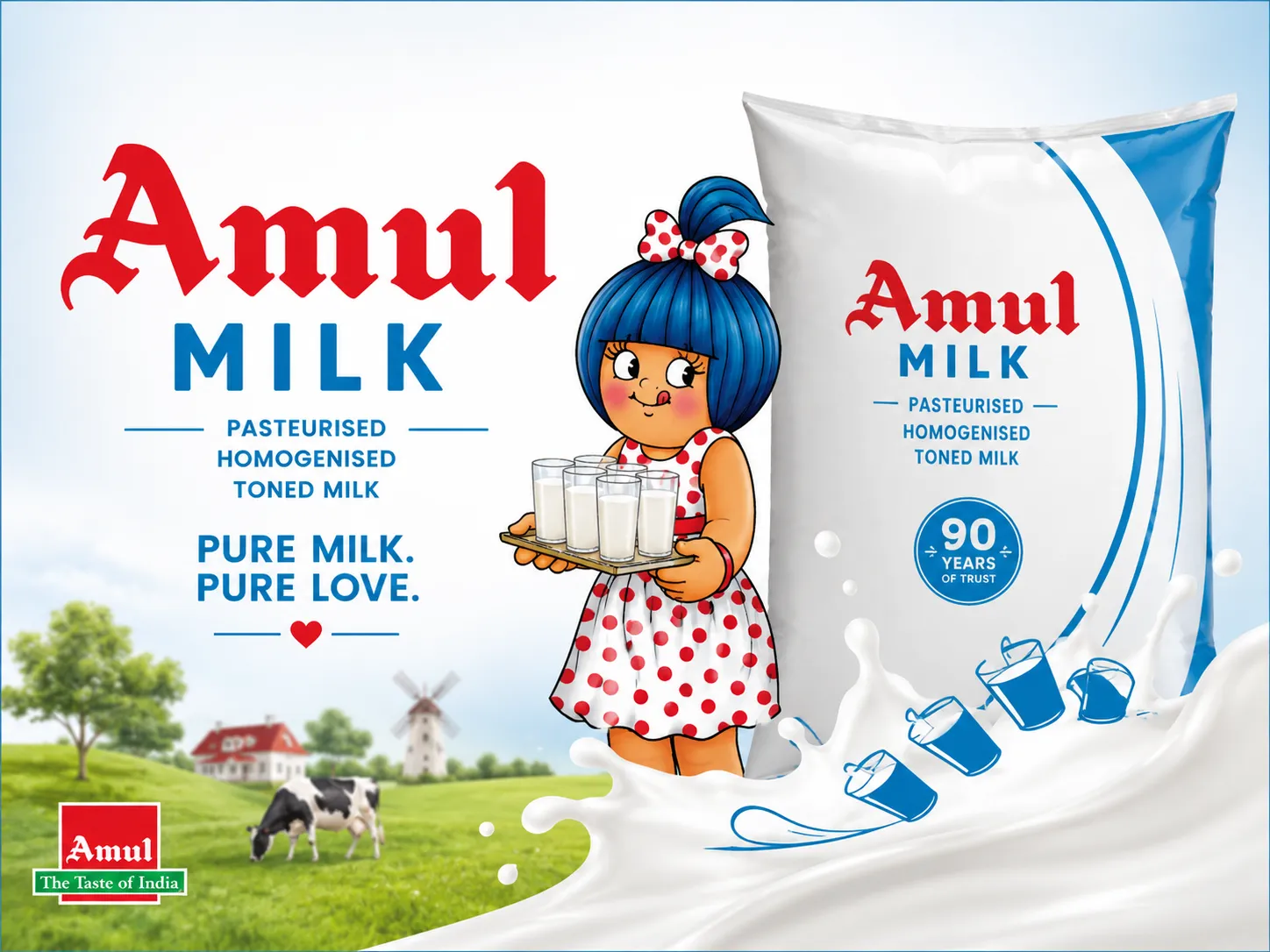
Branding and Marketing: The creation of the iconic "Amul Girl" mascot in 1966 gave the brand a relatable, witty, and enduring public face that consumers trusted.
Authoritative Sources and References
The historical data in this guide is supported by records from the following authoritative bodies:
-
National Dairy Development Board (NDDB): For historical timelines on Operation Flood.
-
Food and Agriculture Organization (FAO): For data regarding India's transition to the world's largest milk-producing nation.
-
Gujarat Cooperative Milk Marketing Federation (GCMMF): For historical records on Tribhuvandas Patel and Dr. Verghese Kurien.
Conclusion
Amul was founded in 1946 by Tribhuvandas Patel as a small cooperative designed to protect local farmers from exploitation. Under the brilliant leadership of Dr. Verghese Kurien and the technological innovations of H.M. Dalaya, it grew into Anand Milk Union Limited. Together, they did not just build a dairy brand; they launched India's Milk Revolution, creating a sustainable, farmer-owned economic model that is still studied globally today.
Frequently Asked Questions (FAQ)
1. Who is the real founder of Amul?
Tribhuvandas Kishibhai Patel is the original founder of the cooperative that became Amul. Dr. Verghese Kurien is the architect who built it into a national brand.
2. What is the full form of Amul?
Amul stands for Anand Milk Union Limited. "Amul" is also derived from the Sanskrit word Amulya, which means priceless or precious.
3. Who is known as the Father of the White Revolution?
Dr. Verghese Kurien is universally recognized as the Father of the White Revolution in India for his role in launching Operation Flood.
4. When was Amul established?
The cooperative was officially registered on December 14, 1946.
5. What was the White Revolution in India?
The White Revolution (Operation Flood) was a national rural development program launched in 1970 that transformed India from a milk-deficient nation into the world's largest milk producer.
6. Who created the Amul Girl mascot?
The Amul Girl was created in 1966 by Sylvester da Cunha, an advertising executive, and Eustace Fernandes, an art director, to rival the Polson Dairy girl.
7. Is Amul a government company?
No. Amul is not owned by the government or a private corporation. It is a cooperative organization jointly owned by millions of milk producers in Gujarat and managed by the GCMMF.
Also Read: Is packed flavoured milk good for health?
 Answered by