
Quick Answer
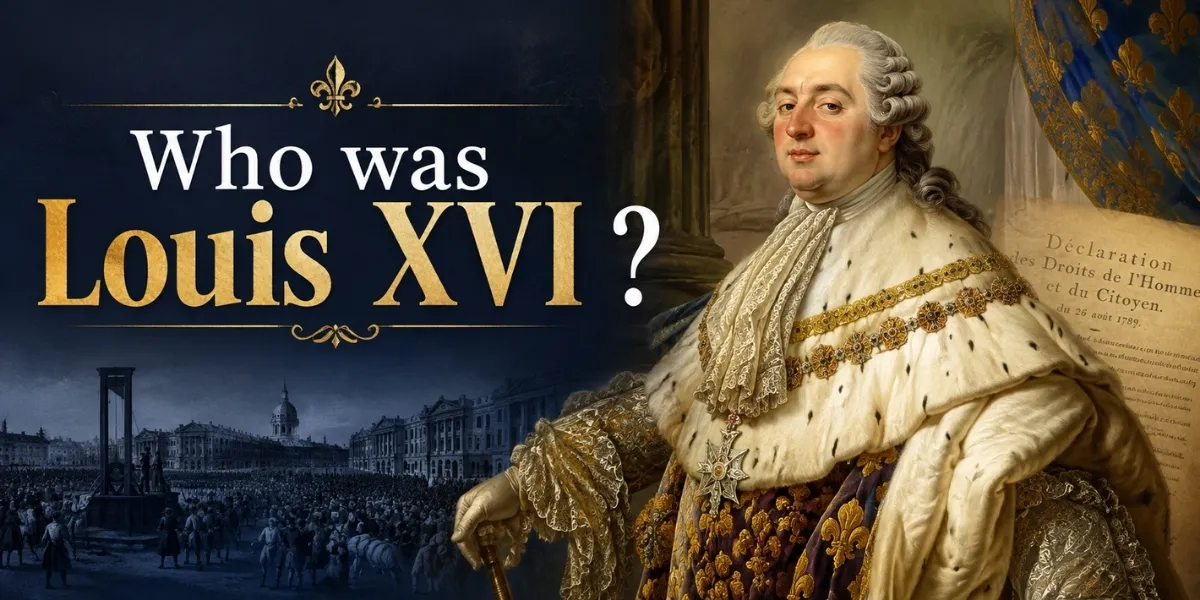
When exploring the dramatic history of Europe, one of the most frequently asked questions is: Who was Louis XVI? He was the last King of France before the fall of the monarchy during the French Revolution. Taking the throne in 1774 at the young age of 20 alongside his wife, Marie Antoinette, Louis XVI inherited a kingdom plagued by deep financial debt and extreme social inequality. Despite his early attempts at reform, his indecisiveness and failure to manage the escalating crisis ultimately led to the collapse of the absolute monarchy. He was convicted of treason by the revolutionary government and executed by guillotine in 1793.
Early Life and Ascent to the Throne
Born on August 23, 1754, in the magnificent Palace of Versailles, Louis-Auguste was not originally destined to be king. It was only after the untimely deaths of his older brother and his father that he became the heir apparent (Dauphin) to his grandfather, King Louis XV.
By all historical accounts, Louis XVI was a well-meaning, intelligent, and deeply religious man who had a strong interest in sciences, geography, and locksmithing. However, he was painfully shy, socially awkward, and lacked the forceful, decisive character required to rule as an absolute monarch. In 1770, to cement an alliance between France and Austria, he was married to the young Austrian archduchess Marie Antoinette. Just four years later, in 1774, he ascended to the throne, inheriting a country on the brink of financial ruin.
The Financial Crisis and the American Connection
One of the defining moments of Louis XVI's reign was his decision to actively support the American colonies in their war for independence against Great Britain. While this foreign policy decision was a military success that helped secure American independence, it was an absolute disaster for the French economy.
The massive loans required to fund the American Revolution drove France into a paralyzing debt crisis. When the king attempted to implement tax reforms to save the economy, he was fiercely blocked by the French nobility and clergy, who refused to give up their tax-exempt status. Meanwhile, a series of harsh winters and widespread crop failures led to severe bread shortages. The common people of France, burdened by extreme taxes and starvation, reached a boiling point.
The Outbreak of the French Revolution
Unable to resolve the financial crisis, Louis XVI reluctantly summoned the Estates-General (the French national assembly) in 1789. This decision backfired spectacularly. The commoners (the Third Estate) broke away, formed the National Assembly, and demanded a constitution.
On July 14, 1789, the people of Paris stormed the Bastille prison, marking the violent beginning of the French Revolution. From that point onward, the king’s power was rapidly stripped away.
King Louis XVI at a Glance
Detail | Historical Fact |
|---|---|
Birth | August 23, 1754 |
Royal House | House of Bourbon |
Reign | May 10, 1774 – September 21, 1792 |
Spouse | Marie Antoinette (Archduchess of Austria) |
Major Conflict | The French Revolution |
Date of Execution | January 21, 1793 |
Key Factors Leading to His Downfall
Louis XVI's tragic end was brought about by a perfect storm of systemic issues and personal failures:
Financial Mismanagement: Plunging the country into bankruptcy by financing foreign wars without a sustainable taxation system.
Social Inequality: Upholding a rigid class system where the poorest citizens paid nearly all the taxes while the wealthy nobility paid nothing.
Indecisive Leadership: Frequently backing down to the nobility on critical reforms, which made him appear weak to both his allies and his enemies.
The Flight to Varennes (1791): The king's disastrous, failed attempt to flee Paris in disguise shattered any remaining public trust. The people viewed this escape attempt as high treason, believing he intended to return with a foreign army to crush the revolution.
Timeline of the Fall of the Monarchy
Explore how rapidly the political landscape shifted from an absolute monarchy to a radical republic during the king's final years:
Frequently Asked Questions (FAQs)
Why was Louis XVI executed?
Following the abolition of the monarchy in 1792, the radical revolutionary government (the National Convention) put Louis XVI on trial for high treason and crimes against the state. He was found guilty of conspiring with foreign powers to crush the revolution and was sentenced to death by guillotine.
Did Louis XVI have any children?
Yes, Louis XVI and Marie Antoinette had four children together. Only their eldest daughter, Marie-Thérèse, survived the brutal conditions of the revolution into adulthood. Their son, Louis-Charles (who royalists recognized as Louis XVII), tragically died in prison at age 10.
What were King Louis XVI's last words?
Before the guillotine fell, Louis XVI addressed the massive crowd gathered in the Place de la Révolution, stating: "I die innocent of all the crimes laid to my charge; I pardon those who have occasioned my death; and I pray to God that the blood you are going to shed may never be visited on France."
Conclusion
Whenever students of history ask, "Who was Louis XVI?", they discover the story of an ordinary, well-intentioned man who was entirely unsuited for the extraordinary times he lived in. His inability to adapt to the desperate needs of his starving population, combined with centuries of built-up systemic inequality, made him the ultimate scapegoat for the wrath of the French people. His death did not just end a human life; it violently ended over a thousand years of continuous monarchical rule, forever altering the course of global history and modern democracy.
Sources & References: History.com
Also Read: Who is Ruskin Bond?